World Book
Cuba
Introduction
Cuba, an island nation located in the Caribbean, has a rich and complex history that has shaped its current socio-political landscape. The native Amerindian population faced significant decline following the arrival of Christopher Columbus in 1492, as the island transitioned into a Spanish colony over the subsequent centuries. The revolutionary fervor of the 20th century culminated in 1959 when Fidel Castro led a successful rebellion against the Batista regime, establishing a one-party socialist state that persists today. This historical backdrop is crucial for understanding the ongoing challenges and developments within Cuba, where the legacy of authoritarian governance continues to influence the lives of its citizens.
Geography
Area
Total: 110,860 sq km
Land: 109,820 sq km
Water: 1,040 sq km
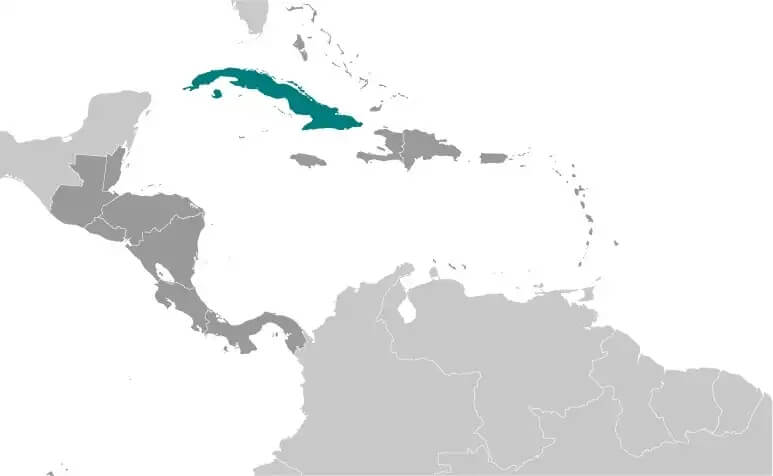
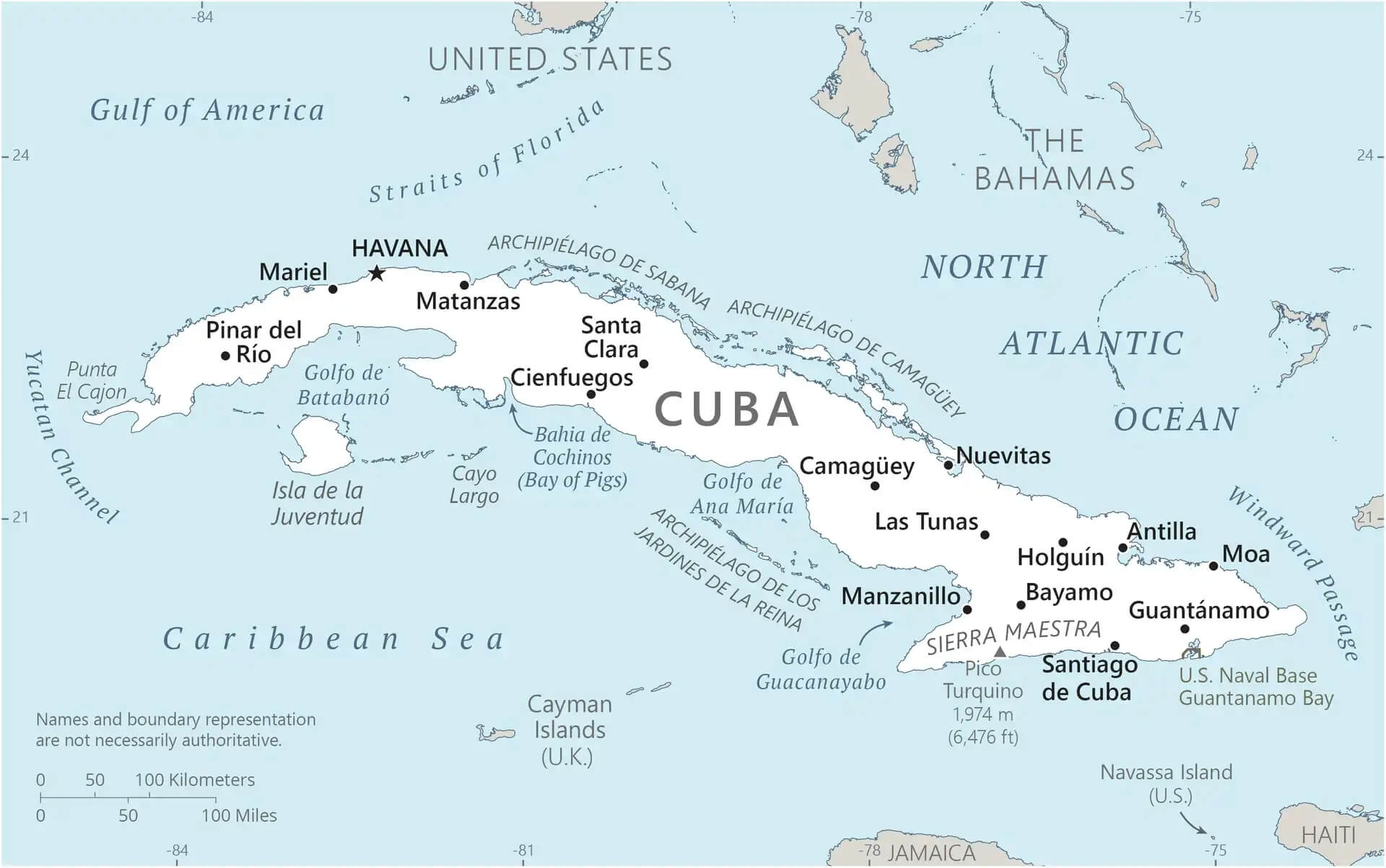
Cuba is the largest island in the Caribbean, characterized by its diverse geography that includes mountainous regions, plains, and extensive coastlines. The island's climate is tropical, moderated by trade winds, which creates a distinct seasonal pattern with a dry season from November to April and a rainy season from May to October. This climatic variability supports a range of ecosystems and agricultural activities. The country is endowed with various natural resources, including cobalt, nickel, iron ore, chromium, copper, salt, timber, silica, and petroleum, alongside arable land that is vital for its agricultural sector.
People and Society
Population
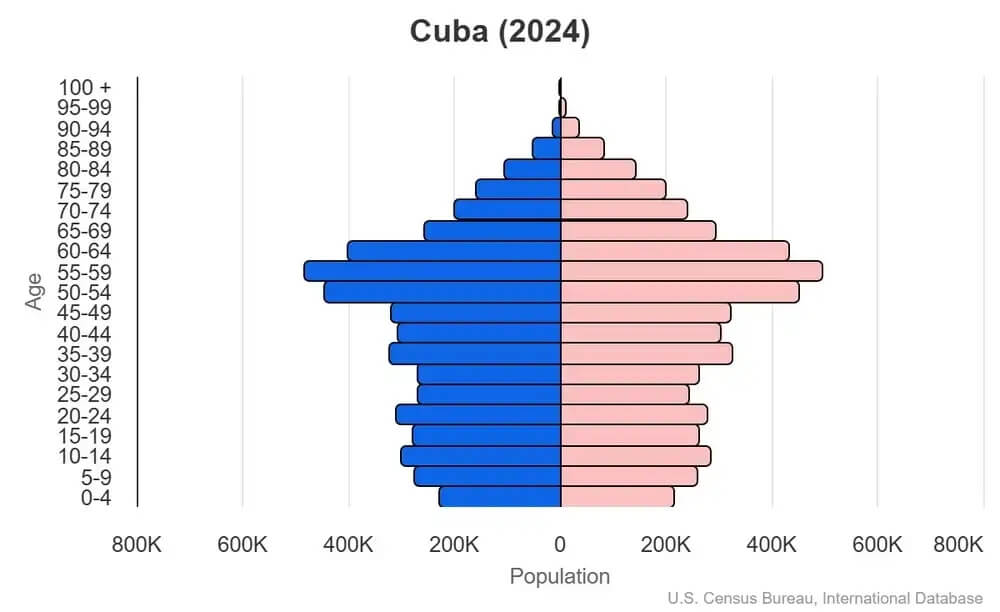
Total: 10,966,038 (2024 estimated)
Ethnic groups
White 64.1%, Mulatto or mixed 26.6%, Black 9.3% (2012 estimated)
Languages
Spanish (official)
Religions
Christian 58.9%, folk religion 17.6%, Buddhist <1%, Hindu <1%, Jewish <1%, Muslim <1%, other <1%, none 23.2% (2020 estimated)
Population growth rate
-0.17% (2024 estimated)
Cuba's population is a tapestry of ethnic diversity, with the majority identifying as White (64.1%), followed by Mulatto or mixed (26.6%) and Black (9.3%). The official language is Spanish, reflecting the island's colonial history and cultural influences. The religious landscape is predominantly Christian, with a significant portion of the population adhering to folk religions, illustrating a blend of traditional beliefs and practices. The population growth rate has been negative at -0.17%, indicating demographic challenges such as emigration and low birth rates, which could have long-term implications for the country's social and economic fabric.
Government
Government type
Communist state
Capital
Name: Havana
Executive branch
Chief of state: President Miguel Diaz-Canel Bermudez (since 19 April 2018)
Head of government: Prime Minister Manuel Marrero Cruz (since 21 December 2019)
Diplomatic representation in the US
Chief of mission: Ambassador (vacant); Chargé d'Affaires Lianys Torres Rivera (since 14 January 2021)
Diplomatic representation from the US
Chief of mission: Ambassador (vacant); Chargé d'Affaires Mike Hammer (since 14 November 2024)
Cuba operates as a one-party communist state, with the government exerting significant control over political and economic life. The capital, Havana, serves as the political and cultural heart of the nation. The executive branch is led by President Miguel Diaz-Canel, who has been in office since April 2018, and Prime Minister Manuel Marrero Cruz, who took office in December 2019. Diplomatic relations with the United States remain complex, with both nations maintaining chargé d'affaires in the absence of ambassadors, reflecting ongoing tensions and the need for dialogue.
Economy
Economic overview
Cuba's economy is primarily characterized as a state-run planned economy, although recent reforms have introduced elements of privatization in response to economic pressures. The country has experienced widespread protests driven by shortages of basic necessities and electricity, highlighting the challenges faced by its citizens. Despite these issues, there has been a notable increase in foreign investment, particularly in sectors such as tourism and biotechnology. Cuba is recognized as a significant exporter of tobacco and maintains a unique oil-for-doctors relationship with Venezuela, which has implications for its economic stability. However, pervasive corruption remains a critical challenge that undermines economic progress.
Real GDP (purchasing power parity)
$81.165 billion (2024 estimated)
$81.985 billion (2023 estimated)
$83.597 billion (2022 estimated)
Real GDP per capita
$23,700 (2024 estimated)
$18,300 (2023 estimated)
$13,300 (2022 estimated)
Exports
$8.768 billion (2020 estimated)
$12.632 billion (2019 estimated)
$14.53 billion (2018 estimated)
Exports - partners
China 34%, Spain 12%, Germany 6%, Switzerland 5%, Hong Kong 4% (2023)
Exports - commodities
Tobacco, nickel, liquor, zinc ore, precious metal ore (2023)
Imports
$8.067 billion (2020 estimated)
$10.971 billion (2019 estimated)
$12.567 billion (2018 estimated)
Imports - partners
Spain 24%, China 13%, Netherlands 10%, USA 9%, Canada 6% (2023)
Imports - commodities
Beer, poultry, rice, plastic products, soybean oil (2023)
Human Development Index
The country's Human Development Index (HDI) is 0.762, ranking it 97th out of 193 countries tested. (more information)