World Book
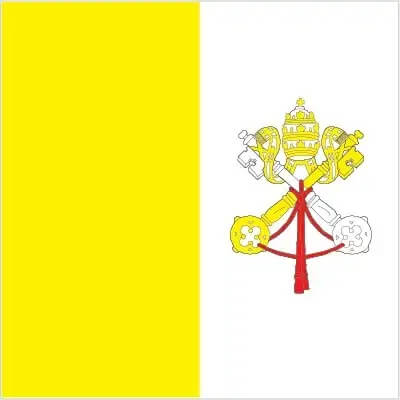
Holy See
Introduction
The Holy See, a unique sovereign entity, serves as the central governing body of the Catholic Church and is recognized as an independent state. Historically, Popes ruled significant portions of the Italian peninsula for over a millennium, until the mid-19th century when the Kingdom of Italy annexed many Papal territories. The annexation of Rome in 1870 further limited the Pope's temporal power, leading to the establishment of the Vatican City as a distinct entity. Today, the Holy See continues to play a pivotal role in global diplomacy and religious leadership, influencing millions of followers worldwide.
Neighboring country
Italy
Geography
Area
Total: 0 sq km
Land: 0.44 sq km
Water: 0 sq km
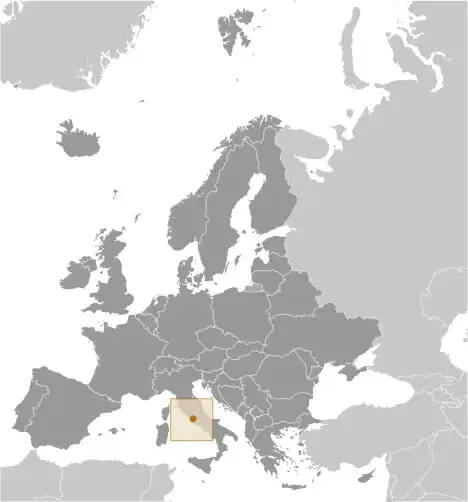
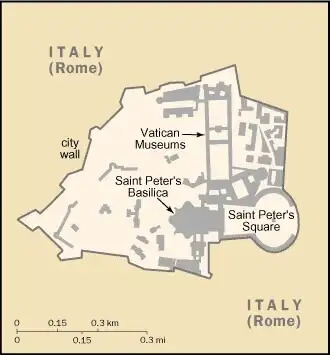
The Holy See is an enclave located entirely within the city of Rome, Italy. Despite its minuscule size, it holds significant historical and cultural importance. The climate is characterized as temperate, featuring mild, rainy winters from September to May, and hot, dry summers from May to September. This unique geographical setting contributes to the Holy See's rich cultural heritage and its role as a pilgrimage destination for millions of Catholics around the globe. However, the Holy See has no natural resources, which underscores its reliance on external support and tourism for economic sustenance.
People and Society
Population
Total: 1,000 (2024)
The population of the Holy See is approximately 1,000, comprising a diverse mix of ethnicities, including Italian, Swiss, Argentinian, and various other nationalities from around the world as of 2017. The primary language spoken is Italian, alongside Latin and French, reflecting the Vatican's historical and cultural ties. The predominant religion is Roman Catholicism, which shapes the societal norms and values of this unique community. With a population growth rate estimated at 0% in 2014, the demographic dynamics of the Holy See remain stable, largely due to its small size and the nature of its residents, many of whom are clergy and officials associated with the Catholic Church.
Government
Government type
Ecclesiastical elective monarchy; self-described as an "absolute monarchy"
Capital
Name: Vatican City
The Holy See operates under an ecclesiastical elective monarchy, with the Pope serving as the chief of state. Currently, Pope Leo XIV has held this position since May 8, 2025. The head of government is the President of the Pontifical Commission for the State of Vatican City and the President of the Governorate of the Vatican City State, Fernando Vergez Alzaga, who has been in office since October 1, 2021. The Holy See maintains diplomatic relations with numerous countries, including the United States, represented by Apostolic Nuncio Cardinal Christophe Pierre since June 27, 2016, and Ambassador Brian Francis Burch II since September 13, 2025.
Economy
Economic overview
The economy of the Holy See is limited and primarily based on tourism, which plays a crucial role in its financial sustainability. The Holy See uses the euro as its currency and has its own minted coins. It produces commemorative stamps, coins, and publications that support its museums and fulfill religious needs. Notably, residents of the Holy See do not pay direct taxes, which is a unique aspect of its economic structure. To address budget shortfalls, the Holy See has implemented a “zero deficit” plan, emphasizing fiscal responsibility while ensuring the continued operation of its essential services and religious functions. This economic model reflects the Holy See's commitment to maintaining its sovereignty and supporting its cultural heritage.