World Book
Portugal
World Book Index
75

With a score of 75, the country is ranked 42nd out of 158 countries in the World Book ranking. (more information)
Introduction
A global maritime power during the 15th and 16th centuries, Portugal lost much of its wealth and status with the destruction of Lisbon in a 1755 earthquake, occupation during the Napoleonic Wars, and the independence of Brazil, its wealthiest colony, in 1822. Portugal is a founding member of NATO and entered the EC (now the EU) in 1986.
Neighboring countries
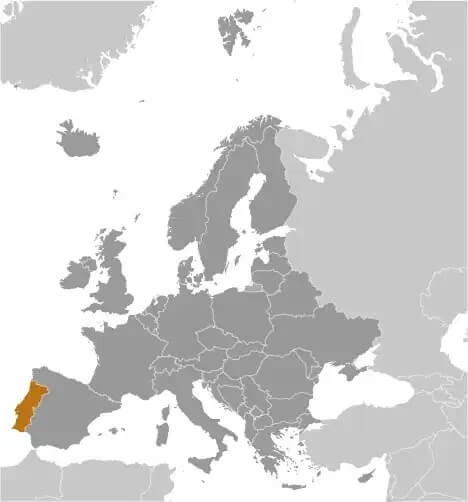
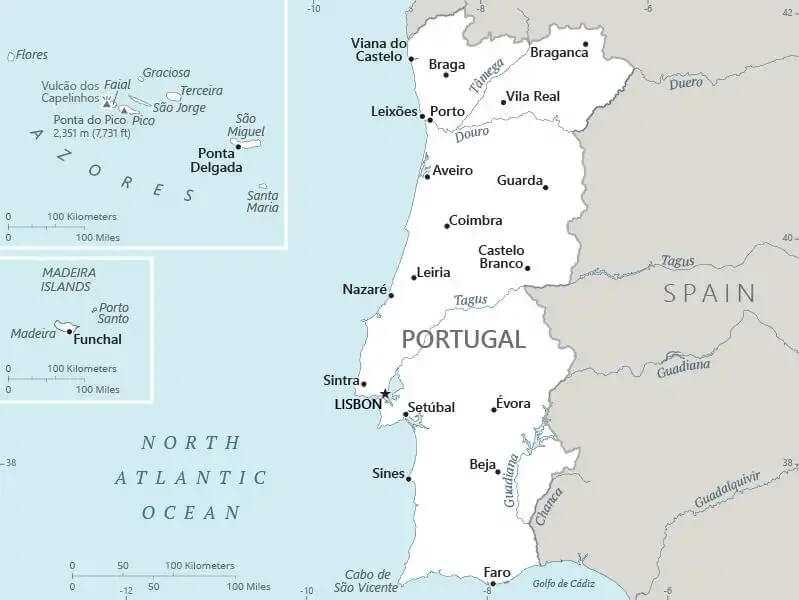
Morocco - Spain
Geography
Area
total: 92,090 sq km
land: 91,470 sq km
water: 620 sq km
Climate
maritime temperate; cool and rainy in north, warmer and drier in south
Natural resources
fish, forests (cork), iron ore, copper, zinc, tin, tungsten, silver, gold, uranium, marble, clay, gypsum, salt, arable land, hydropower
People and Society
Population
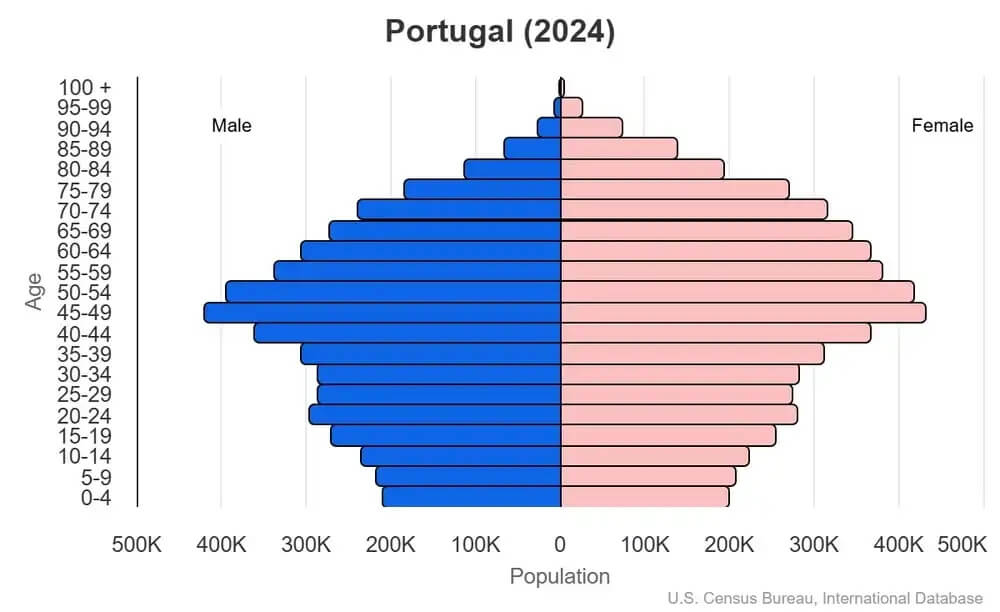
total: 10,207,177 (2024 est.)
Ethnic groups
Portuguese 95%; citizens from Portugal’s former colonies in Africa, Asia (Han Chinese), and South America (Brazilian) and other foreign born 5%
Languages
Portuguese (official), Mirandese (official, but locally used)
Religions
Roman Catholic 79.7%, Protestant 2.2%, other Christian 2.5%, other non-Christian, 1.1%, none 14.5% (2021 est.)
Population growth rate
-0.14% (2024 est.)
Government
Government type
semi-presidential republic
Capital
name: Lisbon
Executive branch
chief of state: President Marcelo REBELO DE SOUSA (since 9 March 2016)
head of government: Prime Minister Antonio Luis MONTENEGRO (since 2 April 2024)
Diplomatic representation in the US
chief of mission: Ambassador Francisco Antonio DUARTE LOPES (since 7 June 2022)
Diplomatic representation from the US
chief of mission: Ambassador John Joseph ARRIGO (since 30 September 2025)
Economy
Economic overview
high-income EU and eurozone economy; strong services sector led by tourism and banking; tight labor market; growth driven by private consumption, trade surplus, and public investment from EU funds; declining public debt
Real GDP (purchasing power parity)
$448.226 billion (2024 est.)
$439.745 billion (2023 est.)
$428.547 billion (2022 est.)
Real GDP per capita
$41,900 (2024 est.)
$41,600 (2023 est.)
$41,100 (2022 est.)
Exports
$144.237 billion (2024 est.)
$137.934 billion (2023 est.)
$126.953 billion (2022 est.)
Exports - partners
Spain 21%, France 11%, Germany 10%, USA 8%, UK 5% (2023)
Exports - commodities
cars, garments, vehicle parts/accessories, unpackaged medicine, refined petroleum (2023)
Imports
$136.976 billion (2024 est.)
$133.617 billion (2023 est.)
$132.193 billion (2022 est.)
Imports - partners
Spain 33%, Germany 11%, France 7%, Netherlands 5%, China 5% (2023)
Imports - commodities
cars, crude petroleum, vehicle parts/accessories, refined petroleum, garments (2023)
Human Development Index
The country's Human Development Index (HDI) is 0.890, ranking it 40th out of 193 countries tested. (more information)
World Happiness Report
The World Happiness Report ranked the country 47th out of 158 countries tested with a score of 6.257. (more information)