List of countries | Ranking
World Book
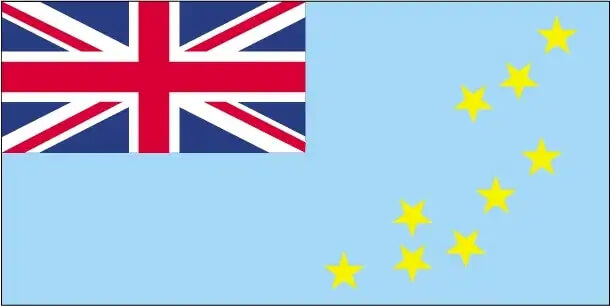
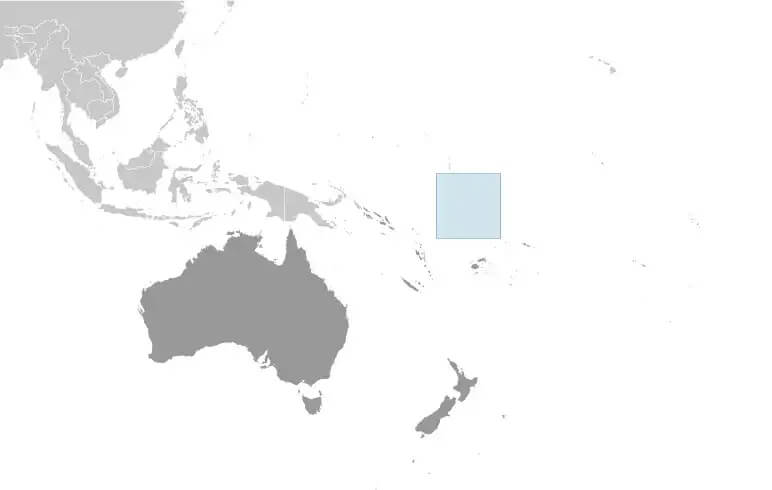
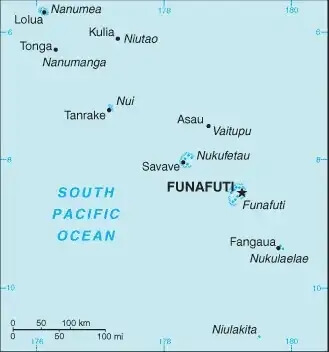
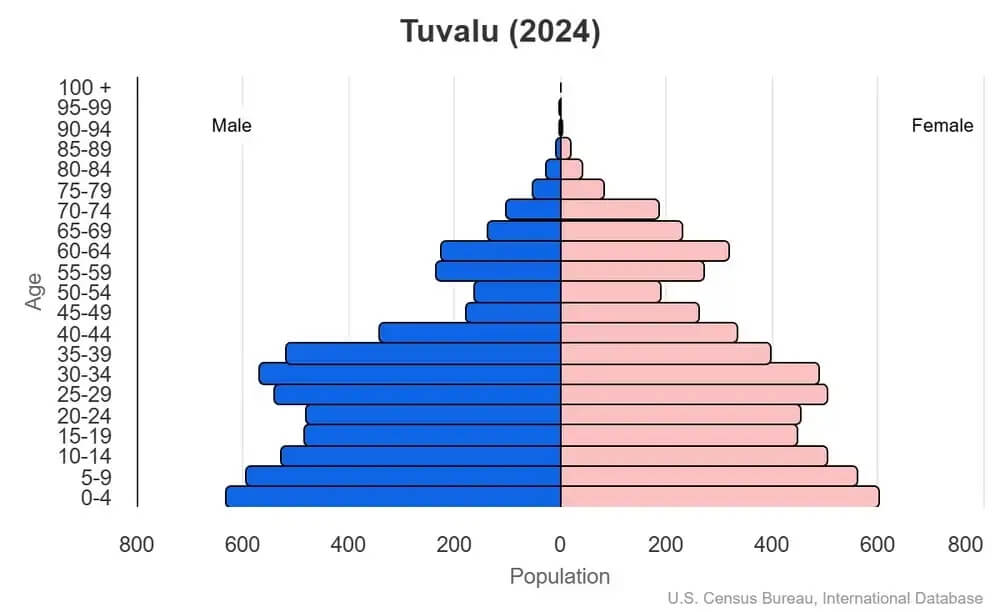
Tuvalu flag  Tuvalu location   Tuvalu map  Tuvalu population

Tuvalu

Introduction


Tuvalu, a small island nation in the Pacific Ocean, is characterized by its unique cultural heritage and historical significance. The islands were first settled by voyagers from Samoa or Tonga during the first millennium A.D., establishing a rich tapestry of traditions and community life. In 1892, the United Kingdom declared a protectorate over Tuvalu, integrating it with the Micronesian Gilbert Islands. Following a long journey towards self-determination, Tuvalu achieved independence in 1978, marking a pivotal moment in its history as it embraced its identity as a sovereign nation.

Neighboring countries


Fiji - Kiribati - Nauru - Samoa - Solomon Islands

Geography


Area
Total: 26 sq km
Land: 26 sq km
Water: 0 sq km

Tuvalu is an archipelago consisting of nine islands, situated in the central Pacific Ocean. Its total land area is a mere 26 square kilometers, making it one of the smallest countries in the world. The islands are characterized by their low-lying terrain, with the highest point being only a few meters above sea level, which renders them particularly vulnerable to the impacts of climate change and rising sea levels. The climate is tropical, moderated by easterly trade winds from March to November, while the period from November to March is marked by westerly gales and heavy rainfall. The natural resources of Tuvalu are limited, primarily consisting of fish and coconut (copra), which play a crucial role in the local economy and sustenance of the population.

People and Society


Population
Total: 11,733 (2024 estimated)

Ethnic groups
Tuvaluan 97%, Tuvaluan/I-Kiribati 1.6%, Tuvaluan/other 0.8%, other 0.6% (2017 estimated)

Languages
Tuvaluan (official), English (official), Samoan, Kiribati (on the island of Nui)

Religions
Protestant 92.7% (Congregational Christian Church of Tuvalu 85.9%, Brethren 2.8%, Seventh Day Adventist 2.5%, Assemblies of God 1.5%), Baha'i 1.5%, Jehovah's Witness 1.5%, other 3.9%, none or refused 0.4% (2017 estimated)

Population growth rate
0.78% (2024 estimated)

The population of Tuvalu is estimated at 11,733 in 2024, reflecting a modest growth rate of 0.78%. The demographic composition is predominantly Tuvaluan, with 97% of the population identifying as such. The linguistic landscape is characterized by the official languages of Tuvaluan and English, alongside the presence of Samoan and Kiribati on the island of Nui, highlighting the cultural diversity within this small nation. The religious affiliation is predominantly Protestant, with a significant majority belonging to the Congregational Christian Church of Tuvalu. This strong religious identity plays a vital role in shaping the social fabric and community life of Tuvaluans, influencing their values, traditions, and communal activities.

Government


Government type
Parliamentary democracy under a constitutional monarchy; a Commonwealth realm

Capital
Name: Funafuti

Executive branch
Chief of state: King CHARLES III (since 8 September 2022); represented by Governor General Tofiga Vaevalu FALANI (since 29 August 2021)
Head of government: Prime Minister Feleti Penitala TEO (since 27 February 2024)

Diplomatic representation in the US
Chief of mission: Ambassador Tapugao FALEFOU (since 19 April 2023); note - also Permanent Representative to UN

Tuvalu operates as a parliamentary democracy within the framework of a constitutional monarchy, recognizing the British monarch as the head of state. The capital, Funafuti, serves as the political and administrative center of the nation. The executive branch is led by the Prime Minister, currently Feleti Penitala TEO, who took office on 27 February 2024. The governance structure emphasizes democratic principles, with a focus on representation and accountability. Tuvalu's diplomatic representation in the United States is managed by Ambassador Tapugao FALEFOU, who also serves as the Permanent Representative to the United Nations, underscoring the country's engagement in international affairs.

Economy


Economic overview
Upper middle-income Pacific island economy; extremely environmentally fragile; currency pegged to Australian dollar; large international aid recipient; subsistence agrarian sector; Te Kakeega sustainable development; domain name licensing incomes

Real GDP (purchasing power parity)
$57.055 million (2023 estimated)
$54.938 million (2022 estimated)
$54.568 million (2021 estimated)

Real GDP per capita
$5,800 (2023 estimated)
$5,500 (2022 estimated)
$5,400 (2021 estimated)

Exports
$2.232 million (2022 estimated)
$2.745 million (2021 estimated)
$3.089 million (2020 estimated)

Exports - partners
Thailand 88%, Japan 6%, Philippines 3%, Ireland 1%, USA 1% (2023)

Exports - commodities
Fish (2023)

Imports
$57.388 million (2022 estimated)
$63.962 million (2021 estimated)
$56.947 million (2020 estimated)

Imports - partners
China 42%, Fiji 24%, Japan 11%, Australia 11%, NZ 4% (2023)

Imports - commodities
Ships, refined petroleum, iron structures, fish, hand tools (2023)

Tuvalu's economy is classified as an upper middle-income Pacific island economy, characterized by its extreme environmental fragility. The currency is pegged to the Australian dollar, which provides some stability in international markets. The nation is heavily reliant on international aid, which plays a critical role in supporting its economic framework. The subsistence agrarian sector remains vital for local livelihoods, while initiatives like Te Kakeega aim to promote sustainable development practices. In terms of economic performance, the real GDP (purchasing power parity) was estimated at $57.055 million in 2023, with a per capita GDP of $5,800. Exports, primarily consisting of fish, totaled $2.232 million in 2022, with Thailand being the largest trading partner. Conversely, imports amounted to $57.388 million in 2022, with China being the predominant source of goods. This economic landscape reflects the challenges and opportunities faced by Tuvalu as it navigates its development in a rapidly changing global environment.

Human Development Index


The country's Human Development Index (HDI) is 0.689, ranking it 129th out of 193 countries tested. (more information)


Detailed map of Tuvalu

Oceania

All countries

A summary of the country's situation with information on the country's geography, population, politics and economy.

How is the World Book Index calculated?

This website is based on information from The World Factbook 2025 Edition, UN reports, and The World Happiness Report.

Lastatlas offers you world maps translated into more than 23 languages.

Find detailed country maps and fact sheets for each country at Worldmappdf.com

Cookies | Terms of use | Contact | Sources | ©worldbook.app