World Book
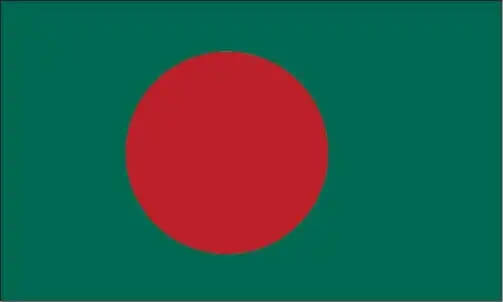
Bangladesh
World Book Index
53

With a score of 53, the country is ranked 116th out of 158 countries in the World Book ranking. (more information)
Introduction
Bangladesh, a nation steeped in history, emerged from the rich cultural tapestry of the Bengal region. The vast delta formed by the confluence of the Ganges and Brahmaputra rivers has been a cradle of civilization for centuries. Throughout much of the first millennium A.D., this area was a loosely incorporated outpost of various empires, reflecting a diverse heritage. The struggle for independence, marked by the Bengali independence movement led by the Awami League (AL) and supported by India, culminated in the establishment of Bangladesh as a sovereign state in 1971. Today, Bangladesh stands as a testament to resilience and cultural richness, navigating its path in the global arena with a unique identity.
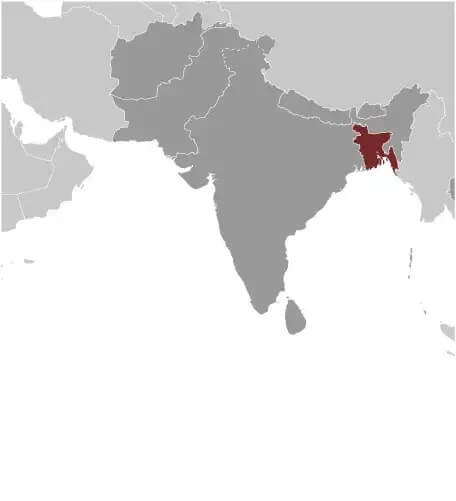
Neighboring countries
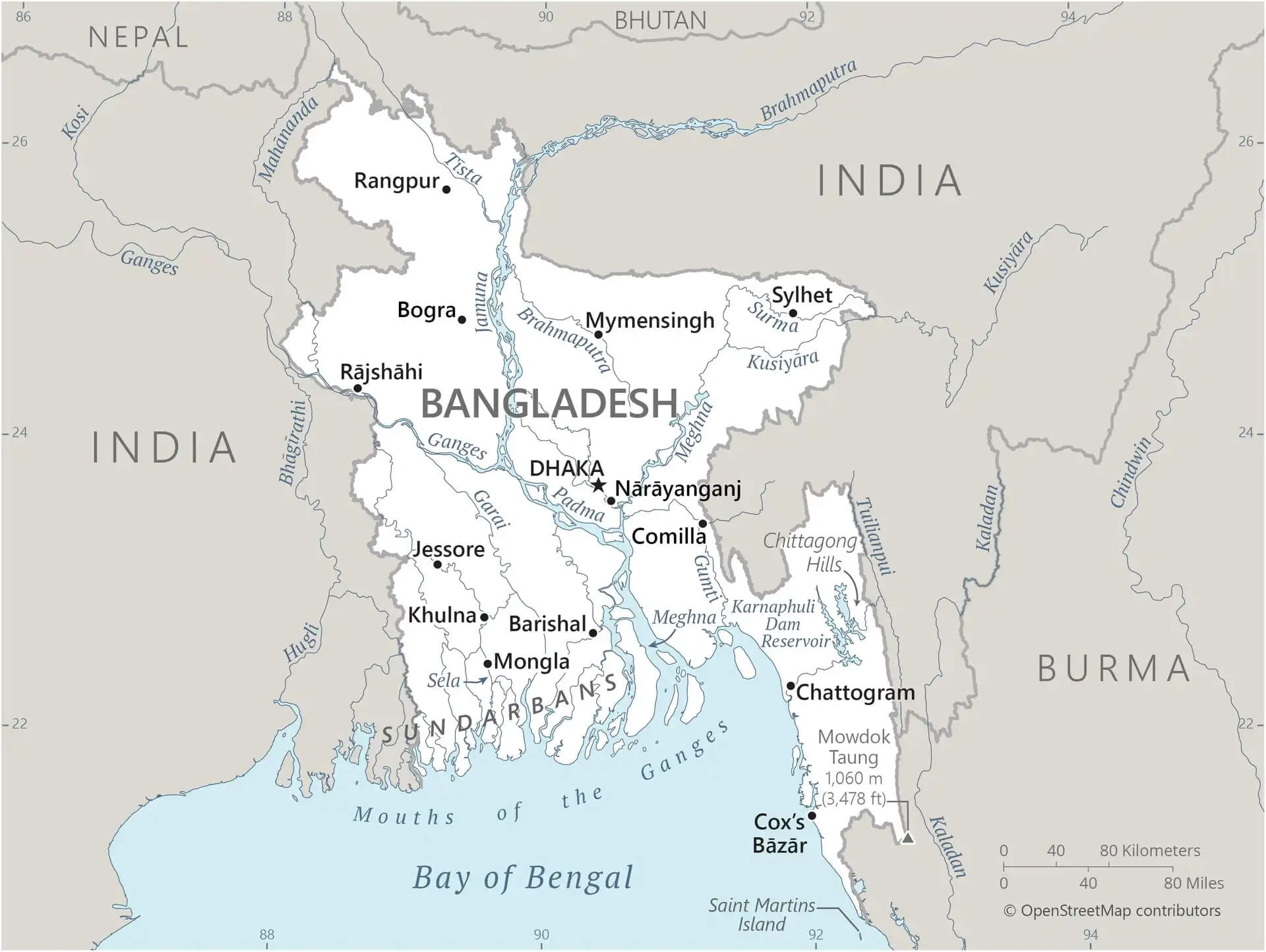
India - Burma
Geography
Area
Total: 148,460 sq km
Land: 130,170 sq km
Water: 18,290 sq km
Bangladesh is characterized by its unique geographical features, primarily shaped by the extensive river systems of the Ganges and Brahmaputra. The country is predominantly flat, with a landscape that includes fertile plains and numerous rivers, making it one of the most densely populated countries in the world. The tropical climate is marked by a mild winter from October to March, followed by a hot and humid summer from March to June, and a warm, rainy monsoon season from June to October. This climate supports a rich biodiversity and a variety of natural resources, including natural gas, arable land, timber, and coal, which are vital for the country's economic development.
People and Society
Population
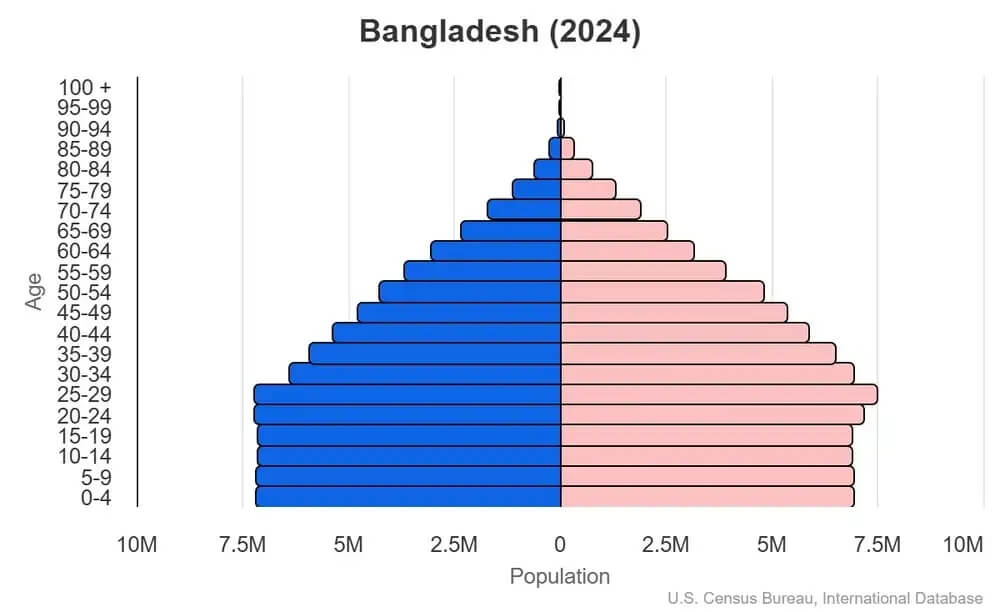
Total: 168,697,184 (2024 estimated)
Ethnic groups
Bengali at least 99%, other indigenous ethnic groups 1% (2022 estimated)
Languages
Bangla 98.8% (official, also known as Bengali), other 1.2% (2011 estimated)
Religions
Muslim 91%, Hindu 8%, other 1% (2022 estimated)
Population growth rate
0.89% (2024 estimated)
The demographic landscape of Bangladesh is predominantly shaped by its Bengali ethnic group, which constitutes at least 99% of the population. This homogeneity is complemented by a small percentage of indigenous groups, contributing to the cultural diversity of the nation. The official language, Bangla, is spoken by 98.8% of the population, reflecting a strong linguistic unity. The religious composition is primarily Muslim, accounting for 91% of the population, with Hindus making up 8% and other religions comprising the remaining 1%. The population growth rate of 0.89% indicates a gradual increase, which poses both opportunities and challenges for the nation's development, particularly in terms of resource allocation and social services.
Government
Government type
Parliamentary republic
Capital
Name: Dhaka
Executive branch
Chief of state: President Mohammad SHAHABUDDIN Chuppi (since 24 April 2023)
Head of government: Interim Prime Minister Muhammad YUNUS (since 8 August 2024)
Diplomatic representation in the US
Chief of mission: Ambassador Tareq Md Ariful ISLAM (since 5 September 2025)
Diplomatic representation from the US
Chief of mission: Ambassador (vacant); Chargé d’Affaires Ambassador Tracey Ann JACOBSEN (since 11 January 2025)
Bangladesh operates as a parliamentary republic, where the President serves as the head of state while the Prime Minister is the head of government. The capital city, Dhaka, is not only the political hub but also a vibrant center of culture and commerce. The current leadership, with President Mohammad SHAHABUDDIN Chuppi and Interim Prime Minister Muhammad YUNUS, reflects the dynamic political landscape of the country. Diplomatic relations, particularly with the United States, are crucial for Bangladesh, as evidenced by the appointments of key ambassadors, which play a significant role in fostering international cooperation and development.
Economy
Economic overview
Bangladesh is recognized as one of the fastest-growing emerging market economies in the world. The nation has experienced a robust economic rebound following the challenges posed by COVID-19, showcasing significant poverty reduction and resilience. The economy is heavily reliant on the textile industry, which dominates exports. However, recent trends indicate weakened exports and remittances, leading to declining foreign exchange reserves and prompting a request for an IMF loan in 2022. This economic landscape underscores the need for diversification and sustainable growth strategies.
Real GDP (purchasing power parity)
$1.473 trillion (2024 estimated)
$1.413 trillion (2023 estimated)
$1.336 trillion (2022 estimated)
Real GDP per capita
$8,500 (2024 estimated)
$8,200 (2023 estimated)
$7,900 (2022 estimated)
Exports
$53.848 billion (2024 estimated)
$58.885 billion (2023 estimated)
$60.066 billion (2022 estimated)
Exports - partners
USA 16%, Germany 15%, UK 8%, Spain 7%, Poland 6% (2023)
Exports - commodities
Garments, footwear, fabric, textiles, trunks and cases (2023)
Imports
$74.96 billion (2024 estimated)
$73.172 billion (2023 estimated)
$93.635 billion (2022 estimated)
Imports - partners
China 34%, India 17%, Indonesia 5%, Singapore 5%, Malaysia 4% (2023)
Imports - commodities
Refined petroleum, cotton fabric, natural gas, cotton, fabric (2023)
Human Development Index
The country's Human Development Index (HDI) is 0.685, ranking it 130th out of 193 countries tested. (more information)
World Happiness Report
The World Happiness Report ranked the country 138th out of 158 countries tested with a score of 3.886. (more information)