World Book Index
56

With a score of
56, the country is ranked
110th out of 158 countries in the World Book ranking. (
more information)
Introduction
Egypt, a country steeped in history and culture, is renowned for its ancient civilization that flourished along the banks of the Nile River. The annual flooding of the Nile provided fertile soil, enabling agriculture to thrive and supporting a burgeoning population. This unique geographical advantage, combined with the natural barriers of the surrounding deserts, facilitated the emergence of a unified kingdom around 3200 B.C. Over the centuries, Egypt has experienced a rich tapestry of foreign rule and influence, ultimately achieving independence in 1952. Today, it stands as a pivotal nation in both African and Middle Eastern geopolitics, with a vibrant culture that continues to captivate the world.
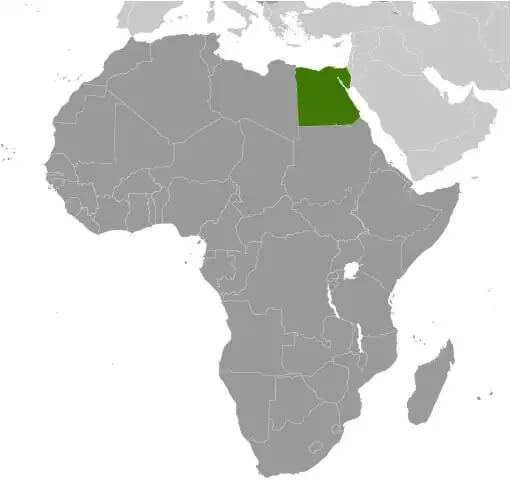
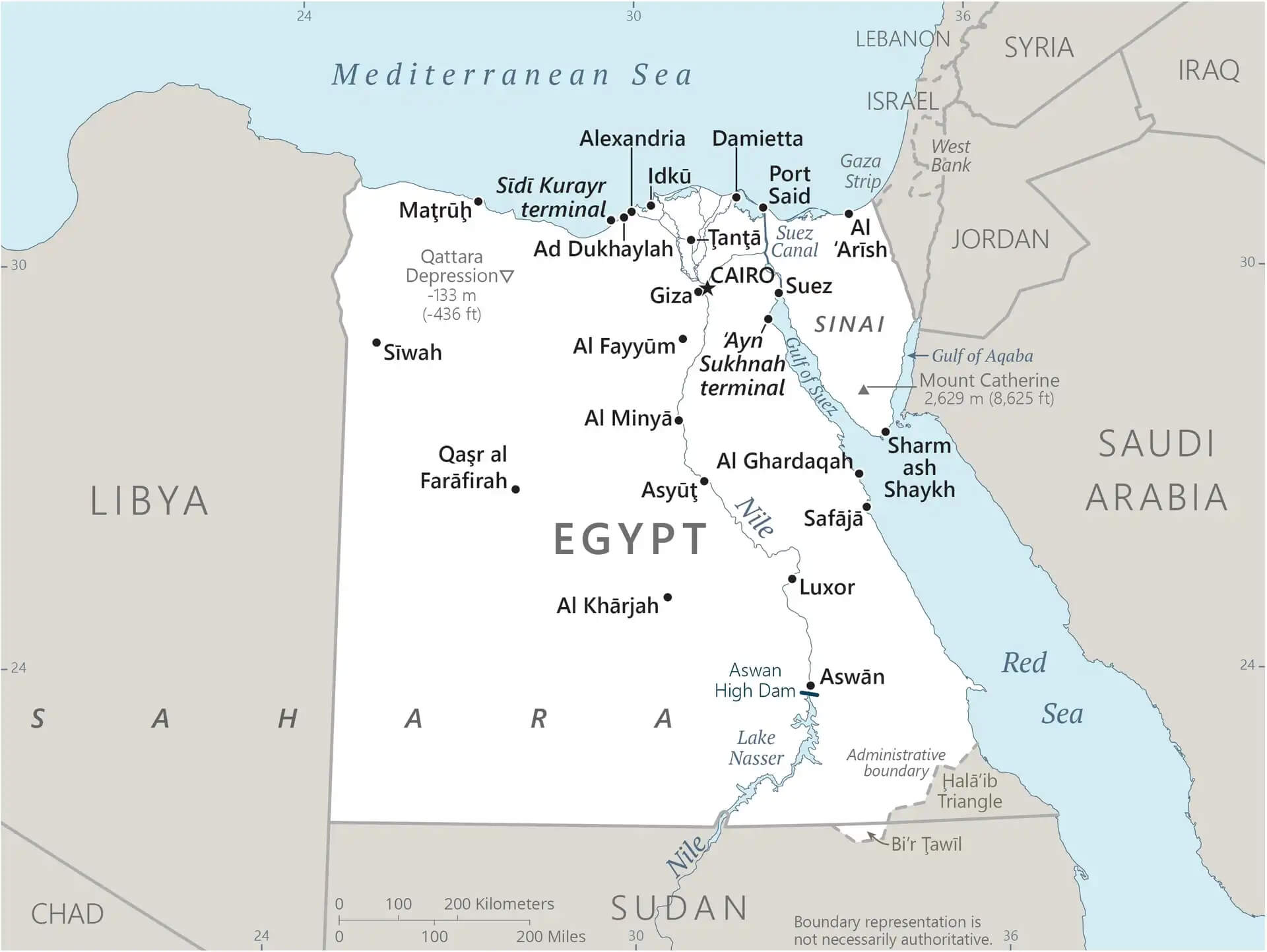
Neighboring countries
Gaza Strip -
Israel -
Libya -
Sudan
Geography
Area
Total: 1,001,450 sq km
Land: 995,450 sq km
Water: 6,000 sq km
Egypt is predominantly characterized by its vast desert landscapes, which encompass the majority of its territory. The country is bordered by the Mediterranean Sea to the north, providing a crucial outlet for trade and tourism. The Nile River, the lifeblood of Egypt, flows through the country from south to north, creating a fertile valley that supports agriculture and sustains the population. The climate is primarily desert, featuring hot, dry summers and moderate winters, which influences both the lifestyle and economic activities of its inhabitants. Rich in natural resources, Egypt possesses significant reserves of petroleum, natural gas, and various minerals, which play a vital role in its economy.
People and Society
Population
Total: 111,247,248 (2024 estimated)
Ethnic groups
Egyptian 99.7%, other 0.3% (2006 estimated)
Languages
Arabic (official); English and French widely understood by educated classes
Religions
Muslim (predominantly Sunni) 90%, Christian (majority Coptic Orthodox, other Christians include Armenian Apostolic, Catholic, Maronite, Orthodox, and Anglican) 10%
Population growth rate
1.49% (2024 estimated)
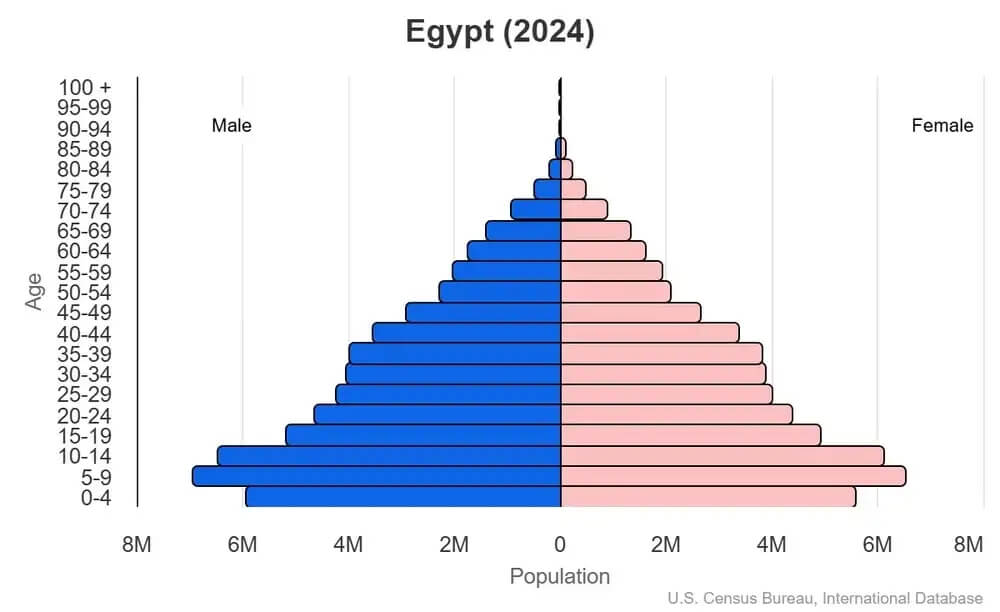
Egypt's population is predominantly Egyptian, with a small percentage of other ethnic groups. The official language is Arabic, reflecting the country's cultural heritage, while English and French are commonly spoken among the educated elite, facilitating international communication and business. The society is predominantly Muslim, with a significant Christian minority, primarily Coptic Orthodox. This religious diversity contributes to the rich cultural fabric of the nation. The population growth rate of 1.49% indicates a steady increase, posing both opportunities and challenges for the country in terms of resource allocation, education, and employment.
Government
Government type
Presidential republic
Capital
Name: Cairo
Executive branch
Chief of state: President Abdel Fattah EL-SISI (since 8 June 2014)
Head of government: Prime Minister Mostafa MADBOULY (since 7 June 2018)
Diplomatic representation in the US
Chief of mission: Ambassador Motaz Mounir ZAHRAN (since 17 September 2020)
Diplomatic representation from the US
Chief of mission: Ambassador Herro MUSTAFA GARG (since 15 November 2023)
Egypt operates as a presidential republic, where the President serves as both the head of state and government, wielding significant executive power. The capital city, Cairo, is not only the political center but also a cultural and economic hub. The current leadership under President Abdel Fattah EL-SISI has been marked by efforts to stabilize the country and implement economic reforms. The diplomatic landscape is characterized by active engagement with international partners, particularly the United States, which underscores Egypt's strategic importance in regional and global affairs.
Economy
Economic overview
Africa’s second-largest economy; 2030 Vision to diversify markets and energy infrastructure; improving fiscal, external, and current accounts; underperforming private sector; poor labor force participation; expanded credit access
Real GDP (purchasing power parity)
$1.958 trillion (2024 estimated)
$1.912 trillion (2023 estimated)
$1.842 trillion (2022 estimated)
Real GDP per capita
$16,800 (2024 estimated)
$16,700 (2023 estimated)
$16,400 (2022 estimated)
Exports
$68.218 billion (2023 estimated)
$76.295 billion (2022 estimated)
$58.339 billion (2021 estimated)
Exports - partners
Saudi Arabia 10%, Turkey 9%, Italy 6%, USA 5%, UAE 5% (2023)
Exports - commodities
Refined petroleum, natural gas, fertilizers, garments, crude petroleum (2023)
Imports
$82.265 billion (2023 estimated)
$97.144 billion (2022 estimated)
$94.039 billion (2021 estimated)
Imports - partners
China 16%, Saudi Arabia 6%, Russia 6%, USA 6%, Germany 5% (2023)
Imports - commodities
Refined petroleum, wheat, plastics, natural gas, packaged medicine (2023)
Egypt's economy is the second-largest in Africa, driven by a diverse range of sectors including energy, agriculture, and manufacturing. The government's 2030 Vision aims to enhance economic diversification and improve infrastructure, particularly in energy. Despite positive trends in fiscal and external accounts, challenges remain, particularly in the private sector's performance and labor force participation rates. The real GDP, estimated at $1.958 trillion in 2024, reflects a growing economy, with a per capita GDP of $16,800. Exports are a vital component of the economy, with key partners including Saudi Arabia and Turkey, while imports are dominated by China and Saudi Arabia. The balance of trade remains a critical area for economic policy as the country seeks to strengthen its economic resilience.
Human Development Index
The country's Human Development Index (HDI) is
0.754, ranking it
100th out of 193 countries tested. (
more information)
World Happiness Report
The World Happiness Report ranked the country
141st out of 158 countries tested with a score of
3.781. (
more information)
