World Book
Estonia
World Book Index
76

With a score of 76, the country is ranked 34th out of 158 countries in the World Book ranking. (more information)
Introduction
After centuries of Danish, Swedish, German, and Russian rule, Estonia attained independence in 1918. Forcibly incorporated into the USSR in 1940, it regained its freedom in 1991 with the collapse of the Soviet Union and has since joined NATO, the EU, and the OECD.
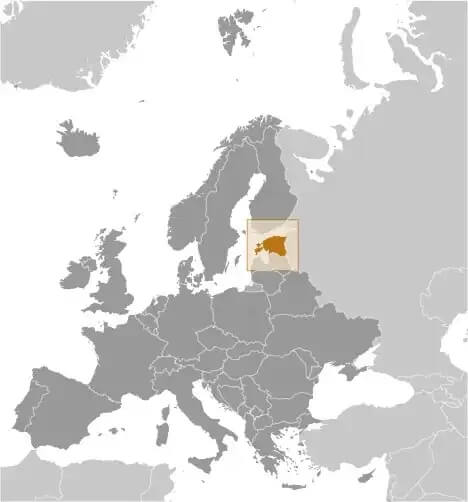
Neighboring countries
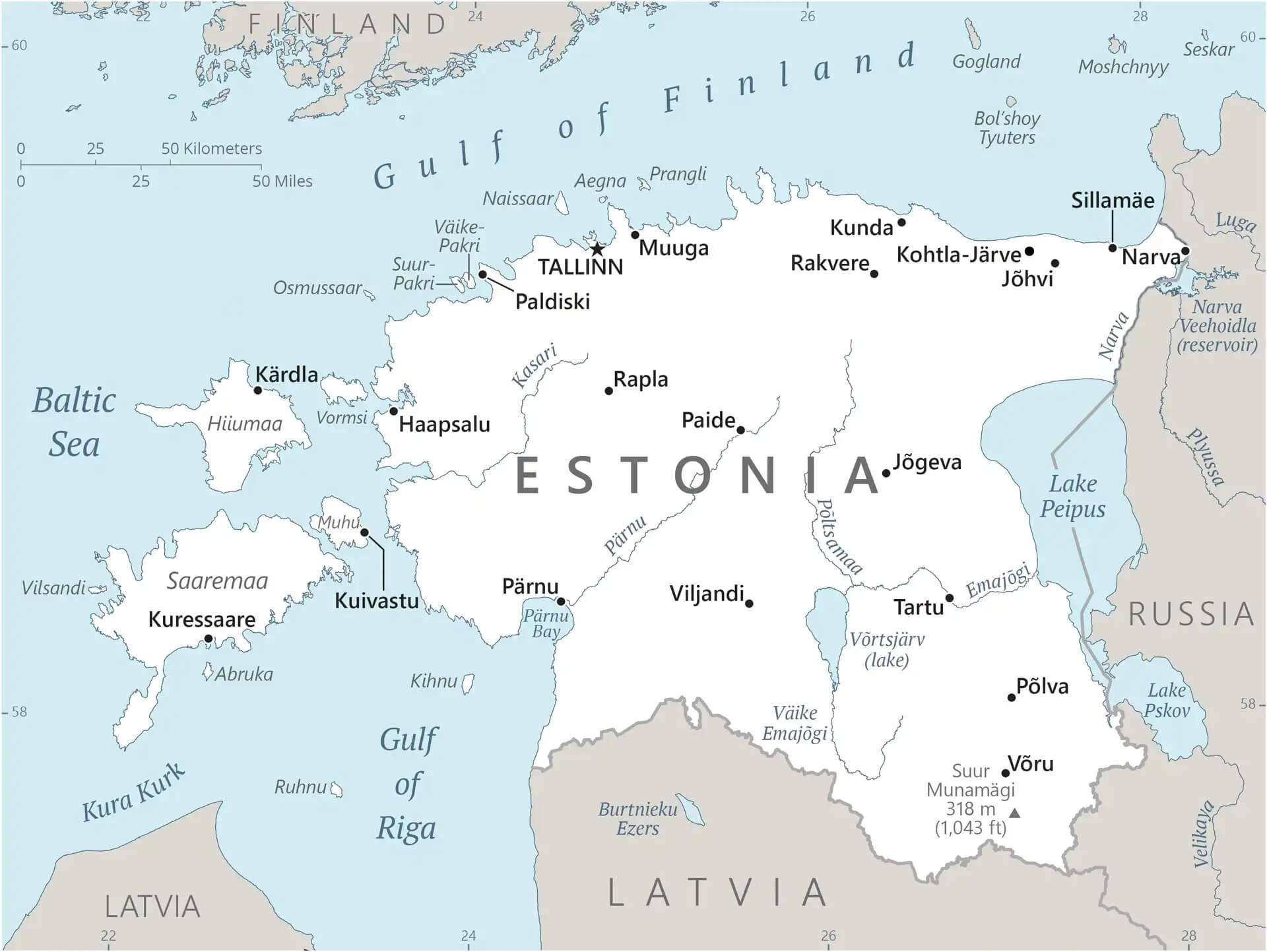
Latvia - Russia
Geography
Area
total: 45,228 sq km
land: 42,388 sq km
water: 2,840 sq km
Climate
maritime; wet, moderate winters, cool summers
Natural resources
oil shale, peat, rare earth elements, phosphorite, clay, limestone, sand, dolomite, arable land, sea mud
People and Society
Population
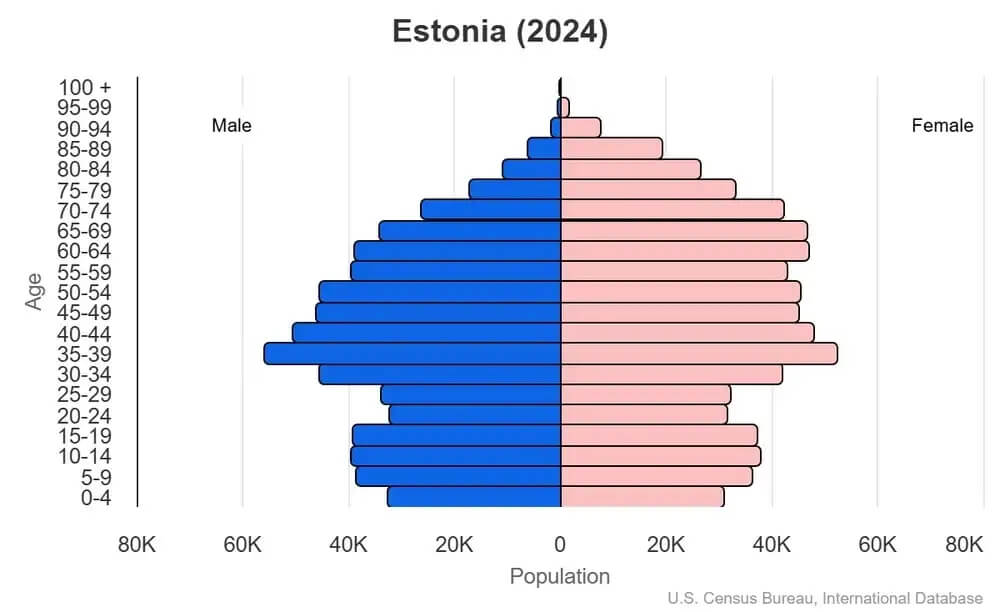
total: 1,193,791 (2024 est.)
Ethnic groups
Estonian 69.1%, Russian 23.7%, Ukrainian 2.1%, other 4.6%, unspecified 0.5% (2021 est.)
Languages
Estonian (official) 67.2%, Russian 28.5%, other 3.7%, unspecified 0.6% (2021est.)
Religions
Orthodox 16.5%, Protestant 9.2% (Lutheran 7.7%, other Protestant 1.5%), other 3% (includes Roman Catholic, Muslim, Jehovah's Witness, Pentecostal, Buddhist, and Taara Believer), none 58.4%, unspecified 12.9% (2021 est.)
Population growth rate
-0.76% (2024 est.)
Government
Government type
parliamentary republic
Capital
name: Tallinn
Executive branch
chief of state: President Alar KARIS (since 11 October 2021)
head of government: Prime Minister Kristen MICHAL (since 23 July 2024)
Diplomatic representation in the US
chief of mission: Ambassador Kristjan PRIKK (since 7 July 2021)
Diplomatic representation from the US
chief of mission: Ambassador (vacant); Chargé d’Affaires Matthew E. WALL (since January 2025)
Economy
Economic overview
high-income, service-based EU and eurozone economy; rebound in exports playing a role in economic recovery; rising food prices contributing to inflation; decrease in labor force participation and rising unemployment rate; recovery depends on boosting private investment and productivity rates
Real GDP (purchasing power parity)
$57.001 billion (2024 est.)
$57.15 billion (2023 est.)
$58.931 billion (2022 est.)
Real GDP per capita
$41,500 (2024 est.)
$41,700 (2023 est.)
$43,700 (2022 est.)
Exports
$32.637 billion (2024 est.)
$32.147 billion (2023 est.)
$33.178 billion (2022 est.)
Exports - partners
Finland 14%, Latvia 10%, Lithuania 9%, Sweden 7%, Russia 6% (2023)
Exports - commodities
cars, wood, broadcasting equipment, refined petroleum, prefabricated buildings (2023)
Imports
$32.375 billion (2024 est.)
$31.796 billion (2023 est.)
$33.655 billion (2022 est.)
Imports - partners
Finland 11%, Germany 11%, China 10%, Lithuania 6%, Poland 6% (2023)
Imports - commodities
cars, refined petroleum, broadcasting equipment, natural gas, packaged medicine (2023)
Human Development Index
The country's Human Development Index (HDI) is 0.905, ranking it 36th out of 193 countries tested. (more information)
World Happiness Report
The World Happiness Report ranked the country 44th out of 158 countries tested with a score of 6.284. (more information)