List of countries | Ranking
World Book
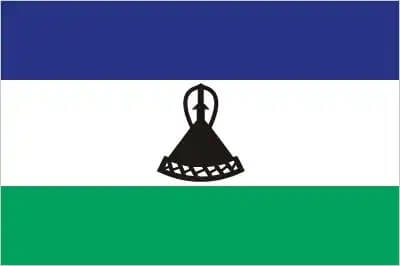
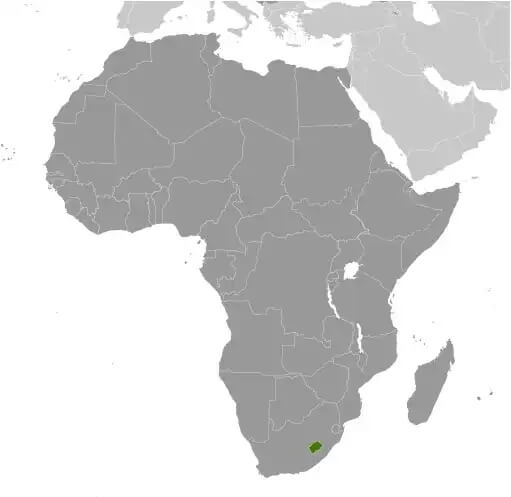
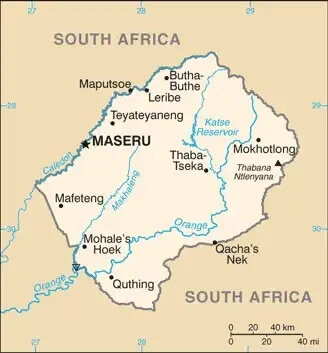
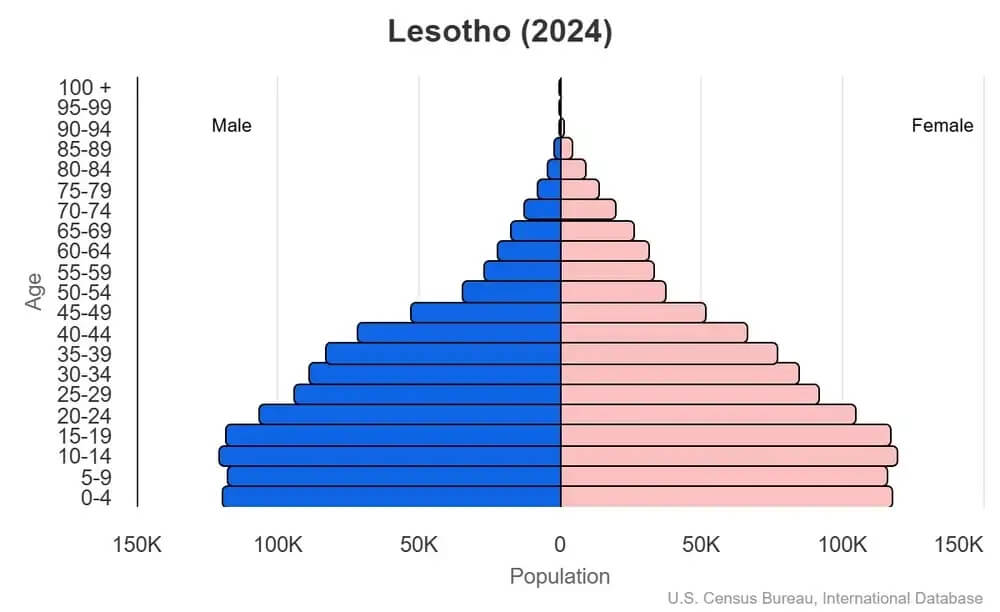
Lesotho flag  Lesotho location   Lesotho map  Lesotho population

Lesotho

World Book Index

44
World Book Index
With a score of 44, the country is ranked 146th out of 158 countries in the World Book ranking. (more information)

Introduction


Lesotho, formerly known as Basutoland, emerged as an independent nation in 1966 following its liberation from British colonial rule. The late 1990s marked a significant turning point for the country, as constitutional reforms were implemented to restore political stability after a period of turbulence. Today, Lesotho stands as a unique enclave within South Africa, characterized by its rich cultural heritage and resilient population, navigating the complexities of modern governance and development.

Neighboring country


South Africa

Geography


Area
Total: 30,355 sq km
Land: 30,355 sq km
Water: 0 sq km

Lesotho is a landlocked country situated entirely within the Southern African region, surrounded by the Republic of South Africa. Its topography is predominantly mountainous, with the Maloti Mountains dominating the landscape, which contributes to its unique climatic conditions. The climate is temperate, featuring cool to cold, dry winters and hot, wet summers, which significantly influences agricultural practices and water resource management. The country is endowed with natural resources, including water, agricultural and grazing land, diamonds, sand, clay, and building stone, which are vital for its economy and development.

People and Society


Population
Total: 2,227,548 (2024 estimated)

Ethnic groups
Sotho 99.7%, other 0.3% (includes Kwena, Nguni (Hlubi and Phuthi), Zulu)

Languages
Sesotho (official), English (official), Phuthi, Xhosa, Zulu

Religions
Protestant 47.8% (Pentecostal 23.1%, Lesotho Evangelical 17.3%, Anglican 7.4%), Roman Catholic 39.3%, other Christian 9.1%, non-Christian 1.4%, none 2.3% (2014 estimated)

Population growth rate
0.76% (2024 estimated)

Lesotho's population is predominantly composed of the Sotho ethnic group, which constitutes 99.7% of the total demographic. The official languages, Sesotho and English, reflect the country's colonial history and cultural identity. The religious landscape is diverse, with a significant majority identifying as Protestant, alongside a notable Roman Catholic presence. The population growth rate of 0.76% indicates a gradual increase, which poses both opportunities and challenges for the nation's socio-economic development, particularly in education, healthcare, and employment sectors.

Government


Government type
Parliamentary constitutional monarchy

Capital
Name: Maseru

Executive branch
Chief of state: King LETSIE III (since 7 February 1996)
Head of government: Prime Minister Ntsokoane Samuel MATEKANE (28 October 2022)

Diplomatic representation in the US
Chief of mission: Ambassador Tumisang MOSOTHO (since 16 September 2022)

Diplomatic representation from the US
Chief of mission: Ambassador (vacant); Chargé d'Affaires Thomas HINES (since August 2024)

Lesotho operates as a parliamentary constitutional monarchy, where the King serves as the ceremonial head of state while the Prime Minister holds executive powers. The capital city, Maseru, is the political and administrative center of the country. The current monarch, King Letsie III, has been in power since 1996, while the Prime Minister, Ntsokoane Samuel Matekane, took office in late 2022. The government structure aims to balance traditional leadership with modern democratic principles, although it faces challenges related to political stability and governance.

Economy


Economic overview
Lesotho's economy is classified as a lower middle-income economy, heavily influenced by its geographical position surrounded by South Africa. The nation grapples with environmental fragility and political instability, which hinder sustainable development. Key investments in infrastructure and renewable energy are crucial for economic resilience. The COVID-19 pandemic has exacerbated existing challenges, leading to significant urban job losses and increased poverty levels. Systemic corruption remains a critical issue, undermining efforts for economic reform and growth.

Real GDP (purchasing power parity)
$6.166 billion (2024 estimated)
$6 billion (2023 estimated)
$5.893 billion (2022 estimated)

Real GDP per capita
$2,600 (2024 estimated)
$2,600 (2023 estimated)
$2,600 (2022 estimated)

Exports
$983.027 million (2024 estimated)
$885.789 million (2023 estimated)
$1.07 billion (2022 estimated)

Exports - partners
South Africa 31%, Belgium 26%, USA 20%, UAE 8%, India 8% (2023)

Exports - commodities
Diamonds, garments, wool, power equipment, bedding (2023)

Imports
$2.083 billion (2024 estimated)
$2.077 billion (2023 estimated)
$2.247 billion (2022 estimated)

Imports - partners
South Africa 78%, China 10%, Taiwan 3%, Japan 1%, India 1% (2023)

Imports - commodities
Refined petroleum, fabric, trucks, garments, cotton fabric (2023)

Human Development Index


The country's Human Development Index (HDI) is 0.550, ranking it 167th out of 193 countries tested. (more information)

World Happiness Report


The World Happiness Report ranked the country 153th out of 158 countries tested with a score of 3.341. (more information)


Detailed map of Lesotho

Africa

All countries

A summary of the country's situation with information on the country's geography, population, politics and economy.

How is the World Book Index calculated?

This website is based on information from The World Factbook 2025 Edition, UN reports, and The World Happiness Report.

Lastatlas offers you world maps translated into more than 23 languages.

Find detailed country maps and fact sheets for each country at Worldmappdf.com

Cookies | Terms of use | Contact | Sources | ©worldbook.app
