World Book
Moldova
World Book Index
72

With a score of 72, the country is ranked 56th out of 158 countries in the World Book ranking. (more information)
Introduction
Moldova, a landlocked nation in Eastern Europe, has a rich and complex history that has shaped its cultural and political landscape. A significant portion of its territory was part of the Russian Empire in 1812, later unifying with Romania in 1918 following World War I. However, this union was short-lived, as the region was absorbed into the Soviet Union after World War II. Since gaining independence in 1991, Moldova has navigated a challenging path toward establishing its national identity and sovereignty, marked by ongoing political and economic reforms.
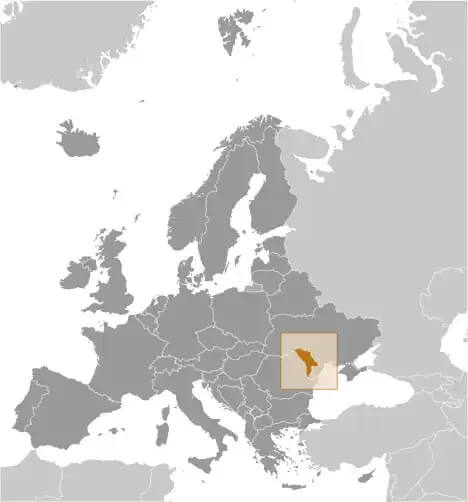
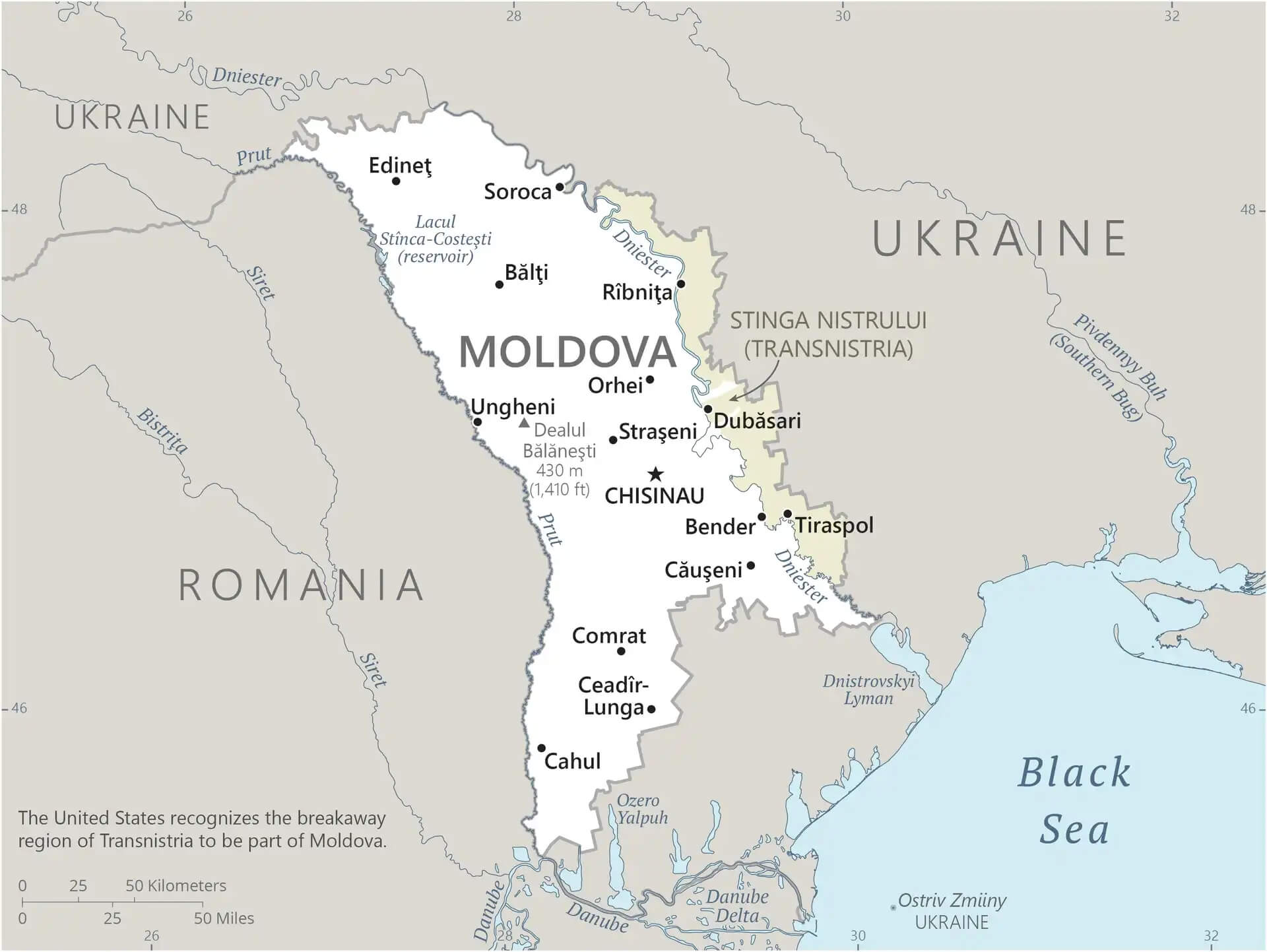
Neighboring countries
Romania - Ukraine
Geography
Area
Total: 33,851 sq km
Land: 32,891 sq km
Water: 960 sq km
Moldova is characterized by its diverse geography, which includes rolling hills, fertile plains, and river valleys. The country's total area of 33,851 sq km is predominantly land, with 32,891 sq km of terrestrial space and 960 sq km covered by water bodies. The climate is classified as moderate, featuring cold winters and warm summers, which supports a variety of agricultural activities. The nation is endowed with natural resources such as lignite, phosphorites, gypsum, limestone, and extensive arable land, making it a significant player in the agricultural sector of the region.
People and Society
Population
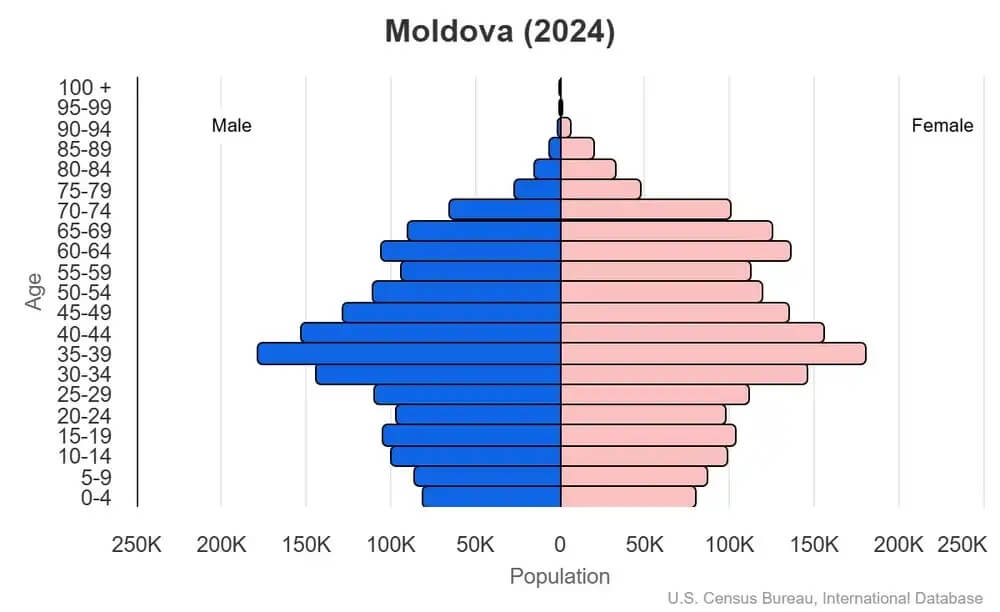
Total: 3,599,528 (2024 estimated)
Ethnic groups
Moldovan 75.1%, Romanian 7%, Ukrainian 6.6%, Gagauz 4.6%, Russian 4.1%, Bulgarian 1.9%, other 0.8% (2014 estimated)
Languages
Moldovan/Romanian 80.2% (official) (56.7% Moldovan; 23.5% Romanian), Russian 9.7%, Gagauz 4.2% (a Turkish language), Ukrainian 3.9%, Bulgarian 1.5%, Romani 0.3%, other 0.2% (2014)
Religions
Orthodox 90.1%, other Christian 2.6%, other 0.1%, agnostic <0.1%, atheist 0.2%, unspecified 6.9% (2014 estimated)
Population growth rate
-0.58% (2024 estimated)
Moldova's population, estimated at 3,599,528 in 2024, reflects a diverse ethnic composition, with Moldovans making up 75.1% of the populace, followed by significant Romanian, Ukrainian, and Gagauz communities. The official languages, Moldovan and Romanian, are spoken by 80.2% of the population, highlighting the cultural ties to Romania. The country is predominantly Orthodox Christian, with 90.1% of the population adhering to this faith. However, Moldova faces demographic challenges, including a negative population growth rate of -0.58%, driven by emigration and low fertility rates, which could impact its future socio-economic landscape.
Government
Government type
Parliamentary republic
Capital
Name: Chisinau in Romanian (Kishinev in Russian)
Executive branch
Chief of state: President Maia SANDU (since 24 December 2020)
Head of government: Prime Minister Dorin RECEAN (since 16 February 2023)
Diplomatic representation in the US
Chief of mission: Ambassador Vladislav KULMINSKI (since 5 September 2025)
Diplomatic representation from the US
Chief of mission: Ambassador (vacant); Chargé d’Affaires Nick PIETROWICZ (since 2025)
Moldova operates as a parliamentary republic, where the President serves as the head of state and the Prime Minister acts as the head of government. The capital city, Chisinau, is the political and administrative center of the country. The current President, Maia Sandu, has been in office since December 2020, while Prime Minister Dorin Recean has been leading the government since February 2023. Moldova maintains diplomatic relations with various countries, including the United States, where it is represented by Ambassador Vladislav Kulminski.
Economy
Economic overview
Upper middle-income Eastern European economy; sustained growth reversed by COVID-19; significant remittances; Russian energy and regional dependence; agricultural exporter; declining workforce due to emigration and low fertility
Real GDP (purchasing power parity)
$39.342 billion (2024 estimated)
$39.301 billion (2023 estimated)
$38.835 billion (2022 estimated)
Real GDP per capita
$16,500 (2024 estimated)
$16,000 (2023 estimated)
$15,400 (2022 estimated)
Exports
$5.717 billion (2024 estimated)
$5.866 billion (2023 estimated)
$5.981 billion (2022 estimated)
Exports - partners
Romania 31%, Ukraine 13%, Italy 6%, Germany 6%, Czechia 4% (2023)
Exports - commodities
Insulated wire, garments, refined petroleum, seed oils, wheat (2023)
Imports
$10.418 billion (2024 estimated)
$9.84 billion (2023 estimated)
$10.265 billion (2022 estimated)
Imports - partners
Romania 16%, Ukraine 13%, China 11%, Turkey 8%, Germany 7% (2023)
Imports - commodities
Refined petroleum, natural gas, cars, packaged medicine, plastic products (2023)
Moldova's economy is classified as an upper middle-income economy within Eastern Europe, characterized by a mix of agricultural exports and significant remittances from Moldovans working abroad. The country's real GDP is projected to reach $39.342 billion in 2024, reflecting a gradual recovery from the economic disruptions caused by the COVID-19 pandemic. The GDP per capita is estimated at $16,500, indicating a modest standard of living. Moldova's export landscape is dominated by agricultural products, with Romania being its largest trading partner, accounting for 31% of total exports. However, the economy faces challenges, including a declining workforce due to emigration and low fertility rates, which could hinder long-term growth and sustainability.
Human Development Index
The country's Human Development Index (HDI) is 0.785, ranking it 86th out of 193 countries tested. (more information)
World Happiness Report
The World Happiness Report ranked the country 28th out of 158 countries tested with a score of 6.594. (more information)