World Book
Palau
Introduction
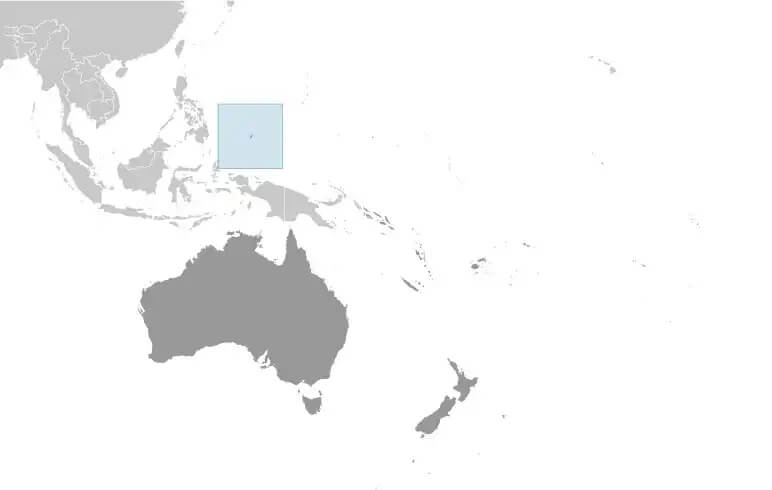
Palau, a stunning archipelago located in the western Pacific Ocean, has a rich history shaped by its unique cultural heritage and strategic geopolitical significance. After three decades as part of the UN Trust Territory of the Pacific under US administration, this westernmost cluster of the Caroline Islands opted not to join the Federated States of Micronesia in 1978. The Compact of Free Association with the United States, approved in 1986, was ratified in 1993 and has since played a crucial role in shaping Palau's political and economic landscape. This relationship has fostered a sense of autonomy while ensuring continued support from the US, making Palau a distinctive player in the Pacific region.
Neighboring countries
Indonesia - Micronesia - Philippines
Geography
Area
Total: 459 sq km
Land: 459 sq km
Water: 0 sq km
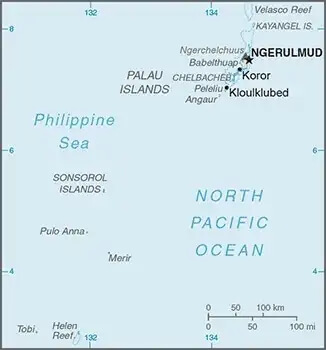
Palau is an archipelago consisting of over 500 islands, with a total land area of 459 square kilometers. The islands are characterized by their lush tropical landscapes, surrounded by vibrant coral reefs and clear blue waters. The climate is tropical, marked by hot and humid conditions, with a distinct wet season from May to November. This geographical setting not only supports a rich biodiversity but also presents challenges related to environmental sustainability and climate change. The natural resources of Palau include forests, minerals—particularly gold—and marine products, alongside deep-seabed minerals, which are crucial for the country's economic development.
People and Society
Population
Total: 21,864 (2024 estimated)
Ethnic groups
Palauan (Micronesian with Malayan and Melanesian admixtures) 70.6%, Carolinian 1.2%, Asian 26.5%, other 1.7% (2020 estimated)
Languages
Palauan (official on most islands) 65.2%, other Micronesian 1.9%, English (official) 19.1%, Filipino 9.9%, Chinese 1.2%, other 2.8% (2015 estimated)
Religions
Roman Catholic 46.9%, Protestant 30.9% (Evangelical 24.6%, Seventh Day Adventist 5%, other Protestant 1.4%), Modekngei 5.1% (indigenous to Palau), Muslim 4.9%, other 12.3% (2020 estimated)
Population growth rate
0.38% (2024 estimated)
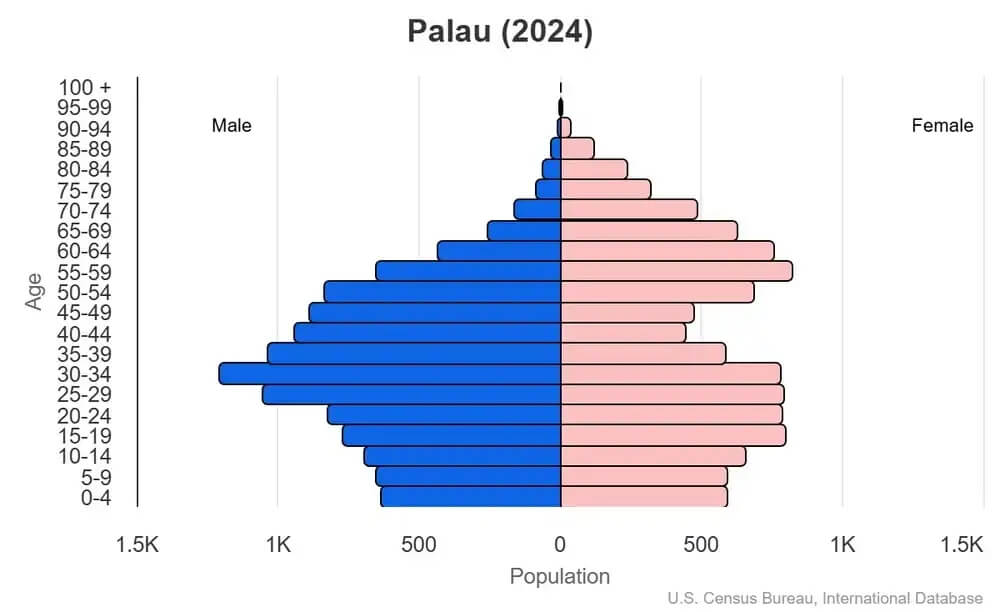
Palau's population, estimated at 21,864 in 2024, reflects a diverse cultural tapestry. The majority of the population identifies as Palauan, with significant Asian communities contributing to the multicultural landscape. The official languages, Palauan and English, facilitate communication and governance, while the prevalence of various religions, including Roman Catholicism and Protestantism, highlights the spiritual diversity of the nation. The population growth rate of 0.38% indicates a stable demographic trend, which is essential for planning and development in this small island nation.
Government
Government type
Presidential republic in free association with the US
Capital
Name: Ngerulmud
Executive branch
Chief of state: President Surangel WHIPPS, Jr. (since 21 January 2021)
Head of government: President Surangel WHIPPS, Jr. (since 21 January 2021)
Diplomatic representation in the US
Chief of mission: Ambassador Hersey KYOTA (since 12 November 1997)
Diplomatic representation from the US
Chief of mission: Ambassador Joel EHRENDREICH (since 29 September 2023)
Palau operates as a presidential republic, maintaining a unique status of free association with the United States. The capital, Ngerulmud, serves as the political hub of the nation. The executive branch is led by President Surangel WHIPPS, Jr., who has been in office since January 21, 2021. This governance structure allows for a degree of autonomy while benefiting from the strategic partnership with the US, which includes diplomatic representation and support. The long-standing ambassadorial relationships further solidify Palau's position on the international stage.
Economy
Economic overview
High-income Pacific island economy; environmentally fragile; subsistence agriculture and fishing industries; US aid reliance; rebounding post-pandemic tourism industry and services sector; very high living standard and low unemployment
Real GDP (purchasing power parity)
$280.025 million (2023 estimated)
$274.866 million (2022 estimated)
$278.538 million (2021 estimated)
Real GDP per capita
$15,800 (2023 estimated)
$15,500 (2022 estimated)
$15,700 (2021 estimated)
Exports
$24.48 million (2022 estimated)
$10.566 million (2021 estimated)
$52.897 million (2020 estimated)
Exports - partners
India 41%, Turkey 26%, Taiwan 10%, USA 9%, Japan 5% (2023)
Exports - commodities
Ships, refined petroleum (2023)
Imports
$216.681 million (2022 estimated)
$169.938 million (2021 estimated)
$207.224 million (2020 estimated)
Imports - partners
Italy 32%, China 25%, USA 11%, Turkey 10%, Japan 6% (2023)
Imports - commodities
Ships, refined petroleum, additive manufacturing machines, cars, plastic products (2023)
Palau's economy is classified as a high-income Pacific island economy, characterized by its environmental fragility and reliance on subsistence agriculture and fishing industries. The nation has historically depended on US aid, which has been pivotal in maintaining its economic stability. Following the challenges posed by the COVID-19 pandemic, the tourism industry is showing signs of recovery, contributing positively to the services sector. With a real GDP of $280.025 million in 2023 and a per capita GDP of $15,800, Palau enjoys a very high standard of living and low unemployment rates. The export landscape is diverse, with significant contributions from India, Turkey, and Taiwan, while imports are dominated by Italy and China, reflecting the interconnectedness of Palau's economy with global markets.
Human Development Index
The country's Human Development Index (HDI) is 0.786, ranking it 84th out of 193 countries tested. (more information)