World Book
Saint Kitts and Nevis
Introduction
Saint Kitts and Nevis, a picturesque twin-island nation in the Caribbean, boasts a rich history that dates back to the Carib Indians, who inhabited these lands for centuries prior to European colonization. The islands were first settled by the British and French in 1623, marking the beginning of a complex colonial history. After a long journey towards self-governance, Saint Kitts and Nevis achieved independence in 1983, establishing itself as a sovereign nation while maintaining its status as a Commonwealth realm under the British monarchy. This unique blend of cultural influences and historical legacies continues to shape the identity of the islands today.
Neighboring country
Antigua and Barbuda
Geography
Area
Total: 261 sq km
Land: 261 sq km
Water: 0 sq km
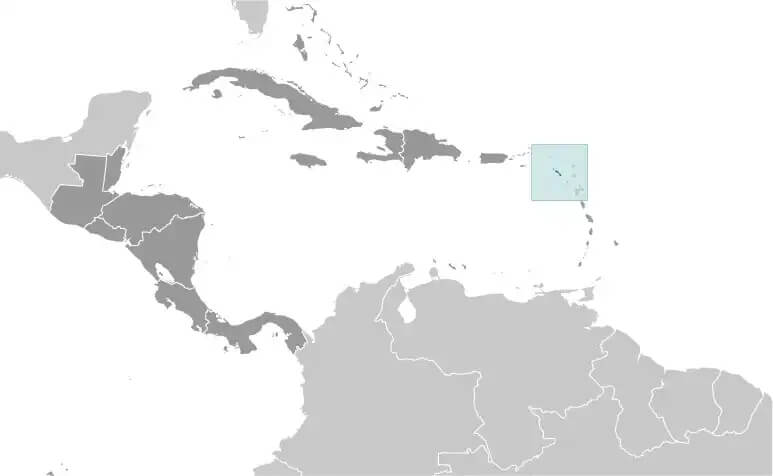
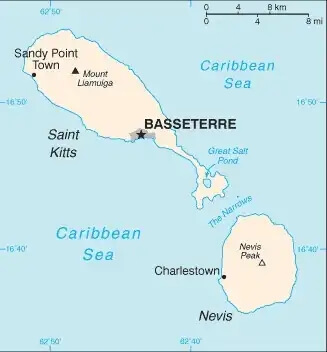
The geography of Saint Kitts and Nevis is characterized by its stunning landscapes and tropical climate. The islands are situated in the Leeward Islands of the West Indies, surrounded by the azure waters of the Caribbean Sea. The terrain is predominantly volcanic, with lush hills and valleys that provide a striking contrast to the coastal areas. The climate is tropical, moderated by consistent sea breezes, which results in minimal seasonal temperature variation. The rainy season, occurring from May to November, brings vital precipitation that supports the islands' diverse ecosystems. The natural resources of Saint Kitts and Nevis include arable land, which is essential for agriculture and sustains the local economy.
People and Society
Population
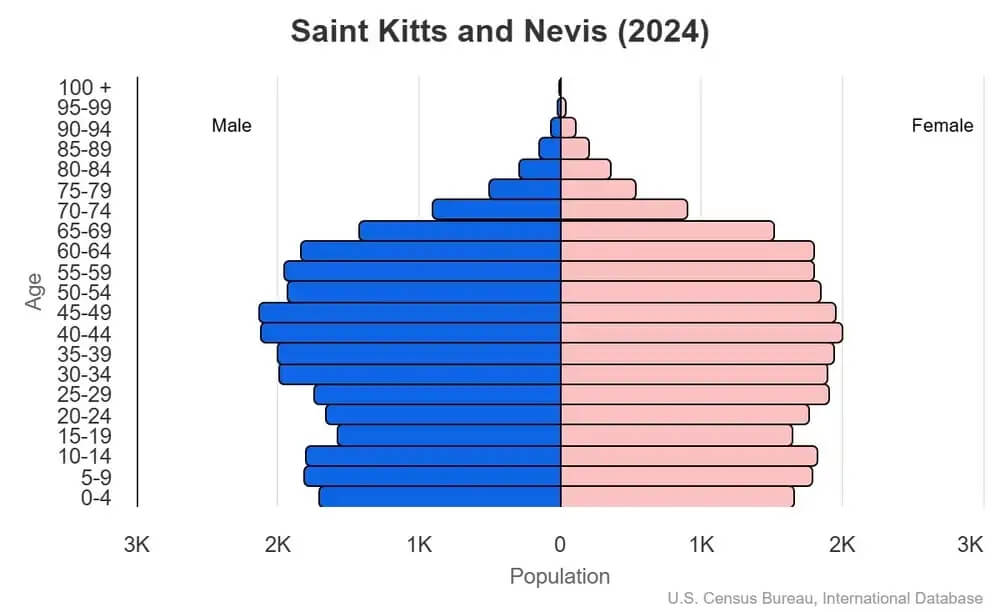
Total: 55,133 (2024 estimated)
The demographic landscape of Saint Kitts and Nevis is predominantly composed of individuals of African descent, accounting for 92.5% of the population. The society is characterized by a rich tapestry of cultural influences, with mixed heritage (3%), White (2.1%), East Indian (1.5%), and other ethnic groups (0.6%) contributing to the national identity. English is the official language, facilitating communication and governance. The religious composition is diverse, with Protestant denominations representing 75.6% of the population, including Anglican, Methodist, and Pentecostal faiths. Roman Catholicism and Hinduism also have a presence, reflecting the islands' multicultural heritage. The population growth rate stands at 0.56% (2024 estimated), indicating a stable demographic trend in this small island nation.
Government
Government type
Federal parliamentary democracy under a constitutional monarchy; a Commonwealth realm
The governance of Saint Kitts and Nevis operates as a federal parliamentary democracy, functioning under the framework of a constitutional monarchy. The capital city, Basseterre, serves as the political and administrative center of the nation. The chief of state is King Charles III, who has been in this role since 8 September 2022, and is represented locally by Governor General Marcella Liburd, who took office on 1 February 2023. The head of government is Prime Minister Dr. Terrance Drew, who has been in office since 6 August 2022. This political structure reflects the islands' historical ties to the United Kingdom while allowing for local governance and representation.
Diplomatic representation in the US
Chief of mission: Ambassador Jacinth Henry-Martin (since 15 September 2023)
Economy
Economic overview
Saint Kitts and Nevis operates a high-income, tourism-based economy that is part of the Organisation of Eastern Caribbean States (OECS). The nation has made significant strides in better debt management and economic balancing, positioning itself as a growing offshore financial and telecommunications hub. However, the economy remains environmentally fragile, necessitating sustainable practices to protect its natural resources. A unique aspect of the economic landscape is the citizenship-driven growth model, which has attracted foreign investment and contributed to the overall economic development.
Real GDP (purchasing power parity)
$1.465 billion (2024 estimated)
$1.448 billion (2023 estimated)
$1.388 billion (2022 estimated)
Real GDP per capita
$31,300 (2024 estimated)
$31,000 (2023 estimated)
$29,700 (2022 estimated)
Exports
$504.391 million (2024 estimated)
$579.568 million (2023 estimated)
$542.983 million (2022 estimated)
Exports - partners
Malta 49%, USA 21%, Turkey 7%, St. Vincent & the Grenadines 5%, Guyana 3% (2023)
Exports - commodities
Ships, measuring instruments, beer, electrical transformers, electrical control boards (2023)
Imports
$642.934 million (2024 estimated)
$669.168 million (2023 estimated)
$606.856 million (2022 estimated)
Imports - partners
USA 50%, Italy 11%, China 8%, Japan 2%, UK 2% (2023)
Imports - commodities
Refined petroleum, ships, cars, jewelry, poultry (2023)
Human Development Index
The country's Human Development Index (HDI) is 0.840, ranking it 58th out of 193 countries tested. (more information)