List of countries | Ranking
World Book
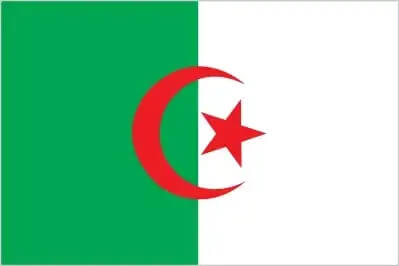
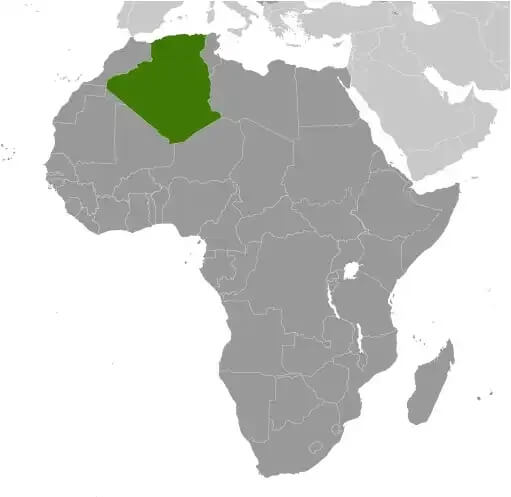
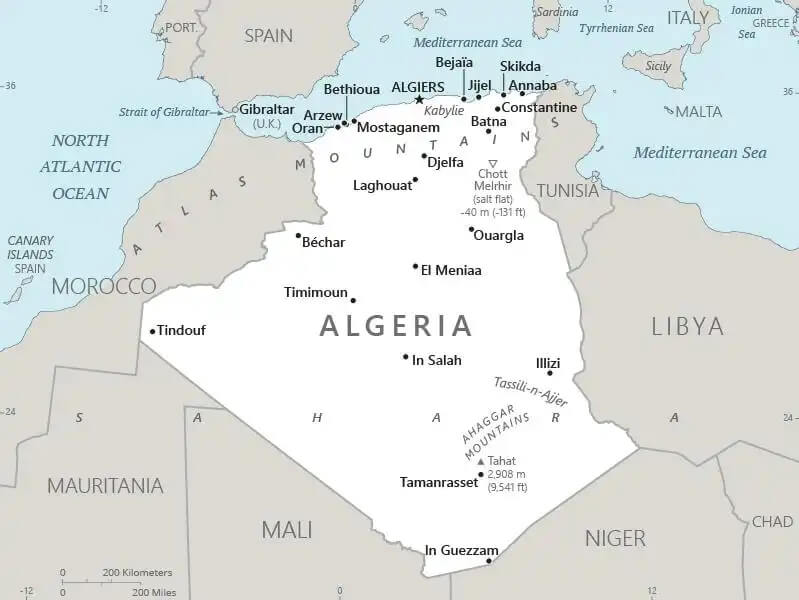
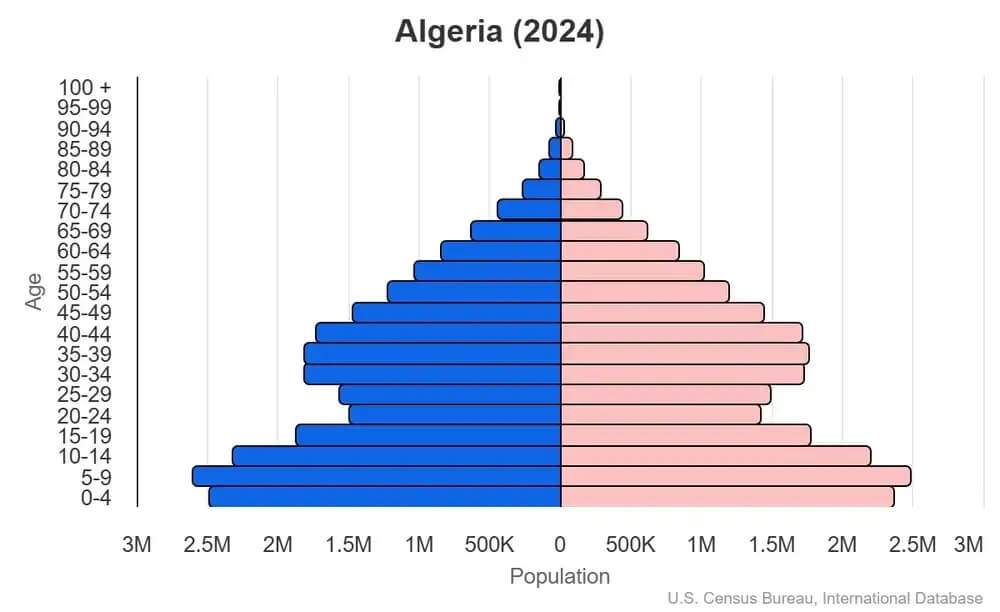
Algeria flag  Algeria location   Algeria map  Algeria population

Algeria

World Book Index

63
World Book Index
With a score of 63, the country is ranked 92nd out of 158 countries in the World Book ranking. (more information)

Introduction


Algeria, the largest country in Africa, boasts a rich history shaped by its colonial past and a resilient spirit. Following a protracted and bloody struggle for independence from French colonial rule, which lasted eight years and concluded in 1962, Algeria emerged as a sovereign nation. This historical backdrop has profoundly influenced its national identity and socio-political landscape, fostering a sense of unity and pride among its citizens. Today, Algeria stands at a crossroads, navigating the complexities of modern governance while honoring its storied heritage.

Neighboring countries


Libya - Niger - Mali - Mauritania - Morocco - Tunisia

Geography


Area
Total: 2,381,740 sq km
Land: 2,381,740 sq km
Water: 0 sq km

Climate
Algeria's climate ranges from arid to semiarid, characterized by mild, wet winters and hot, dry summers along the coast. The interior high plateau experiences drier conditions, with cold winters and scorching summers. A notable climatic feature is the sirocco, a hot wind laden with dust and sand, which is particularly prevalent during the summer months, impacting both the environment and daily life.

Natural resources
Algeria is endowed with significant natural resources, including petroleum, natural gas, iron ore, phosphates, uranium, lead, and zinc. These resources play a crucial role in the country's economy, providing both revenue and employment opportunities, while also presenting challenges related to sustainability and environmental management.

People and Society


Population
Total: 47,022,473 (2024 estimated)

Ethnic groups
Arab-Amazigh 99%, European less than 1%

Languages
Arabic (official), French (lingua franca), Tamazight (official) (dialects include Kabyle (Taqbaylit), Shawiya (Tacawit), Mzab, Tuareg (Tamahaq))

Religions
Muslim (official; predominantly Sunni) 99%, other (includes Christian, Jewish, Ahmadi Muslim, Shia Muslim, Ibadi Muslim) < 1% (2012 estimated)

Population growth rate
1.54% (2024 estimated)

Algeria's population is predominantly Arab-Amazigh, reflecting a rich cultural tapestry that is deeply rooted in its history. The official languages, Arabic and Tamazight, alongside French as a lingua franca, illustrate the country's complex colonial legacy and its efforts to promote national identity. The population growth rate of 1.54% indicates a youthful demographic, which presents both opportunities and challenges in terms of education, employment, and social services. The overwhelming Muslim majority shapes the societal norms and values, influencing various aspects of life, including governance and community relations.

Government


Government type
Presidential republic

Capital
Name: Algiers

Executive branch
Chief of state: President Abdelmadjid TEBBOUNE (since 12 December 2019)
Head of government: Prime Minister Sifi GHRIEB (since 28 August 2025)

Diplomatic representation in the US
Chief of mission: Ambassador Sabri BOUKADOUM (since 27 February 2024)

Diplomatic representation from the US
Chief of mission: Ambassador Elizabeth Moore AUBIN (since 9 February 2022)

Algeria operates as a presidential republic, where the President serves as both the head of state and government, wielding significant authority in the political landscape. The capital, Algiers, is not only the political heart of the nation but also a symbol of its historical struggles and aspirations. The current leadership, under President TEBBOUNE and Prime Minister GHRIEB, faces the dual challenge of addressing domestic issues while navigating international relations, particularly with key partners such as the United States.

Economy


Economic overview
Algeria's economy is heavily reliant on its oil and gas sector, which poses significant challenges due to a lack of diversification across other sectors and markets. Political instability has dampened domestic consumption, while poor access to credit and declining business confidence have further exacerbated economic woes. The impact of COVID-19 has led to austerity measures, delaying much-needed socio-economic reforms that could foster resilience and growth in the long term.

Real GDP (purchasing power parity)
$722.912 billion (2024 estimated)
$699.818 billion (2023 estimated)
$672.256 billion (2022 estimated)

Real GDP per capita
$15,400 (2024 estimated)
$15,200 (2023 estimated)
$14,800 (2022 estimated)

Exports
$59.426 billion (2023 estimated)
$69.226 billion (2022 estimated)
$41.846 billion (2021 estimated)

Exports - partners
Italy 29%, France 14%, Spain 13%, USA 6%, Netherlands 4% (2023)

Exports - commodities
Natural gas, crude petroleum, refined petroleum, fertilizers, iron bars (2023)

Imports
$51.131 billion (2023 estimated)
$46.613 billion (2022 estimated)
$44.287 billion (2021 estimated)

Imports - partners
China 24%, France 12%, Italy 8%, Turkey 7%, Brazil 6% (2023)

Imports - commodities
Wheat, plastics, cars, milk, corn (2023)

Human Development Index


The country's Human Development Index (HDI) is 0.763, ranking it 96th out of 193 countries tested. (more information)

World Happiness Report


The World Happiness Report ranked the country 99th out of 158 countries tested with a score of 5.158. (more information)


Detailed map of Algeria

Africa

All countries

A summary of the country's situation with information on the country's geography, population, politics and economy.

How is the World Book Index calculated?

This website is based on information from The World Factbook 2025 Edition, UN reports, and The World Happiness Report.

Lastatlas offers you world maps translated into more than 23 languages.

Find detailed country maps and fact sheets for each country at Worldmappdf.com

Cookies | Terms of use | Contact | Sources | ©worldbook.app
