World Book
Tunisia
World Book Index
58

With a score of 58, the country is ranked 105th out of 158 countries in the World Book ranking. (more information)
Introduction
Tunisia, a country steeped in history, has been shaped by a multitude of civilizations over the centuries. From the ancient Phoenicians, who established settlements as early as the 12th century B.C., to the powerful Carthaginians and the expansive Roman Empire, Tunisia's strategic location has made it a focal point of trade and cultural exchange. The region has witnessed the rise and fall of various empires, including the Vandals, Byzantines, and a succession of Arab and Berber kingdoms. The Ottoman Empire later exerted control until the establishment of the French protectorate in 1818. Tunisia's journey towards independence culminated in 1956, marking the beginning of a new chapter in its national identity and governance.
Neighboring countries
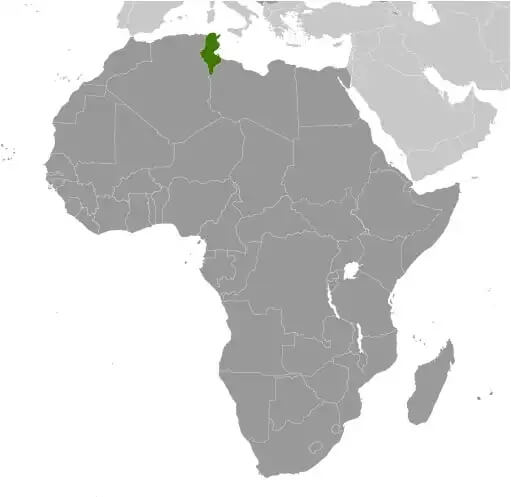
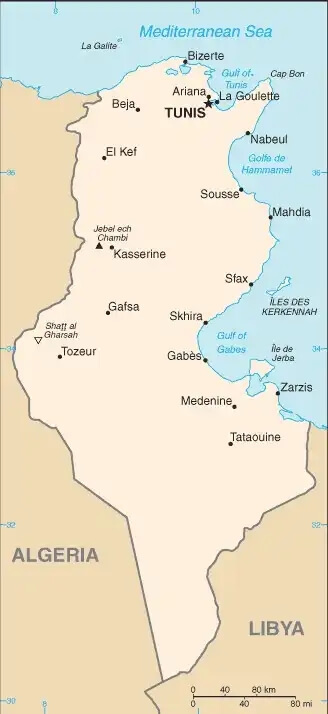
Algeria - Italy - Libya - Malta
Geography
Area
Total: 163,610 sq km
Land: 155,360 sq km
Water: 8,250 sq km
Tunisia's geography is characterized by a diverse landscape that ranges from the Mediterranean coastline in the north to the arid desert regions in the south. The northern part of the country enjoys a temperate climate, featuring mild, rainy winters and hot, dry summers, which supports a variety of agricultural activities. In contrast, the southern regions transition into a desert climate, where the landscape is dominated by vast stretches of arid land. Tunisia is endowed with significant natural resources, including petroleum, phosphates, iron ore, lead, zinc, and salt, which play a crucial role in its economy and development.
People and Society
Population
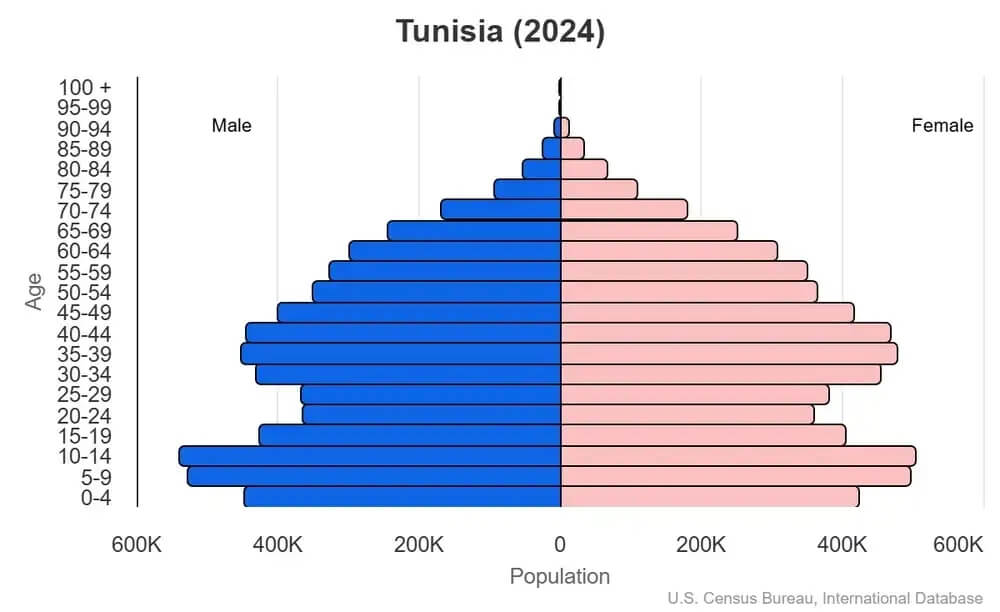
Total: 12,048,847 (2024 estimated)
Tunisia's demographic composition is predominantly Arab, accounting for 98% of the population, with a small percentage of Europeans (1%) and other ethnic groups, including Jews (1%). The official language is Arabic, which is widely used in commerce, while French also plays a significant role in business and education. The country is predominantly Muslim, with 99% of the population adhering to Sunni Islam, reflecting a rich cultural heritage that influences various aspects of daily life. The population growth rate stands at 0.58% (2024 estimated), indicating a gradual increase in the number of inhabitants. This demographic landscape presents both opportunities and challenges for Tunisia, particularly in terms of social cohesion and economic development.
Government
Government type
Parliamentary republic
The capital of Tunisia is Tunis, which serves as the political and administrative center of the country. The executive branch is led by President Kais SAIED, who has been in office since 23 October 2019, and the head of government is Prime Minister Sarra ZAAFRANI Zenzri, who took office on 21 March 2025. Tunisia maintains diplomatic relations with the United States, represented by Ambassador Joey HOOD since 2 February 2023, while the position of the chief of mission in Tunisia remains vacant, with Chargé d'Affaires Anis HAJRI serving since 1 August 2025.
Economy
Economic overview
Tunisia's economy is classified as a lower middle-income North African economy, facing several challenges that hinder its growth potential. The government is currently drafting reforms aimed at attracting foreign lenders to stimulate economic activity. High unemployment rates, particularly among youth and women, remain a pressing issue, exacerbated by the economic impact of the COVID-19 pandemic. The public sector is characterized by high wages, contributing to a significant public debt burden. Additionally, the country has implemented protectionist austerity measures in response to economic pressures. Tunisia's economy is closely tied to the European Union, making it a key trade partner in the region.
Real GDP (purchasing power parity)
$156.086 billion (2024 estimated)
$154.006 billion (2023 estimated)
$153.945 billion (2022 estimated)
Real GDP per capita
$12,700 (2024 estimated)
$12,600 (2023 estimated)
$12,700 (2022 estimated)
Exports
$19.732 billion (2023 estimated)
$17.254 billion (2022 estimated)
$14.054 billion (2021 estimated)
Exports - partners
France 22%, Italy 17%, Germany 13%, USA 4%, Libya 4% (2023)
Exports - commodities
Garments, insulated wire, olive oil, refined petroleum, crude petroleum (2023)
Imports
$21.953 billion (2023 estimated)
$22.453 billion (2022 estimated)
$18.178 billion (2021 estimated)
Imports - partners
Italy 13%, France 12%, China 10%, Russia 8%, Germany 7% (2023)
Imports - commodities
Refined petroleum, natural gas, plastic products, cars, plastics (2023)
Human Development Index
The country's Human Development Index (HDI) is 0.746, ranking it 105th out of 193 countries tested. (more information)
World Happiness Report
The World Happiness Report ranked the country 128th out of 158 countries tested with a score of 4.289. (more information)