World Book
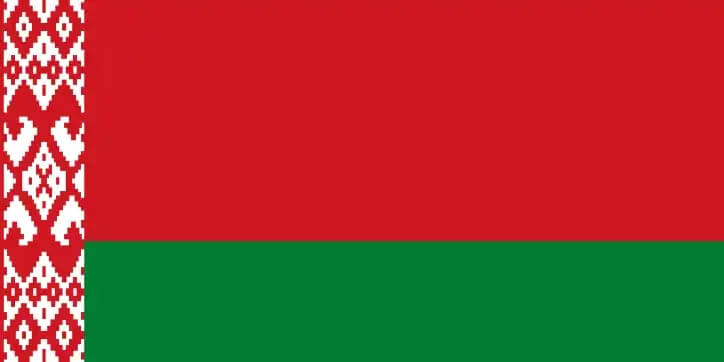
Belarus
World Book Index
68

With a score of 68, the country is ranked 70th out of 158 countries in the World Book ranking. (more information)
Introduction
Belarus, a landlocked country in Eastern Europe, emerged as an independent nation in 1991 after seven decades as a constituent republic of the USSR. Since gaining independence, Belarus has faced significant challenges, particularly regarding political and civil liberties. Under the long-standing leadership of President Alyaksandr LUKASHENKA, the government has imposed strict restrictions on freedoms of speech, assembly, and the press, which has led to a complex political landscape characterized by limited democratic processes and ongoing international scrutiny.
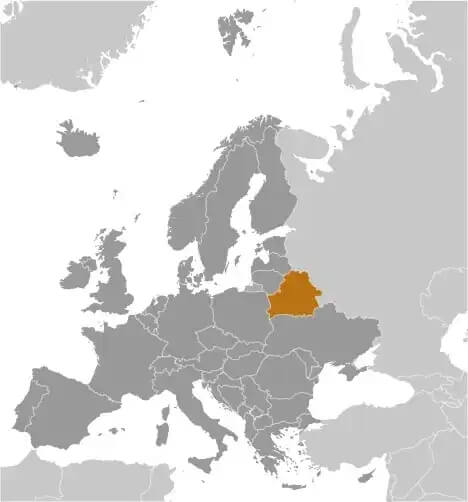
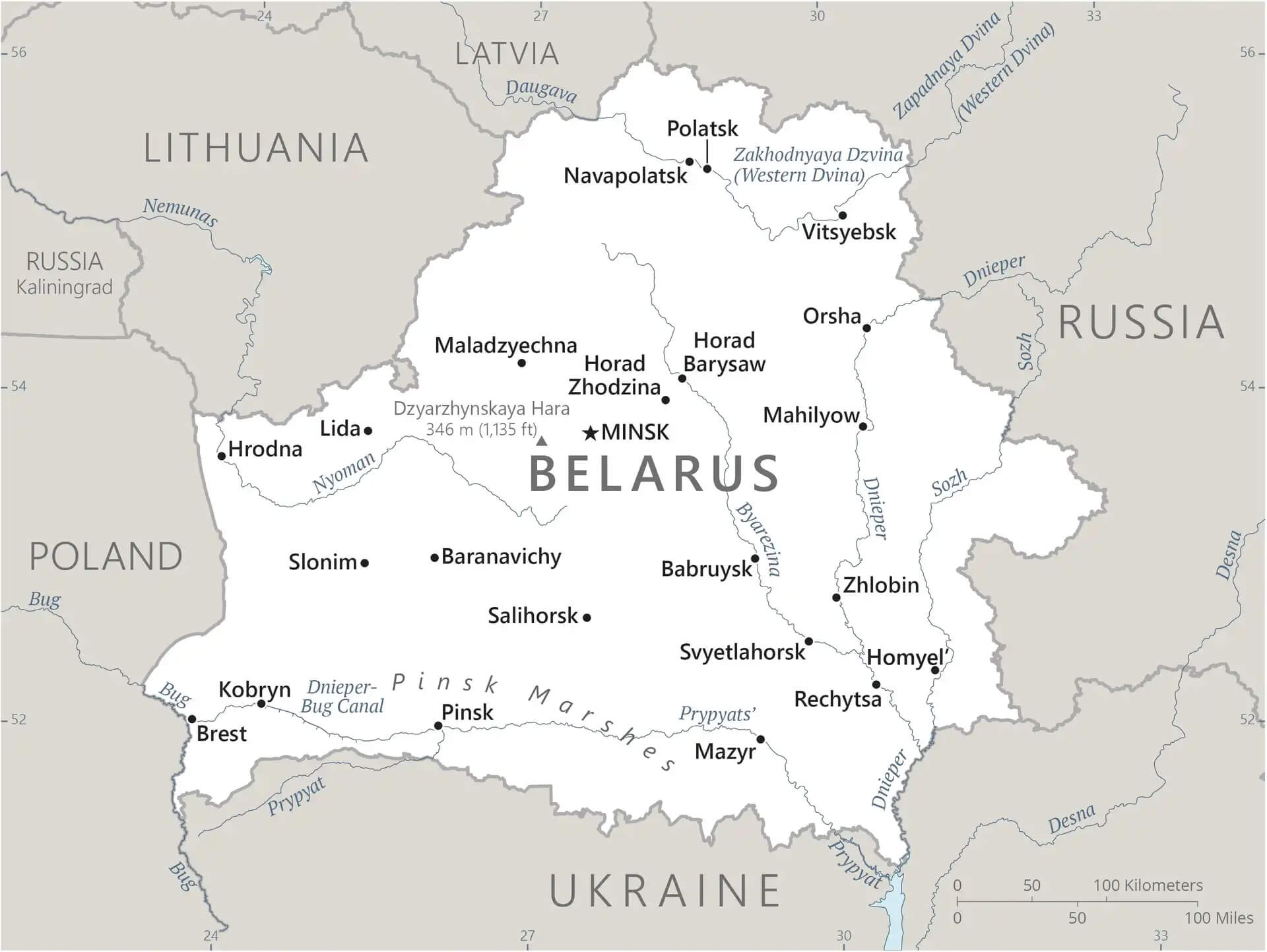
Neighboring countries
Latvia - Lithuania - Poland - Russia - Ukraine
Geography
Area
Total: 207,600 sq km
Land: 202,900 sq km
Water: 4,700 sq km
Belarus is characterized by its flat terrain, with an extensive network of rivers and lakes that contribute to its natural beauty and ecological diversity. The climate is marked by cold winters and cool, moist summers, representing a transitional zone between continental and maritime climates. This unique climatic condition supports a variety of ecosystems and agricultural practices. The country is endowed with significant natural resources, including timber, peat deposits, and small quantities of oil and natural gas, alongside minerals such as granite, dolomitic limestone, and chalk. These resources play a crucial role in the economy and development of Belarus.
People and Society
Population
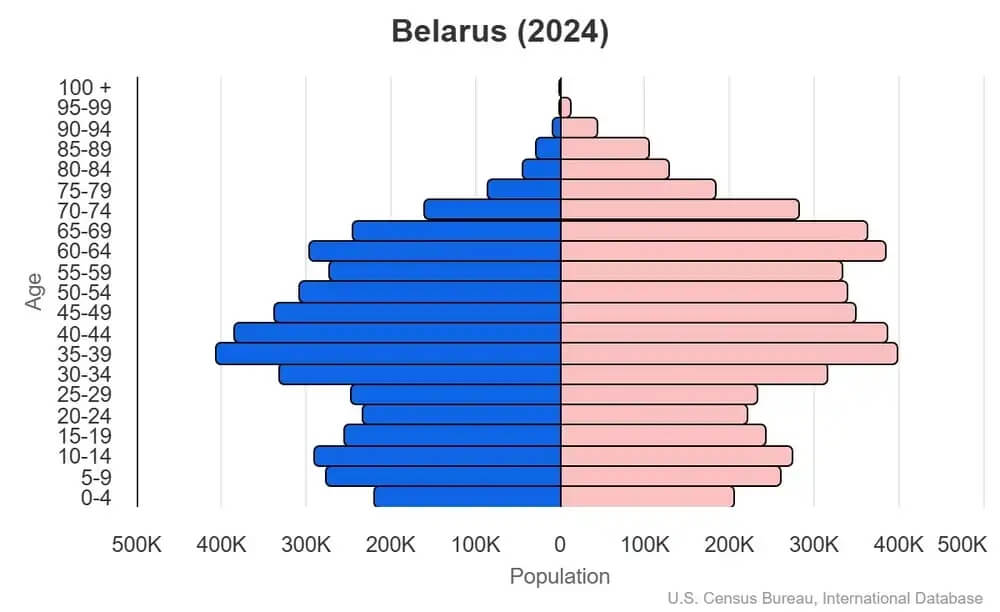
Total: 9,501,451 (2024 estimated)
Ethnic groups
Belarusian 83.7%, Russian 8.3%, Polish 3.1%, Ukrainian 1.7%, other 2.4%, unspecified 0.9% (2009 estimated)
Languages
Russian (official) 71.4%, Belarusian (official) 26%, other 0.3% (includes small Polish- and Ukrainian-speaking minorities), unspecified 2.3% (2019 estimated)
Religions
Orthodox 48.3%, Catholic 7.1%, other 3.5%, non-believers 41.1% (2011 estimated)
Population growth rate
-0.42% (2024 estimated)
Belarus has a diverse demographic landscape, with the majority of its population identifying as Belarusian, followed by significant Russian and Polish minorities. The linguistic landscape reflects this diversity, with Russian and Belarusian as the official languages, though Russian predominates in daily use. The religious composition is predominantly Orthodox, with a notable percentage of non-believers, indicating a complex relationship with faith and identity in contemporary Belarus. The population growth rate has been negative, reflecting broader trends in Eastern Europe, including emigration and demographic challenges.
Government
Government type
Presidential republic in name, although in fact a dictatorship
Capital
Name: Minsk
Executive branch
Chief of state: President Alyaksandr LUKASHENKA (since 20 July 1994)
Head of government: Prime Minister Alyaksandr TURCHYN (since 10 March 2025)
Diplomatic representation in the US
Chief of mission: Ambassador (vacant; recalled by Belarus in 2008); Chargé d'Affaires Pavel SHIDLOWSKI (since 9 August 2022)
Diplomatic representation from the US
Chief of mission: Ambassador (vacant); Chargé d’Affaires Michael KREIDLER (since July 2025)
Belarus operates under a presidential republic framework, yet the reality is characterized by authoritarian governance. President Alyaksandr LUKASHENKA has maintained a firm grip on power since 1994, with significant control over the political landscape and limited opposition. The capital, Minsk, serves as the political and cultural heart of the nation. The diplomatic relations, particularly with the United States, have been strained, reflecting the broader geopolitical tensions in the region.
Economy
Economic overview
Declining Russian energy subsidies will end in 2024; growing public debt; strong currency pressures have led to higher inflation; recent price controls on basic food and drugs; public sector wage increases and fragile private sector threaten household income gains and economic growth
Real GDP (purchasing power parity)
$265.22 billion (2024 estimated)
$254.995 billion (2023 estimated)
$244.89 billion (2022 estimated)
Real GDP per capita
$29,000 (2024 estimated)
$27,800 (2023 estimated)
$26,500 (2022 estimated)
Exports
$49.386 billion (2024 estimated)
$47.714 billion (2023 estimated)
$47.124 billion (2022 estimated)
Exports - partners
China 34%, Kazakhstan 10%, Uzbekistan 7%, Poland 6%, Brazil 5% (2023)
Exports - commodities
Fertilizers, rapeseed oil, wood, poultry, beef (2023)
Imports
$50.679 billion (2024 estimated)
$47.459 billion (2023 estimated)
$42.438 billion (2022 estimated)
Imports - partners
China 33%, Poland 16%, Germany 11%, Lithuania 10%, Turkey 9% (2023)
Imports - commodities
Cars, broadcasting equipment, fabric, plastic products, video displays (2023)
The Belarusian economy is currently navigating a challenging landscape marked by the impending end of Russian energy subsidies in 2024, which have historically supported its economic stability. The country faces rising public debt and inflationary pressures that threaten household incomes and overall economic growth. The GDP, measured in purchasing power parity, is projected to reach $265.22 billion in 2024, with a per capita figure of $29,000. Belarus's export profile is diverse, with significant contributions from fertilizers and agricultural products, while imports primarily consist of machinery and consumer goods. The economic interdependence with key partners, particularly China and Poland, underscores the strategic importance of these relationships in sustaining economic activity.
Human Development Index
The country's Human Development Index (HDI) is 0.824, ranking it 65th out of 193 countries tested. (more information)
World Happiness Report
The World Happiness Report ranked the country 85th out of 158 countries tested with a score of 5.54. (more information)