World Book
Lithuania
World Book Index
83

With a score of 83, the country is ranked 5th out of 158 countries in the World Book ranking. (more information)
Introduction
Lithuania, a country with a rich historical tapestry, was unified in 1236, marking the beginning of its journey as a significant European power. Over the subsequent century, it expanded its territory to encompass much of present-day Belarus and Ukraine, establishing itself as the largest state in Europe by the end of the 14th century. However, the 20th century brought challenges, as Lithuania was annexed by the USSR in 1940. The spirit of independence was rekindled in 1990 when Lithuania became the first Soviet republic to declare its sovereignty, paving the way for its current status as a vibrant democracy in the heart of Europe.
Neighboring countries
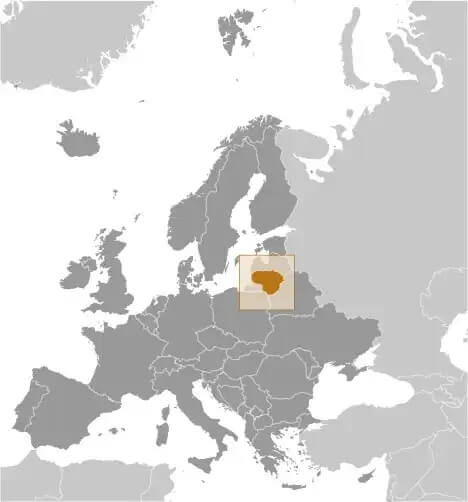
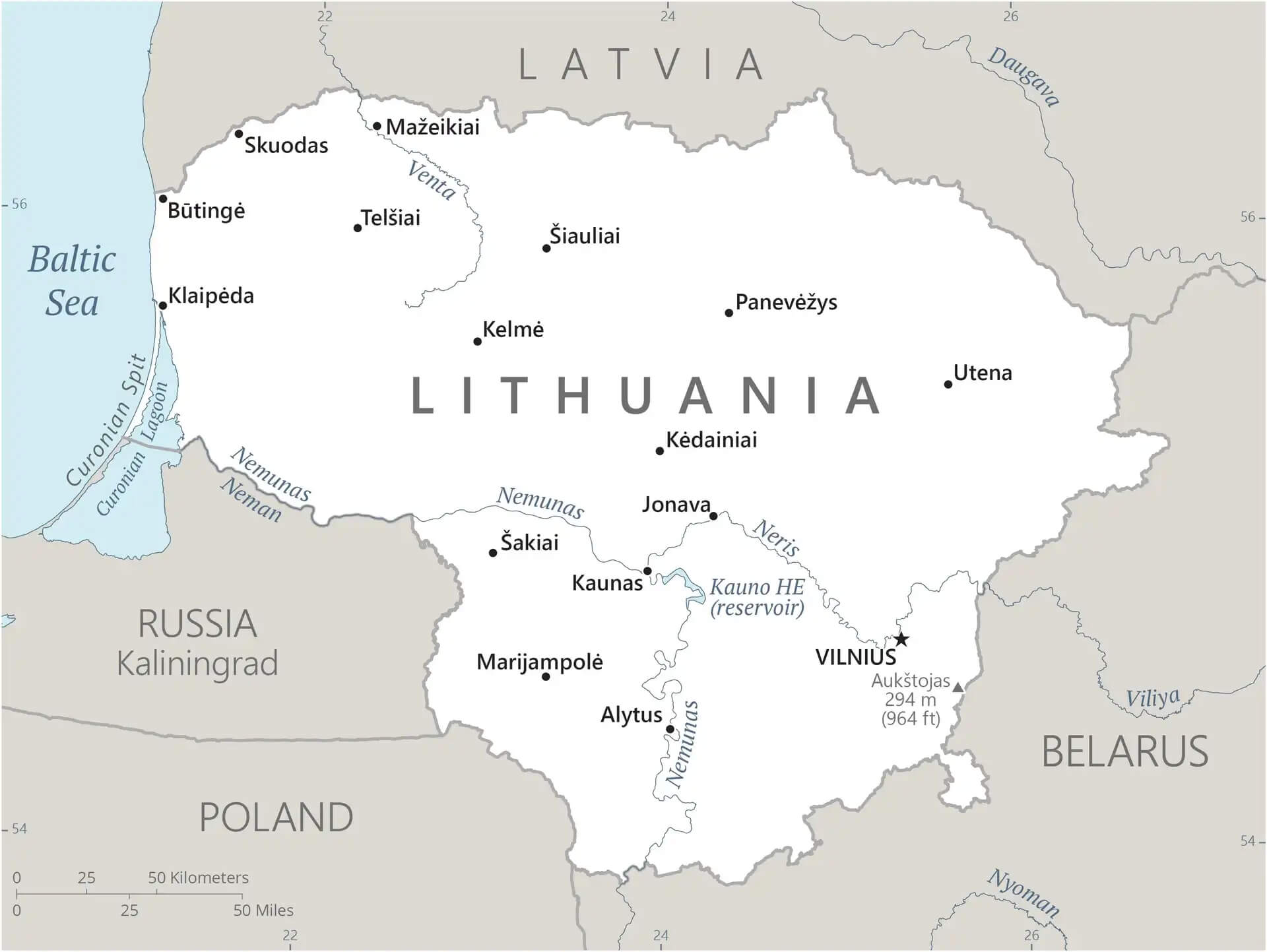
Belarus - Latvia - Poland - Russia
Geography
Area
Total: 65,300 sq km
Land: 62,680 sq km
Water: 2,620 sq km
Lithuania's geographical landscape is characterized by its diverse terrain, which includes vast forests, numerous lakes, and a long coastline along the Baltic Sea. The country experiences a transitional climate that lies between maritime and continental influences, resulting in wet, moderate winters and warm summers. This unique climate, combined with its rich natural resources such as peat, arable land, and amber, contributes to Lithuania's agricultural productivity and ecological diversity, making it an attractive location for both residents and visitors alike.
People and Society
Population
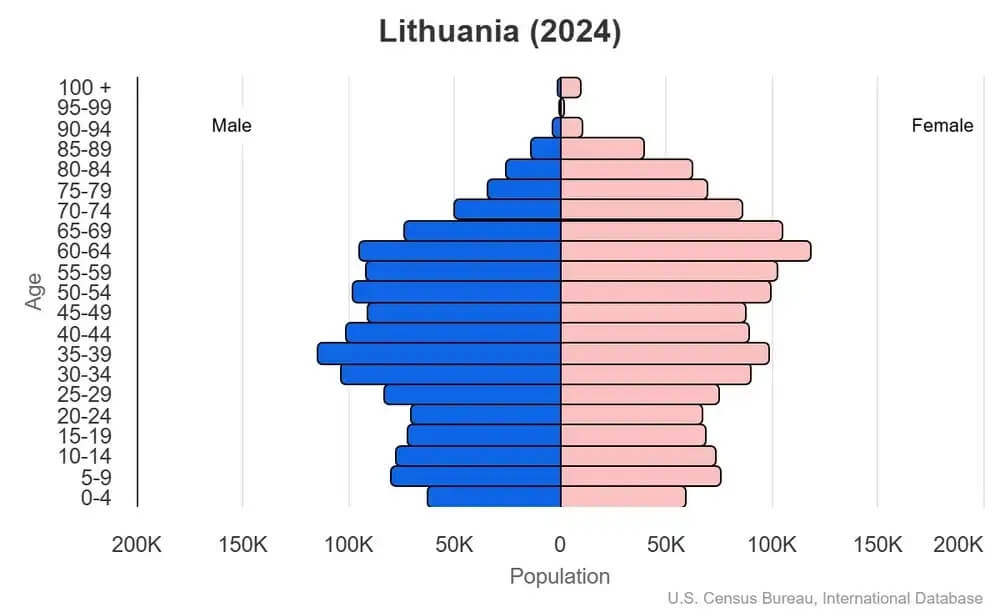
Total: 2,628,186 (2024 estimated)
Ethnic groups
Lithuanian 84.6%, Polish 6.5%, Russian 5%, Belarusian 1%, other 1.1%, unspecified 1.8% (2021 estimated)
Languages
Lithuanian (official) 85.3%, Russian 6.8%, Polish 5.1%, other 1.1%, two mother tongues 1.7% (2021 estimated)
Religions
Roman Catholic 74.2%, Russian Orthodox 3.7%, Old Believer 0.6%, Evangelical Lutheran 0.6%, Evangelical Reformist 0.2%, other (including Sunni Muslim, Jewish, Greek Catholic, and Karaite) 0.9%, none 6.1%, unspecified 13.7% (2021 estimated)
Population growth rate
-1.05% (2024 estimated)
Lithuania's population reflects a complex tapestry of ethnicities, with Lithuanians making up the majority at 84.6%. The Polish and Russian communities also play significant roles in the cultural landscape, contributing to the country's rich heritage. The official language, Lithuanian, is spoken by 85.3% of the population, while Russian and Polish are also prevalent, highlighting the historical influences in the region. The predominant religion is Roman Catholicism, which shapes many aspects of societal values and traditions. However, the country faces demographic challenges, including a declining population growth rate of -1.05%, which raises concerns about the sustainability of its workforce and social systems in the coming years.
Government
Government type
Semi-presidential republic
Capital
Name: Vilnius
Executive branch
Chief of state: President Gitanas NAUSEDA (since 12 July 2019)
Head of government: Acting Prime Minister Rimantas SADZIUS (since 4 August 2025)
Diplomatic representation in the US
Chief of mission: Ambassador Gediminas VARVUOLIS (since 5 September 2025)
Diplomatic representation from the US
Chief of mission: Ambassador Kara C. McDONALD (since 26 January 2024)
Lithuania operates as a semi-presidential republic, where the President serves as the head of state and the Prime Minister acts as the head of government. This political structure allows for a balance of power and a collaborative approach to governance. The capital city, Vilnius, not only serves as the political center but also as a cultural hub, reflecting the nation's historical legacy and modern aspirations. The current leadership, with President Gitanas NAUSEDA and Acting Prime Minister Rimantas SADZIUS, is tasked with navigating the complexities of both domestic and international challenges, including economic development and regional security.
Economy
Economic overview
Lithuania is classified as a high-income EU and eurozone member, recognized as the largest economy in the Baltic region. The country's economic recovery has been bolstered by robust private consumption and investments driven by EU funds. However, it faces structural challenges, including the need for pension reform, an aging workforce, and high energy-import costs, which could impact future growth.
Real GDP (purchasing power parity)
$136.227 billion (2024 estimated)
$132.552 billion (2023 estimated)
$132.099 billion (2022 estimated)
Real GDP per capita
$47,200 (2024 estimated)
$46,200 (2023 estimated)
$46,700 (2022 estimated)
Exports
$62.896 billion (2024 estimated)
$61.02 billion (2023 estimated)
$61.448 billion (2022 estimated)
Exports - partners
Latvia 11%, Poland 8%, Germany 7%, Netherlands 6%, Russia 6% (2023)
Exports - commodities
Refined petroleum, furniture, plastic products, wheat, cars (2023)
Imports
$58.491 billion (2024 estimated)
$57.899 billion (2023 estimated)
$62.916 billion (2022 estimated)
Imports - partners
Germany 13%, Poland 13%, Latvia 8%, USA 7%, Norway 5% (2023)
Imports - commodities
Crude petroleum, cars, natural gas, packaged medicine, plastic products (2023)
Lithuania's economy demonstrates resilience and adaptability, with a real GDP estimated at $136.227 billion in 2024, reflecting a steady growth trajectory. The GDP per capita stands at $47,200, indicating a relatively high standard of living. The export sector is diverse, with refined petroleum, furniture, and plastic products leading the way, while imports are primarily driven by crude petroleum and natural gas. The trade partnerships with neighboring countries such as Latvia, Poland, and Germany underscore Lithuania's strategic position within the European market. However, the economy must address ongoing challenges, particularly in energy dependency and demographic shifts, to sustain its growth and ensure long-term prosperity.
Human Development Index
The country's Human Development Index (HDI) is 0.895, ranking it 39th out of 193 countries tested. (more information)
World Happiness Report
The World Happiness Report ranked the country 1st out of 158 countries tested with a score of 7.795. (more information)