World Book
Botswana
World Book Index
54

With a score of 54, the country is ranked 113th out of 158 countries in the World Book ranking. (more information)
Introduction
Botswana, formerly known as the British protectorate of Bechuanaland, has undergone a remarkable transformation since gaining independence in 1966. The nation has established a robust democratic framework characterized by over five decades of stable civilian governance. This political stability, coupled with progressive social policies and substantial capital investments, has fostered an environment conducive to economic growth and development. Today, Botswana is recognized as an upper middle-income country, showcasing the resilience and adaptability of its institutions and people in navigating the complexities of modern governance and economic challenges.
Neighboring countries
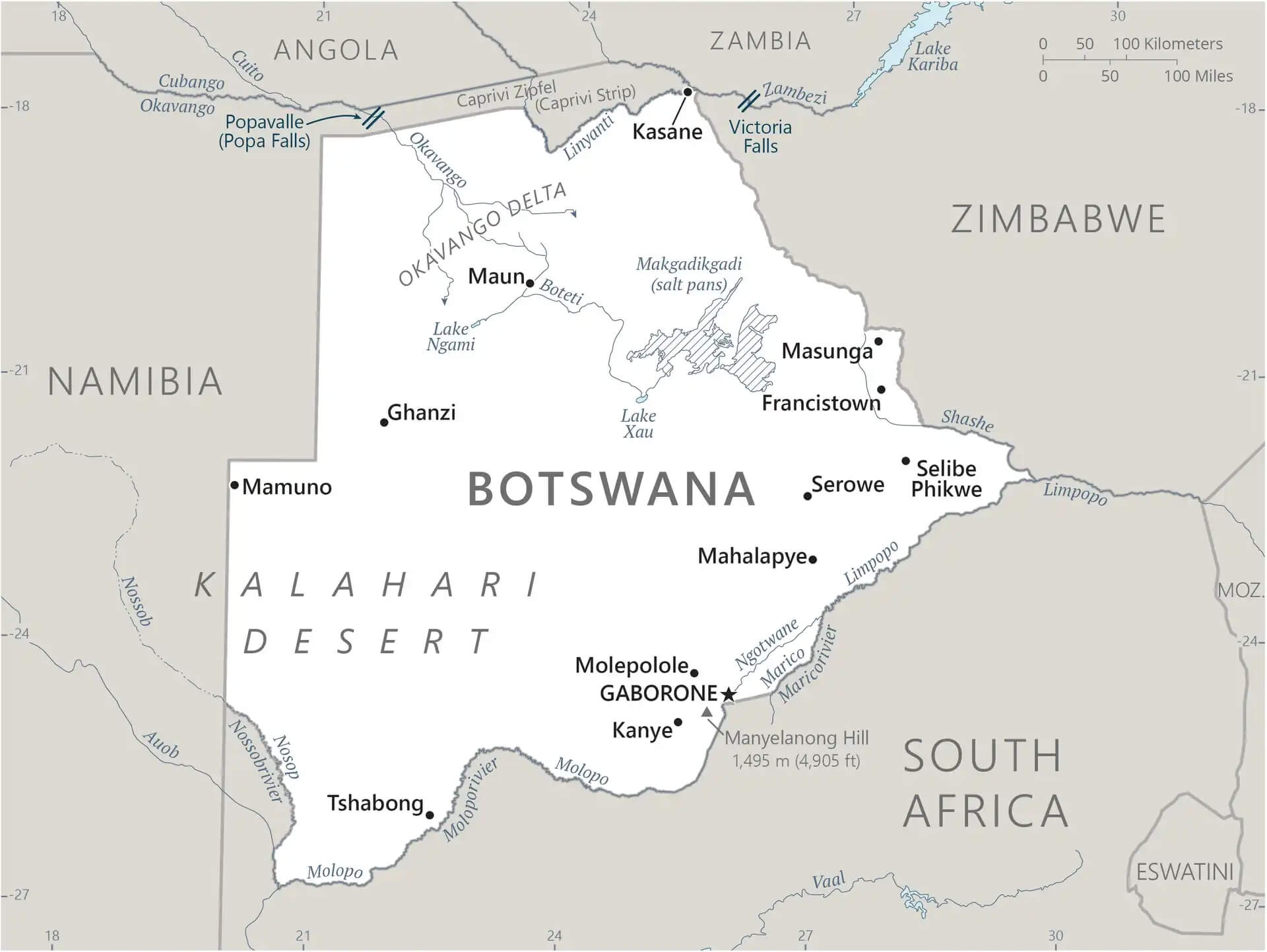
Namibia - South Africa - Zambia - Zimbabwe
Geography
Area
Total: 581,730 sq km
Land: 566,730 sq km
Water: 15,000 sq km
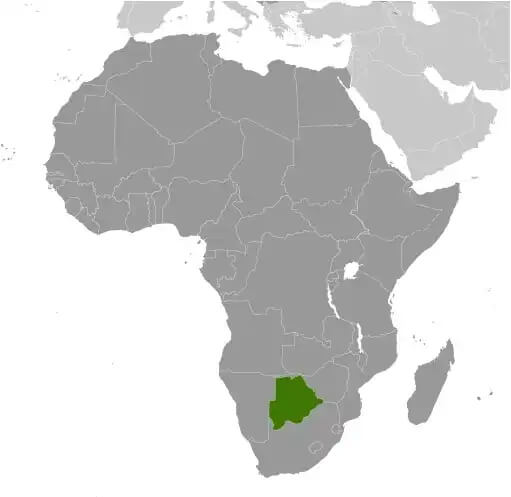
Botswana is a landlocked country located in the southern part of Africa, bordered by Namibia, South Africa, and Zimbabwe. The vast majority of its territory is characterized by arid and semi-arid conditions, with a climate that features warm winters and hot summers. The country is endowed with a variety of natural resources, including diamonds, copper, nickel, salt, soda ash, potash, coal, iron ore, and silver, which play a crucial role in its economic framework. The geographical landscape is predominantly flat, with the Kalahari Desert covering much of the country, contributing to its unique ecological and environmental characteristics.
People and Society
Population
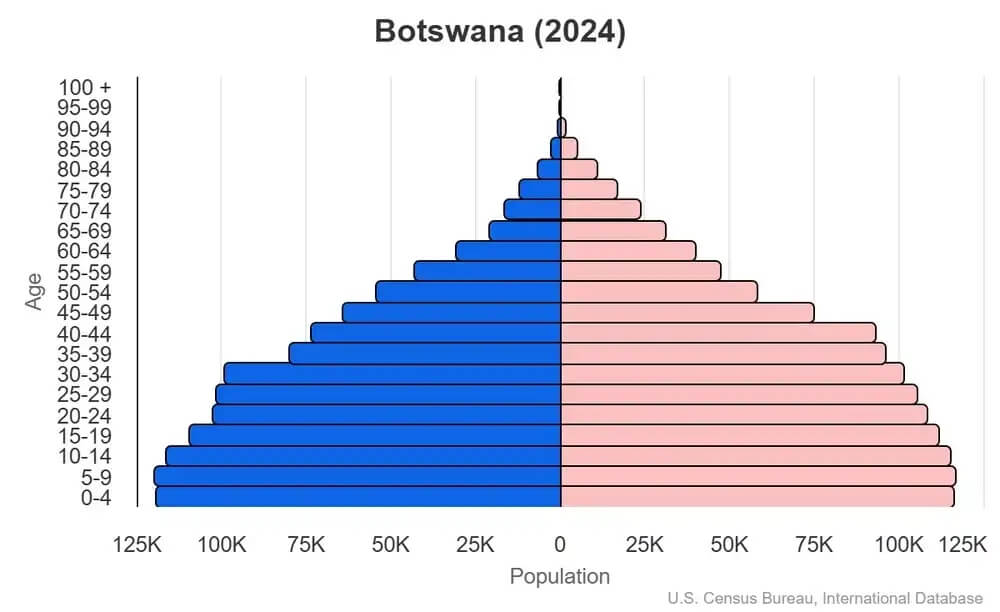
Total: 2,450,668 (2024 estimated)
Botswana's population is diverse, with the Tswana (or Setswana) people constituting approximately 79% of the total demographic. Other significant ethnic groups include the Kalanga at 11%, and the Basarwa at 3%, alongside a mix of Kgalagadi and individuals of European descent making up the remaining 7%. The linguistic landscape is similarly varied, with Setswana being the most widely spoken language at 77.3%, followed by Sekalanga at 7.4% and Shekgalagadi at 3.4%. English serves as the official language, reflecting the country's colonial history and its integration into the global community. The religious composition is predominantly Christian (79.1%), with other faiths such as Badimo and various minority religions represented. The population growth rate is estimated at 1.34% for 2024, indicating a steady increase in the number of inhabitants, which poses both opportunities and challenges for the nation's development.
Government
Government type
Parliamentary republic
Capital
Name: Gaborone
Botswana operates as a parliamentary republic, with a political system that emphasizes democratic principles and the rule of law. The capital city, Gaborone, serves as the political and administrative hub of the country. The executive branch is led by President Duma BOKO, who has been in office since November 1, 2024, holding both the roles of chief of state and head of government. Botswana maintains diplomatic relations with various countries, including the United States, represented by Ambassador Mpho Churchill MOPHUTING since September 18, 2024, and Ambassador Howard A. VAN VRANKEN representing the U.S. since May 24, 2023. This diplomatic engagement reflects Botswana's commitment to fostering international relations and cooperation.
Economy
Economic overview
Botswana's economy is characterized by good economic governance and sound financial management practices. Historically, the nation has relied on a diamond-driven growth model, which has been instrumental in its economic development. However, this model is currently facing challenges, with a decline in diamond revenues impacting overall growth. Despite these challenges, Botswana has made significant strides in reducing poverty levels and improving living standards. Nevertheless, high unemployment rates, particularly among the youth, remain a pressing issue. The COVID-19 pandemic has further exacerbated economic vulnerabilities, leading to a sharp contraction in economic activity and a slow recovery process. Additionally, public sector wages have posed fiscal challenges, necessitating careful management of resources to ensure sustainable economic growth.
Real GDP (purchasing power parity)
$45.553 billion (2024 estimated)
$46.957 billion (2023 estimated)
$45.498 billion (2022 estimated)
Real GDP per capita
$18,100 (2024 estimated)
$18,900 (2023 estimated)
$18,600 (2022 estimated)
Exports
$6.398 billion (2023 estimated)
$8.914 billion (2022 estimated)
$7.861 billion (2021 estimated)
Exports - partners
UAE 27%, India 17%, Belgium 16%, South Africa 8%, USA 7% (2023)
Exports - commodities
Diamonds, copper ore, insulated wire, carbonates, cattle (2023)
Imports
$7.228 billion (2023 estimated)
$8.826 billion (2022 estimated)
$9.25 billion (2021 estimated)
Imports - partners
South Africa 65%, Namibia 8%, Canada 5%, China 3%, India 3% (2023)
Imports - commodities
Refined petroleum, diamonds, cars, flavored water, electricity (2023)
Human Development Index
The country's Human Development Index (HDI) is 0.731, ranking it 111th out of 193 countries tested. (more information)
World Happiness Report
The World Happiness Report ranked the country 147th out of 158 countries tested with a score of 3.502. (more information)