World Book
Central African Republic
World Book Index
38

With a score of 38, the country is ranked 156th out of 158 countries in the World Book ranking. (more information)
Introduction
The Central African Republic, formerly known as the French colony of Ubangi-Shari, gained independence in 1960. Since then, the nation has experienced significant political instability characterized by a series of military governments and civil unrest. Although civilian rule was established in 1993, it was short-lived, lasting only a decade before the country fell back into turmoil. Despite various peace agreements aimed at reconciling the government with armed factions, the situation remains precarious, with armed groups continuing to operate with relative impunity across the nation. The ongoing challenges highlight the need for sustained efforts towards political stability and governance reform.
Neighboring countries
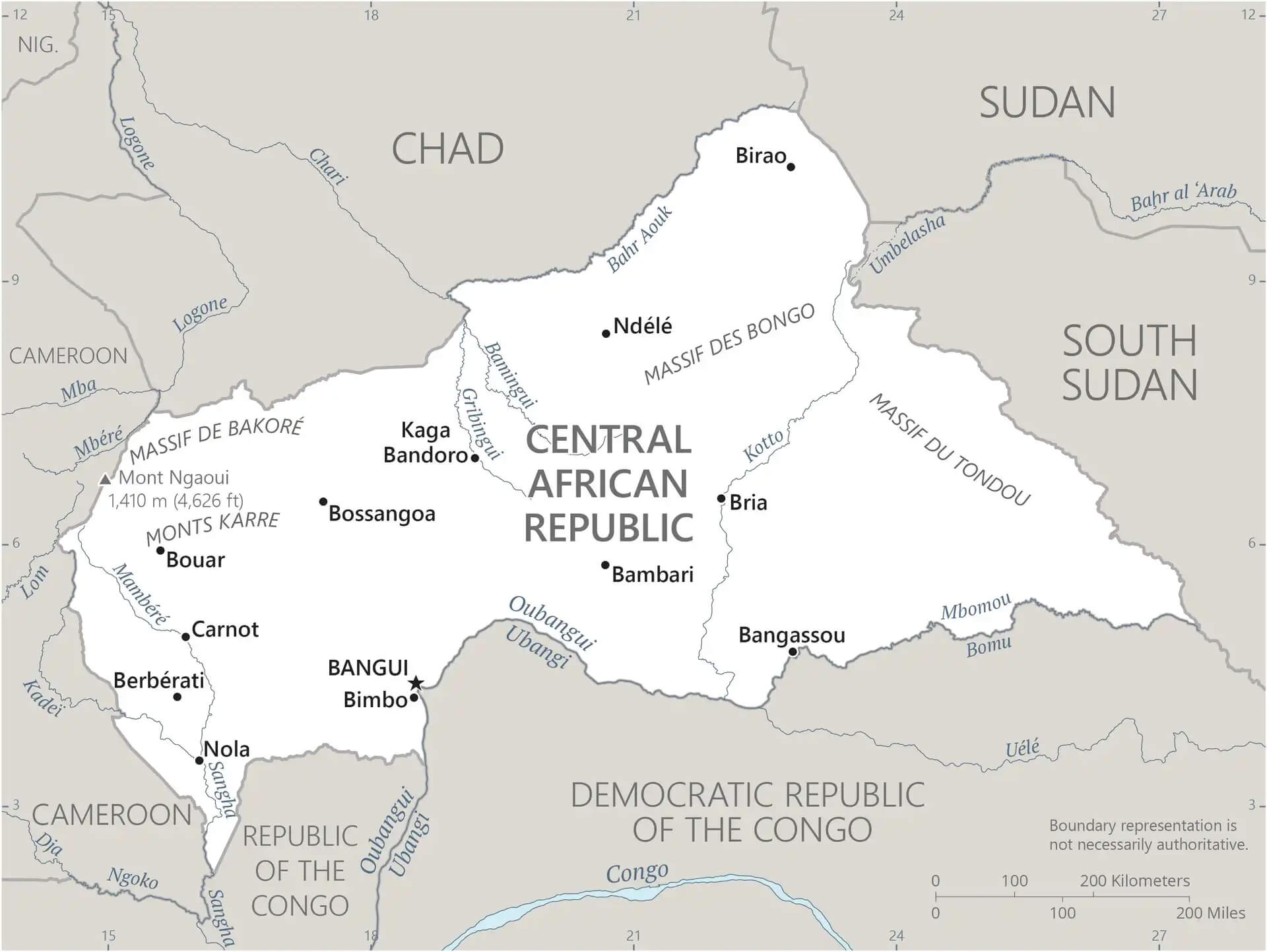
Cameroon - Chad - Democratic Republic of the Congo - Republic of the Congo - South Sudan - Sudan
Geography
Area
Total: 622,984 sq km
Land: 622,984 sq km
Water: 0 sq km
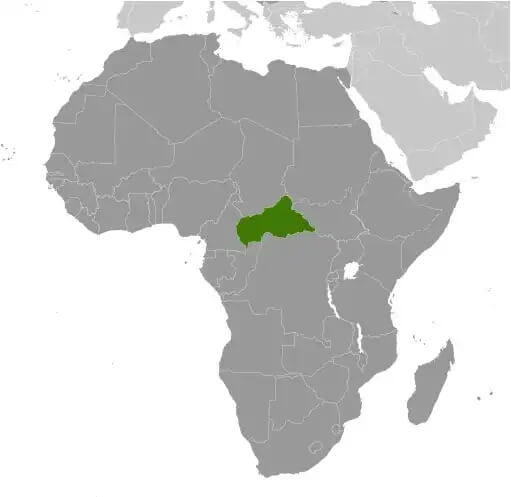
The Central African Republic is a landlocked nation situated in the heart of Africa, characterized by its vast and diverse landscapes. The country's geography is predominantly composed of savannahs and forests, with a tropical climate that features hot, dry winters and mild to hot, wet summers. This climatic condition supports a rich biodiversity and a variety of natural resources, including diamonds, uranium, timber, gold, oil, and hydropower. However, the lack of access to the sea poses significant challenges for trade and economic development, necessitating reliance on neighboring countries for maritime access.
People and Society
Population
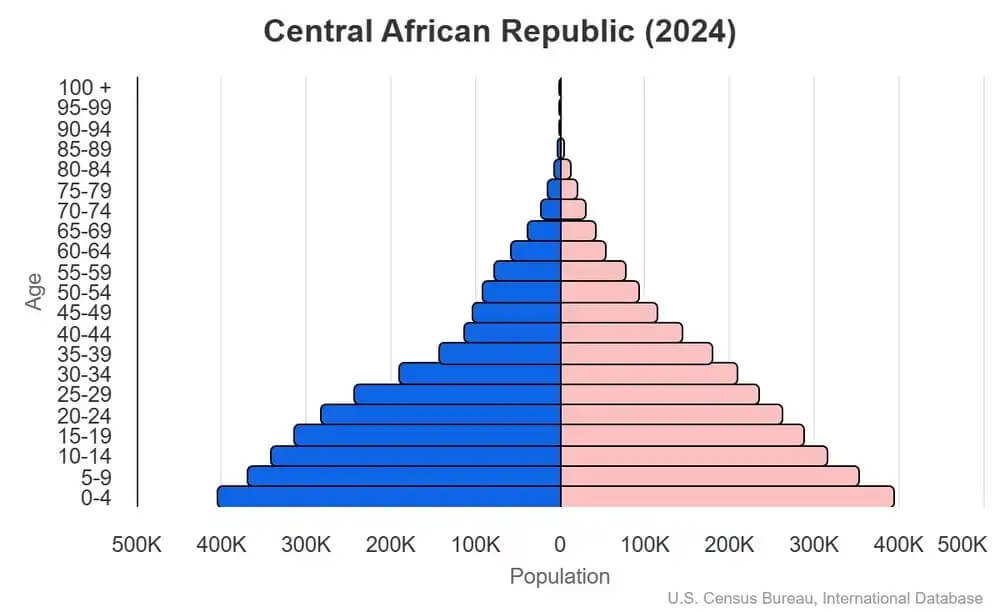
Total: 5,650,957 (2024 estimated)
The Central African Republic is home to a diverse population, with various ethnic groups contributing to its rich cultural tapestry. The largest ethnic groups include the Baya (28.8%), Banda (22.9%), and Mandjia (9.9%), among others. The linguistic landscape is equally varied, with French serving as the official language, while Sangho acts as the national lingua franca. The population is predominantly Christian, with Roman Catholics making up 34.6% and Protestants 15.7%, alongside a significant Muslim minority of 13.8%. The country has a population growth rate of 1.76% (2024 estimated), reflecting ongoing demographic changes. However, the social fabric is strained by political instability and economic challenges, which have led to displacement and a humanitarian crisis affecting a significant portion of the population.
Government
Government type
Presidential republic
Capital
Name: Bangui
The Central African Republic operates as a presidential republic, where the President serves as both the head of state and government. Currently, President Faustin-Archange TOUADÉRA has been in office since March 30, 2016, with Prime Minister Félix MOLOUA appointed as head of government on February 7, 2022. The political landscape is marked by challenges, including ongoing conflicts and a lack of effective governance. The country maintains diplomatic relations with various nations, including the United States, represented by Ambassador Martial NDOUBOU since September 17, 2018, although the U.S. ambassador position remains vacant as of July 2025.
Economy
Economic overview
The Central African Republic is endowed with enormous natural resources, yet it grapples with extreme poverty and weak public institutions. The ongoing political and gender-based violence has led to the displacement of roughly 25% of the population, exacerbating the humanitarian situation. The blockade of the Bangui-Douala corridor has further reduced economic activity and tax collection, hindering the government's ability to provide essential services. Despite these challenges, the agricultural sector has shown resilience, helping to offset the economic downturn caused by the COVID-19 pandemic.
Real GDP (purchasing power parity)
$5.926 billion (2024 estimated)
$5.836 billion (2023 estimated)
$5.795 billion (2022 estimated)
Real GDP per capita
$1,100 (2024 estimated)
$1,100 (2023 estimated)
$1,100 (2022 estimated)
Exports
$425.306 million (2024 estimated)
$369.034 million (2023 estimated)
$293.074 million (2022 estimated)
Exports - partners
UAE 54%, China 14%, France 6%, Turkey 5%, Belgium 4% (2023)
Exports - commodities
Gold, wood, diamonds, vehicle parts/accessories, cotton (2023)
Imports
$890.572 million (2024 estimated)
$742.108 million (2023 estimated)
$784.669 million (2022 estimated)
Imports - partners
China 16%, Cameroon 14%, France 8%, Belgium 6%, Cote d'Ivoire 5% (2023)
Imports - commodities
Refined petroleum, cars, packaged medicine, vaccines, tanks and armored vehicles (2023)
Human Development Index
The country's Human Development Index (HDI) is 0.414, ranking it 191st out of 193 countries tested. (more information)
World Happiness Report
The World Happiness Report ranked the country 149th out of 158 countries tested with a score of 3.476. (more information)