World Book
Cameroon
World Book Index
52

With a score of 52, the country is ranked 120th out of 158 countries in the World Book ranking. (more information)
Introduction
Cameroon, a nation formed from the union of former French and British territories in the early 1960s, stands as a beacon of stability in a region often marked by turmoil. This stability has fostered significant advancements in various sectors, including agriculture, infrastructure, and the burgeoning petroleum industry. The country's rich cultural tapestry and diverse landscapes contribute to its unique identity, making it a pivotal player in Central Africa.
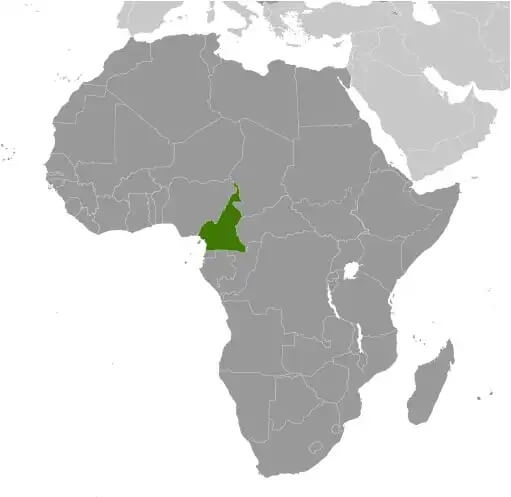
Neighboring countries
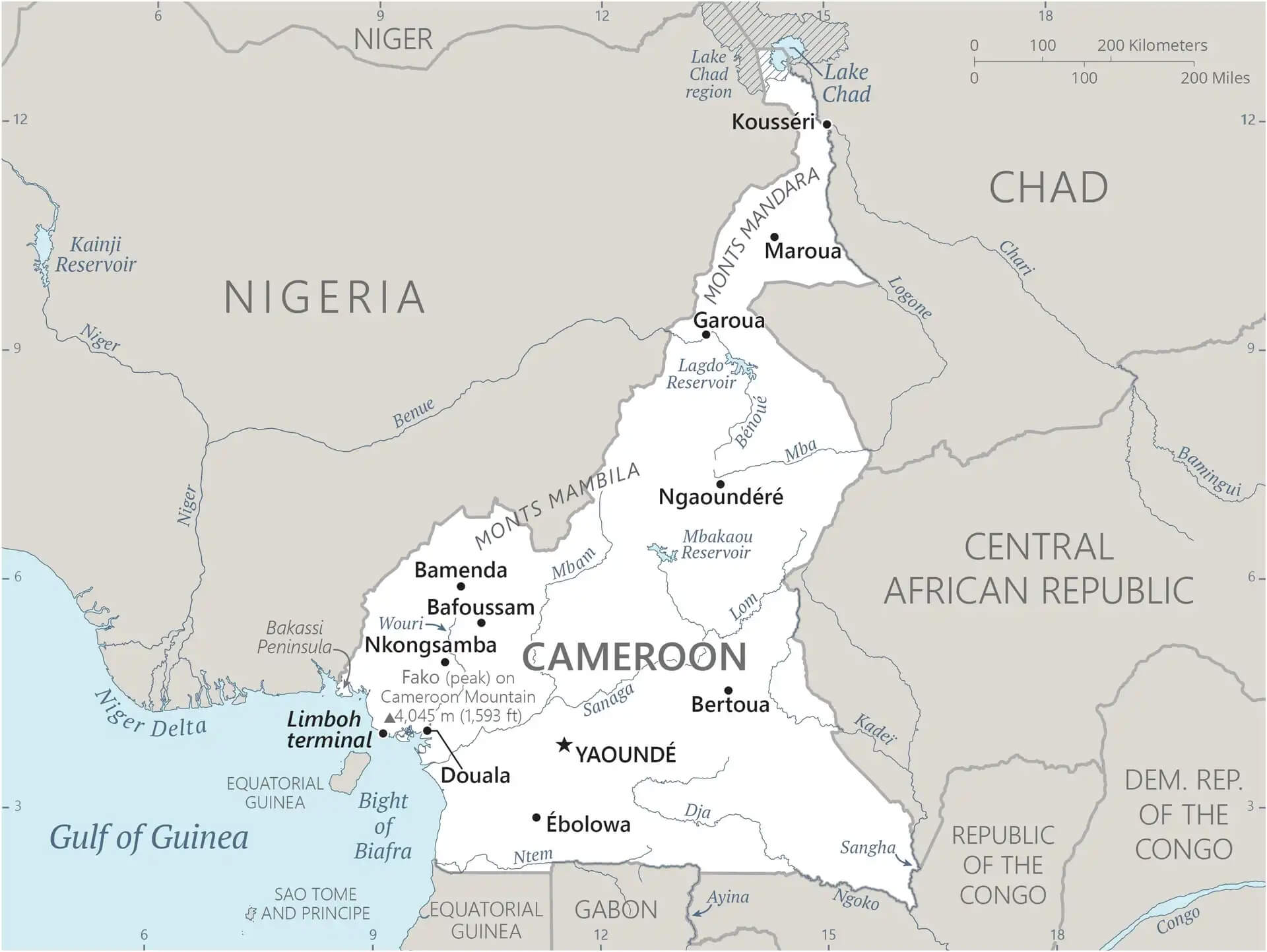
Central African Republic - Chad - Equatorial Guinea - Gabon - Nigeria - Republic of the Congo
Geography
Area
Total: 475,440 sq km
Land: 472,710 sq km
Water: 2,730 sq km
Cameroon's geography is characterized by its diverse landscapes, ranging from coastal plains along the Atlantic Ocean to mountainous regions in the west. The country experiences a variety of climatic conditions, influenced by its topography; the coastal areas enjoy a tropical climate, while the northern regions are marked by a semiarid and hot climate. This geographical diversity not only shapes the natural environment but also impacts agricultural practices and settlement patterns across the nation.
Natural resources
Petroleum, bauxite, iron ore, timber, hydropower
People and Society
Population
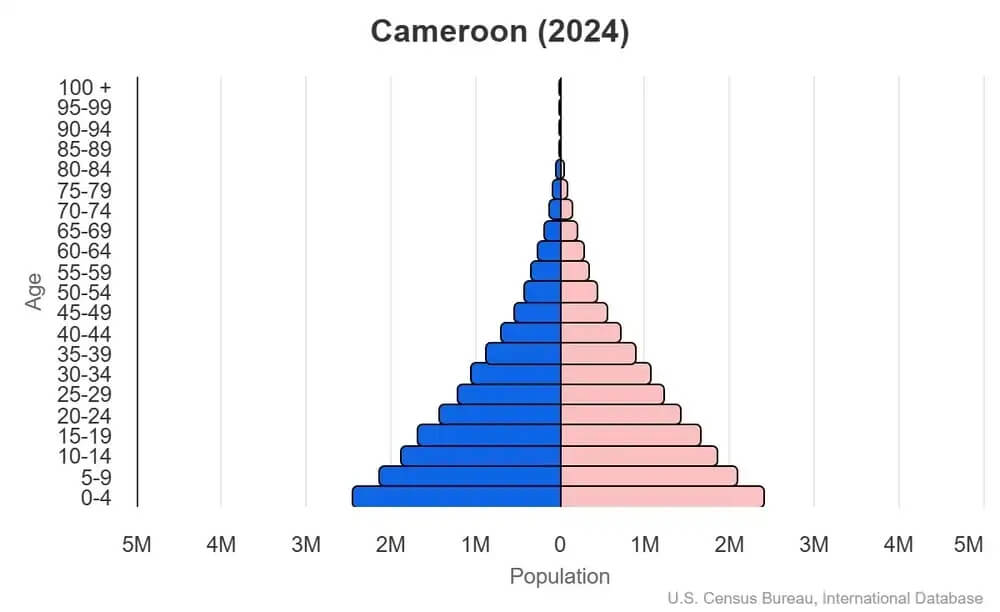
Total: 30,966,105 (2024 estimated)
Ethnic groups
Bamileke-Bamu 22.2%, Biu-Mandara 16.4%, Arab-Choa/Hausa/Kanuri 13.5%, Beti/Bassa, Mbam 13.1%, Grassfields 9.9%, Adamawa-Ubangi, 9.8%, Cotier/Ngoe/Oroko 4.6%, Southwestern Bantu 4.3%, Kako/Meka 2.3%, foreign/other ethnic group 3.8% (2022 estimated)
Languages
24 major African language groups, English (official), French (official)
Religions
Roman Catholic 33.1%, Muslim 30.6%, Protestant 27.1% other Christian 6.1%, animist 1.3%, other 0.7%, none 1.2% (2022 estimated)
Population growth rate
2.71% (2024 estimated)
Cameroon is home to a rich mosaic of ethnicities, with over 200 distinct groups contributing to its cultural diversity. The Bamileke and Biu-Mandara are among the largest ethnic communities, each with unique traditions and languages. The official languages, English and French, reflect the country's colonial history and facilitate communication among its diverse population. The religious landscape is equally varied, with a significant proportion of the population adhering to Christianity and Islam, alongside traditional beliefs. This demographic complexity plays a crucial role in shaping Cameroon's social dynamics and national identity.
Government
Government type
Presidential republic
Capital
Name: Yaounde
Executive branch
Chief of state: President Paul BIYA (since 6 November 1982)
Head of government: Prime Minister Joseph NGUTE (since 4 January 2019)
Diplomatic representation in the US
Chief of mission: Ambassador Henri ETOUNDI ESSOMBA (since 27 June 2016)
Diplomatic representation from the US
Chief of mission: Ambassador Christopher J. LAMORA (since 21 March 2022)
Cameroon operates as a presidential republic, where the President holds significant authority over the executive branch. The current leadership under President Paul Biya, who has been in power since 1982, reflects a long-standing political stability, albeit accompanied by challenges such as calls for reform and increased political participation. The Prime Minister, Joseph Ngute, plays a vital role in the administration, overseeing government operations and implementing policies. This governance structure is pivotal in navigating the complexities of Cameroon's political landscape.
Economy
Economic overview
Cameroon is recognized as the largest economy within the Central African Economic and Monetary Community (CEMAC), boasting an abundance of natural resources. However, the nation faces significant challenges, including recent political instability and the threat of terrorism, which have adversely affected economic output. Systemic corruption and inadequate enforcement of property rights further complicate the economic landscape, contributing to rising poverty levels, particularly in the northern regions of the country. Addressing these issues is crucial for fostering sustainable economic growth and improving the living standards of its citizens.
Real GDP (purchasing power parity)
$143.264 billion (2024 estimated)
$138.191 billion (2023 estimated)
$133.843 billion (2022 estimated)
Real GDP per capita
$4,900 (2024 estimated)
$4,900 (2023 estimated)
$4,800 (2022 estimated)
Exports
$8.353 billion (2023 estimated)
$8.641 billion (2022 estimated)
$7.447 billion (2021 estimated)
Exports - partners
Netherlands 21%, France 14%, UAE 13%, India 9%, China 8% (2023)
Exports - commodities
Crude petroleum, natural gas, gold, cocoa beans, wood (2023)
Imports
$10.294 billion (2023 estimated)
$9.759 billion (2022 estimated)
$9.025 billion (2021 estimated)
Imports - partners
China 43%, France 6%, India 6%, Belgium 4%, UAE 4% (2023)
Imports - commodities
Garments, refined petroleum, plastic products, wheat, rice (2023)
Human Development Index
The country's Human Development Index (HDI) is 0.588, ranking it 155th out of 193 countries tested. (more information)
World Happiness Report
The World Happiness Report ranked the country 114th out of 158 countries tested with a score of 4.657. (more information)