World Book
Gabon
World Book Index
62

With a score of 62, the country is ranked 97th out of 158 countries in the World Book ranking. (more information)
Introduction
Gabon, a nation rich in natural resources and cultural diversity, gained its independence from France in 1960. The political landscape has been dominated by the BONGO family, with El Hadj Omar BONGO Ondimba at the helm from 1967 until his passing, followed by his son, Ali BONGO Ondimba. This long-standing dynasty came to an abrupt end in 2023 when a military coup led to the rise of General Brice OLIGUI Nguema as the transitional president. This shift marks a significant turning point in Gabon's political history, raising questions about the future direction of governance and stability in the country.
Neighboring countries
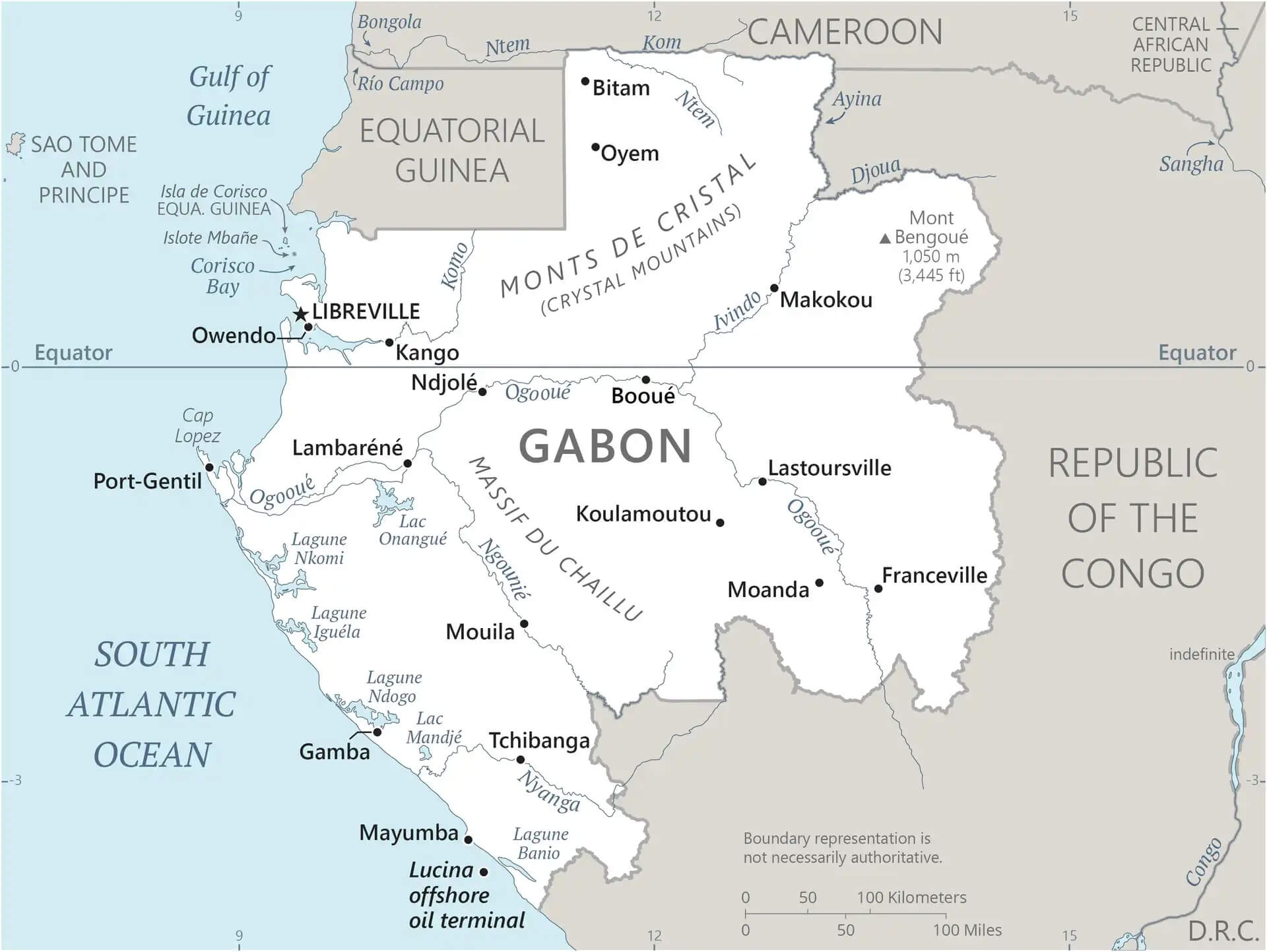
Cameroon - Republic of the Congo - Equatorial Guinea
Geography
Area
Total: 267,667 sq km
Land: 257,667 sq km
Water: 10,000 sq km
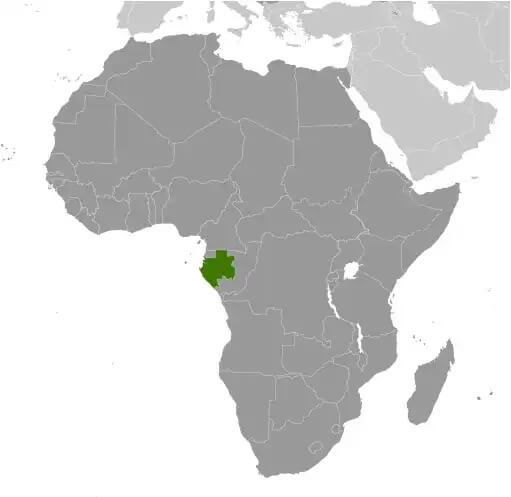
Gabon is located on the west coast of Central Africa, bordered by the Atlantic Ocean to the west. The country's geography is characterized by a diverse landscape that includes coastal plains, savannas, and dense tropical rainforests. The climate is predominantly tropical, with consistently high temperatures and humidity throughout the year, creating an environment conducive to rich biodiversity. Gabon is endowed with abundant natural resources, including petroleum, natural gas, diamonds, niobium, manganese, uranium, gold, timber, iron ore, and hydropower, which play a crucial role in its economy and development.
People and Society
Population
Total: 2,455,105 (2024 estimated)
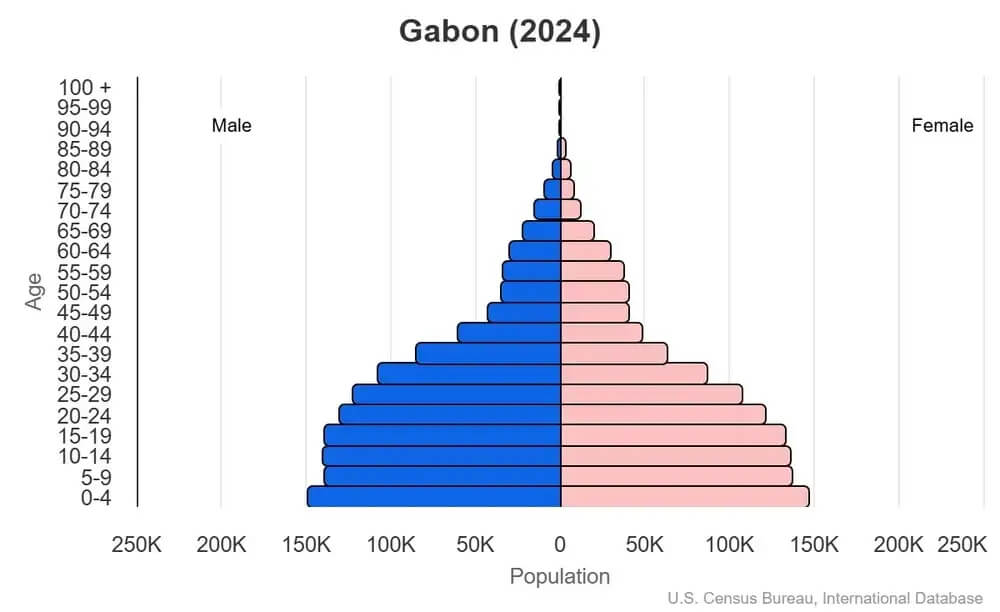
Gabon is home to a diverse population, with various ethnic groups contributing to its rich cultural tapestry. The largest ethnic group is the Fang, comprising 23.5% of the population, followed by the Shira-Punu'Vii at 20.6%, and the Nzabi-Duma at 11.2%. Other significant groups include the Mbede-Teke, Myene, and Kota-Kele. The population also includes a notable percentage of foreigners, accounting for 16.2% as of 2021. French is the official language, reflecting the country's colonial history, while indigenous languages such as Fang, Myene, and Nzebi are widely spoken. The religious landscape is predominantly Christian, with 46.4% identifying as Protestant and 29.8% as Roman Catholic. The population growth rate is estimated at 2.37% for 2024, indicating a youthful demographic that presents both opportunities and challenges for the nation's development.
Government
Government type
Presidential republic
Capital
Name: Libreville
The government of Gabon operates as a presidential republic, where the president serves as both the head of state and the head of government. The current president, Brice OLIGUI Nguema, has been in office since May 3, 2025, following the military coup that reshaped the political landscape. The country maintains diplomatic relations with various nations, including the United States, where the chief of mission is Ambassador Vernelle Trim FITZPATRICK, accredited since January 26, 2024. Gabon's governance structure is currently under scrutiny as it navigates the complexities of post-coup reforms and the quest for stability.
Economy
Economic overview
Gabon boasts a natural-resource-rich economy classified as upper-middle-income, with a significant reliance on oil and mineral exports. The economy is characterized by a highly urbanized population, yet it grapples with high levels of poverty and unemployment. The uncertainty surrounding institutional and development reforms following the 2023 military coup poses challenges for economic stability and growth. The country's economic framework is heavily influenced by its rich endowment of resources, which includes petroleum, natural gas, and various minerals.
Real GDP (purchasing power parity)
$48.045 billion (2024 estimated)
$46.472 billion (2023 estimated)
$45.363 billion (2022 estimated)
Real GDP per capita
$18,900 (2024 estimated)
$18,700 (2023 estimated)
$18,700 (2022 estimated)
Exports
$13.622 billion (2024 estimated)
$12.869 billion (2023 estimated)
$13.814 billion (2022 estimated)
Exports - partners
China 26%, Indonesia 8%, Spain 7%, Israel 6%, Congo, Republic of the 5% (2023)
Exports - commodities
Crude petroleum, ships, manganese ore, refined petroleum, wood (2023)
Imports
$6.094 billion (2024 estimated)
$5.38 billion (2023 estimated)
$5.005 billion (2022 estimated)
Imports - partners
France 14%, China 13%, S. Korea 13%, USA 7%, India 4% (2023)
Imports - commodities
Ships, refined petroleum, iron pipes, cars, packaged medicine (2023)
Human Development Index
The country's Human Development Index (HDI) is 0.733, ranking it 108th out of 193 countries tested. (more information)
World Happiness Report
The World Happiness Report ranked the country 97th out of 158 countries tested with a score of 5.185. (more information)