World Book
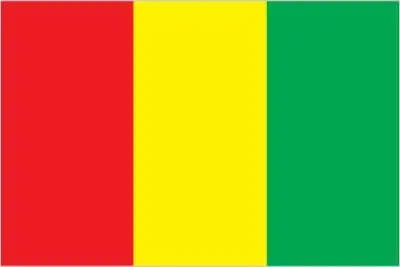
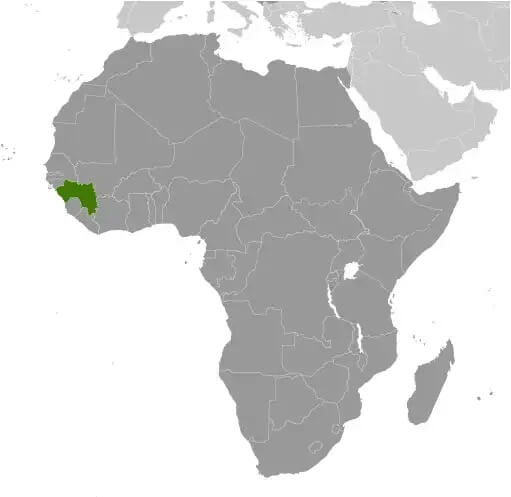
Guinea
World Book Index
49

With a score of 49, the country is ranked 132th out of 158 countries in the World Book ranking. (more information)
Introduction
Guinea, a nation rich in cultural heritage and natural resources, has a complex history shaped by its diverse kingdoms prior to European colonization in the 16th century. The introduction of Islam in the 11th century laid the foundation for a rich cultural tapestry that continues to influence the country today. Following decades of authoritarian governance, Guinea stands at a pivotal moment in its history, striving for democratic reforms and socio-economic development since achieving independence from France in 1958. The resilience of its people and the potential of its resources present opportunities for growth and stability in the years to come.
Neighboring countries
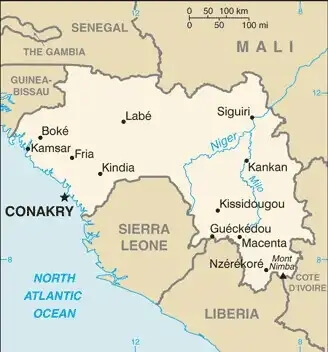
Cote d'Ivoire - Guinea-Bissau - Liberia - Mali - Senegal - Sierra Leone
Geography
Area
Total: 245,857 sq km
Land: 245,717 sq km
Water: 140 sq km
Guinea is located on the western coast of Africa, bordered by the Atlantic Ocean to the southwest. The country's geography is characterized by a diverse landscape that includes coastal plains, savannas, and mountainous regions. The Fouta Djallon highlands, a significant feature of Guinea, serve as the source of several major rivers, including the Niger and Gambia rivers, which are crucial for the region's ecology and economy. The climate is generally hot and humid, with a distinct monsoonal rainy season from June to November, followed by a dry season from December to May. This climatic variation supports a rich biodiversity and a variety of agricultural practices, although it also poses challenges related to climate change and environmental sustainability.
People and Society
Population
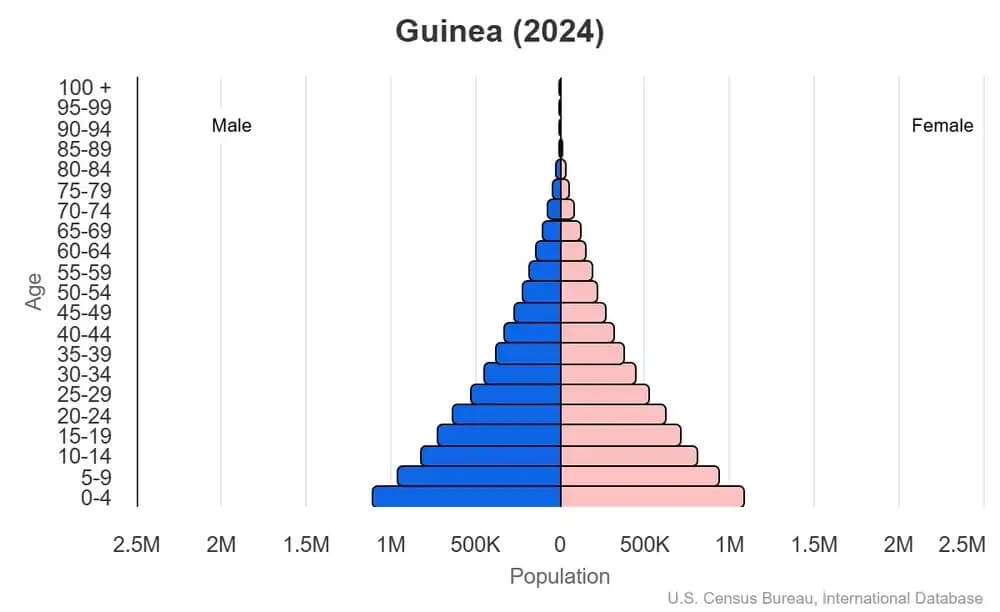
Total: 13,986,179 (2024 estimated)
Guinea's population is a vibrant mosaic of ethnic groups, with the Fulani (Peuhl) making up 33.4%, followed by the Malinke at 29.4%, and the Susu at 21.2%. This ethnic diversity contributes to a rich cultural heritage, reflected in the country's languages and traditions. French is the official language, while several indigenous languages, including Pular, Maninka, and Susu, are widely spoken. The predominant religion is Islam, practiced by 85.2% of the population, with Christianity and animism also present. The population growth rate of 2.74% indicates a youthful demographic, which presents both opportunities for economic development and challenges in terms of providing adequate education and employment opportunities.
Government
Government type
Presidential republic
Capital
Name: Conakry
Guinea operates as a presidential republic, where the President serves as both the head of state and government. The current chief of state is Interim President Col. Mamady DOUMBOUYA, who has been in office since October 1, 2021. The Prime Minister, Amadou Oury BAH, took office on February 27, 2024, and is responsible for the day-to-day administration of the government. The country is navigating a transitional phase, with efforts to stabilize governance and promote democratic practices following years of authoritarian rule. Diplomatic representation in the United States is led by Ambassador Fatoumata KABA, who has been in position since April 19, 2023, while the U.S. mission in Guinea is currently headed by Chargé d’Affaires Mary E. DASCHBACH since July 15, 2025.
Economy
Economic overview
Guinea's economy is primarily agrarian, with a significant reliance on agriculture and a burgeoning mining sector that includes rich deposits of bauxite, gold, and diamonds. The economy has shown growth, with improving fiscal and debt balances noted prior to the COVID-19 pandemic. However, it remains vulnerable to climate change, which poses risks to agricultural productivity and food security. Infrastructure development has been slow, and there are notable gender wealth and human capital gaps that need to be addressed to foster inclusive growth. The government is focusing on diversifying the economy and enhancing resilience against environmental challenges.
Real GDP (purchasing power parity)
$59.439 billion (2024 estimated)
$56.251 billion (2023 estimated)
$53.297 billion (2022 estimated)
Real GDP per capita
$4,000 (2024 estimated)
$3,900 (2023 estimated)
$3,800 (2022 estimated)
Exports
$12.008 billion (2023 estimated)
$8.898 billion (2022 estimated)
$10.266 billion (2021 estimated)
Exports - partners
UAE 50%, China 36%, India 8%, Switzerland 1%, Spain 1% (2023)
Exports - commodities
Gold, aluminum ore, cocoa beans, crude petroleum, coconuts/brazil nuts/cashews (2023)
Imports
$8.365 billion (2023 estimated)
$5.749 billion (2022 estimated)
$5.353 billion (2021 estimated)
Imports - partners
China 39%, India 9%, Netherlands 7%, Belgium 6%, UAE 4% (2023)
Imports - commodities
Refined petroleum, rice, garments, construction vehicles, cars (2023)
Human Development Index
The country's Human Development Index (HDI) is 0.500, ranking it 179th out of 193 countries tested. (more information)
World Happiness Report
The World Happiness Report ranked the country 112th out of 158 countries tested with a score of 4.873. (more information)