World Book
Haiti
World Book Index
46

With a score of 46, the country is ranked 141st out of 158 countries in the World Book ranking. (more information)
Introduction
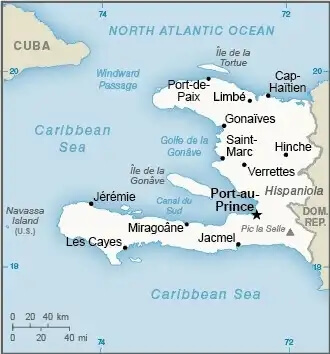
Haiti, a nation with a rich yet tumultuous history, was once a thriving French colony known for its lucrative sugar and forestry industries. The island of Hispaniola, of which Haiti occupies the western third, was ceded to France by Spain in 1697. Over the centuries, Haiti has faced significant challenges, transitioning from one of the wealthiest colonies in the Caribbean to the current status as the poorest country in the Western Hemisphere. This transformation has been marked by a series of political upheavals and social unrest, which continue to affect the nation’s stability and development.
Neighboring countries
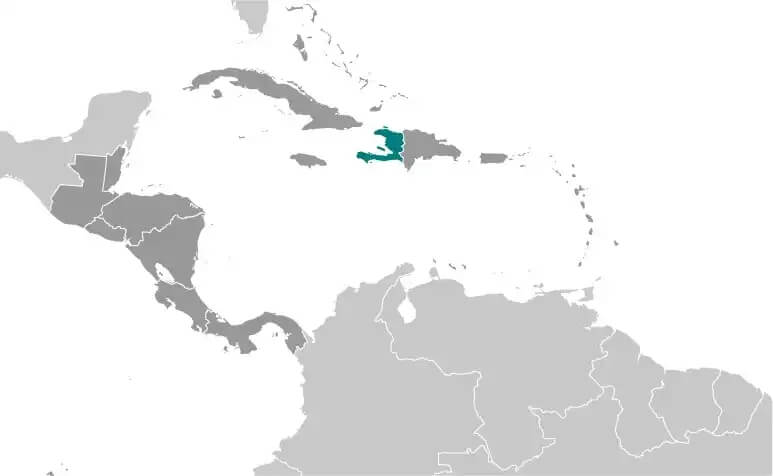
The Bahamas - Cuba - Dominican Republic - Jamaica
Geography
Area
Total: 27,750 sq km
Land: 27,560 sq km
Water: 190 sq km
Haiti is characterized by its diverse geography, which includes mountainous regions, coastal plains, and a tropical climate that is influenced by trade winds. The country experiences a semiarid climate in the eastern mountains, where the elevation disrupts the flow of moisture-laden winds. This geographical diversity not only shapes the climate but also affects the distribution of natural resources, including bauxite, copper, calcium carbonate, gold, marble, and hydropower potential. The availability of arable land further contributes to the agricultural prospects of the nation, although challenges remain in harnessing these resources effectively.
People and Society
Population
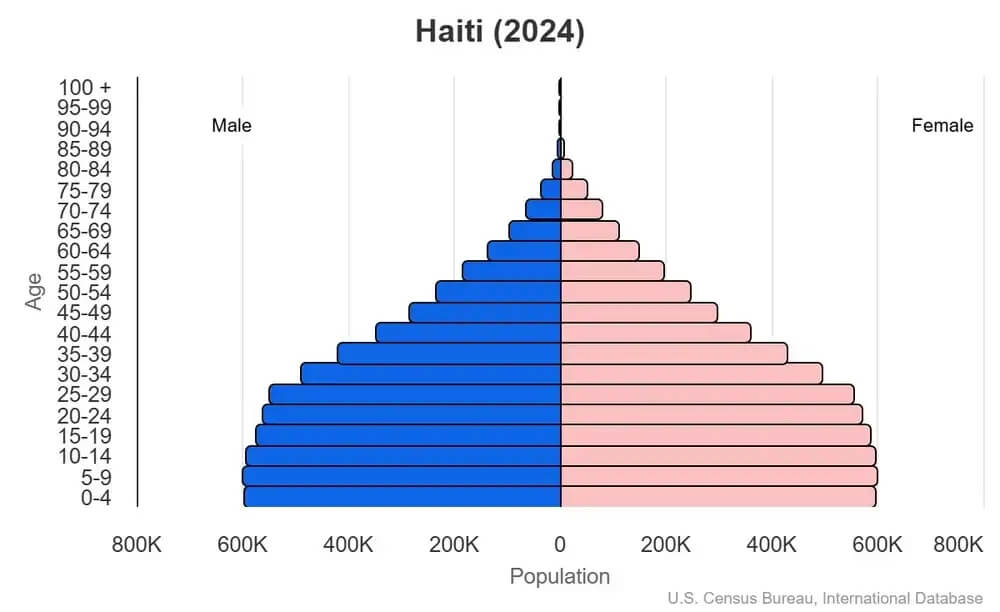
Total: 11,753,943 (2024 estimated)
Ethnic groups
Black 95%, mixed and White 5%
Languages
French (official), Creole (official)
Religions
Catholic 55%, Protestant 29%, Vodou 2.1%, other 4.6%, none 10% (2018 estimated)
Population growth rate
1.23% (2024 estimated)
Haiti's population is predominantly Black, comprising 95% of the demographic, with a small percentage of mixed and White individuals. The official languages, French and Creole, reflect the country's colonial history and cultural heritage. The religious landscape is diverse, with a majority identifying as Catholic, followed by significant Protestant and Vodou communities. The population growth rate of 1.23% indicates a gradual increase, which poses both opportunities and challenges for the nation in terms of resource allocation, education, and employment.
Government
Government type
Semi-presidential republic
Capital
Name: Port-au-Prince
Executive branch
Chief of state: President (vacant)
Head of government: Prime Minister Alix Didier FILS-AIMÉ (since 10 November 2024)
Diplomatic representation in the US
Chief of mission: Ambassador Lionel DELATOUR (since 11 June 2025)
Diplomatic representation from the US
Chief of mission: Ambassador (vacant); Chargé d’Affaires Henry T. WOOSTER (since 12 June 2025)
Haiti operates as a semi-presidential republic, where the executive branch is led by a Prime Minister and a President. Currently, the presidential position remains vacant, highlighting the ongoing political instability that has plagued the nation. The Prime Minister, Alix Didier FILS-AIMÉ, has been in office since November 2024, navigating a complex political landscape. Diplomatic relations, particularly with the United States, are critical for Haiti, as evidenced by the appointment of Ambassador Lionel DELATOUR and the presence of a Chargé d’Affaires from the US.
Economy
Economic overview
Haiti's economy is characterized as a small Caribbean island economy and an OECS-member state, grappling with extreme poverty and inflation. The nation faces enormous income inequality, exacerbated by ongoing civil unrest following a recent presidential assassination. Despite these challenges, Haiti benefits from US preferential market access and remains open to foreign direct investment, which could play a crucial role in its economic recovery.
Real GDP (purchasing power parity)
$32.971 billion (2024 estimated)
$34.406 billion (2023 estimated)
$35.059 billion (2022 estimated)
Real GDP per capita
$2,800 (2024 estimated)
$3,000 (2023 estimated)
$3,000 (2022 estimated)
Exports
$1.095 billion (2023 estimated)
$1.355 billion (2022 estimated)
$1.272 billion (2021 estimated)
Exports - partners
USA 82%, Canada 4%, Mexico 2%, France 2%, India 2% (2023)
Exports - commodities
Garments, essential oils, scrap iron, industrial acids/oils/alcohols, bedding (2023)
Imports
$5.303 billion (2023 estimated)
$5.451 billion (2022 estimated)
$5.048 billion (2021 estimated)
Imports - partners
USA 31%, Dominican Republic 23%, China 14%, Indonesia 4%, India 3% (2023)
Imports - commodities
Refined petroleum, rice, garments, cotton fabric, plastic products (2023)
Haiti's economic indicators reveal a challenging landscape, with a real GDP of $32.971 billion projected for 2024, translating to a GDP per capita of $2,800. The country relies heavily on exports, primarily to the United States, which accounts for 82% of its export market. Key export commodities include garments and essential oils, while imports predominantly consist of refined petroleum and rice. The disparity between exports and imports highlights the economic vulnerabilities Haiti faces, necessitating strategic interventions to foster sustainable growth and development.
Human Development Index
The country's Human Development Index (HDI) is 0.554, ranking it 166th out of 193 countries tested. (more information)
World Happiness Report
The World Happiness Report ranked the country 144th out of 158 countries tested with a score of 3.721. (more information)