World Book
Kenya
World Book Index
53

With a score of 53, the country is ranked 114th out of 158 countries in the World Book ranking. (more information)
Introduction
Kenya, a nation rich in cultural diversity and natural beauty, gained independence from the United Kingdom in 1963. Since then, it has embarked on a journey of nation-building and democratic governance. The adoption of a new constitution in 2010 marked a significant milestone, introducing additional checks and balances to executive power while devolving authority and resources to 47 newly created counties. This constitutional reform aimed to enhance local governance and empower communities, reflecting Kenya's commitment to democratic principles and inclusive development.
Neighboring countries
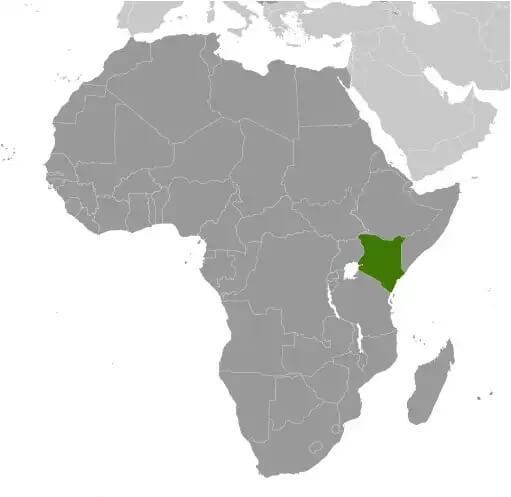
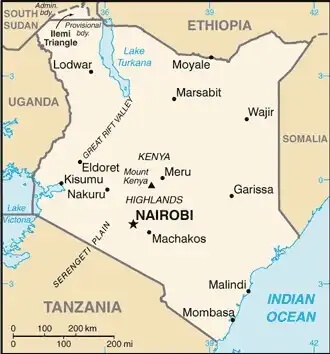
Ethiopia - Somalia - South Sudan - Tanzania - Uganda
Geography
Area
Total: 580,367 sq km
Land: 569,140 sq km
Water: 11,227 sq km
Kenya's geography is characterized by its diverse landscapes, ranging from the coastal plains along the Indian Ocean to the highlands and plateaus in the interior. The country experiences a variety of climatic conditions, with a tropical climate along the coast and arid conditions in the interior regions. This geographical diversity not only contributes to the country's rich biodiversity but also influences its agricultural practices and economic activities. The presence of significant natural resources, including limestone, soda ash, salt, gemstones, fluorspar, zinc, diatomite, gypsum, wildlife, and hydropower, positions Kenya as a vital player in the region's economic landscape.
People and Society
Population
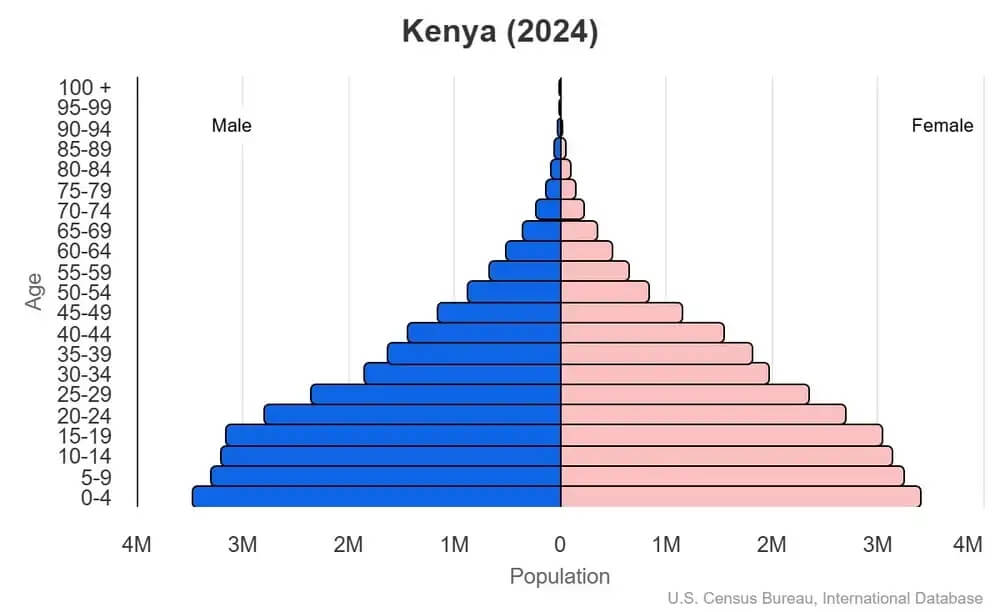
Total: 58,246,378 (2024 estimated)
Kenya is home to a vibrant tapestry of ethnic groups, with the Kikuyu (17.1%), Luhya (14.3%), Kalenjin (13.4%), Luo (10.7%), Kamba (9.8%), Somali (5.8%), Kisii (5.7%), Mijikenda (5.2%), Meru (4.2%), Maasai (2.5%), Turkana (2.1%), non-Kenyan (1%), and other groups (8.2%) contributing to its cultural richness (2019 estimated). The official languages, English and Kiswahili, serve as unifying factors in a nation characterized by numerous indigenous languages. The religious landscape is predominantly Christian (85.5%), with a significant Muslim population (10.9%) and other faiths represented. The population growth rate of 2.06% (2024 estimated) indicates a youthful demographic, which presents both opportunities and challenges for the country's development trajectory.
Government
Government type
Presidential republic
Capital
Name: Nairobi
The government of Kenya operates as a presidential republic, where the President serves as both the head of state and government. Currently, President William RUTO has been in office since 13 September 2022, leading the nation through various reforms and initiatives aimed at fostering economic growth and social development. Kenya maintains diplomatic relations with numerous countries, including representation in the United States, where Ambassador David Kipkorir Kiplagat KERICH has served since 18 September 2024. The political landscape is dynamic, reflecting the aspirations of a diverse populace and the ongoing quest for democratic governance.
Economy
Economic overview
Kenya's economy is one of the fastest-growing in Sub-Saharan Africa, ranking as the third largest in the region. The agricultural sector plays a crucial role, providing employment and sustenance for a significant portion of the population. In recent years, the services and tourism industries have emerged as vital components of economic growth, contributing to diversification and resilience. The government has engaged in an IMF program to address current account and debt service challenges, demonstrating a commitment to fiscal responsibility. Business-friendly policies have fostered infrastructure investment, digital innovation, and public-private partnerships, which are essential for sustainable development. However, the economy remains vulnerable to climate change-induced droughts, which can impact agricultural productivity and food security.
Real GDP (purchasing power parity)
$328.632 billion (2024 estimated)
$314.491 billion (2023 estimated)
$297.938 billion (2022 estimated)
Real GDP per capita
$5,800 (2024 estimated)
$5,700 (2023 estimated)
$5,500 (2022 estimated)
Exports
$12.626 billion (2023 estimated)
$13.954 billion (2022 estimated)
$11.815 billion (2021 estimated)
Exports - partners
Uganda 10%, USA 10%, UAE 8%, Netherlands 8%, Pakistan 6% (2023)
Exports - commodities
Tea, cut flowers, garments, gold, tropical fruits (2023)
Imports
$22.046 billion (2023 estimated)
$24.606 billion (2022 estimated)
$22.001 billion (2021 estimated)
Imports - partners
China 22%, UAE 14%, India 10%, Saudi Arabia 5%, Malaysia 4% (2023)
Imports - commodities
Refined petroleum, palm oil, wheat, plastics, garments (2023)
Human Development Index
The country's Human Development Index (HDI) is 0.628, ranking it 143th out of 193 countries tested. (more information)
World Happiness Report
The World Happiness Report ranked the country 117th out of 158 countries tested with a score of 4.505. (more information)