World Book
Malawi
World Book Index
42

With a score of 42, the country is ranked 147th out of 158 countries in the World Book ranking. (more information)
Introduction
Malawi, a landlocked nation in southeastern Africa, boasts a rich historical tapestry that dates back to the Kingdom of Maravi, which flourished from the late 15th to the 18th centuries. This kingdom not only encompassed present-day Malawi but also extended into parts of Zambia and Mozambique, showcasing its historical significance in the region. The British established the Central African Protectorate in 1889, which was later renamed Nyasaland in 1907. Following a long struggle for independence, Malawi emerged as a sovereign nation in 1964, marking a pivotal moment in its history. Today, Malawi is known for its vibrant culture, stunning landscapes, and the resilience of its people, who continue to navigate the challenges of modern governance and economic development.
Neighboring countries
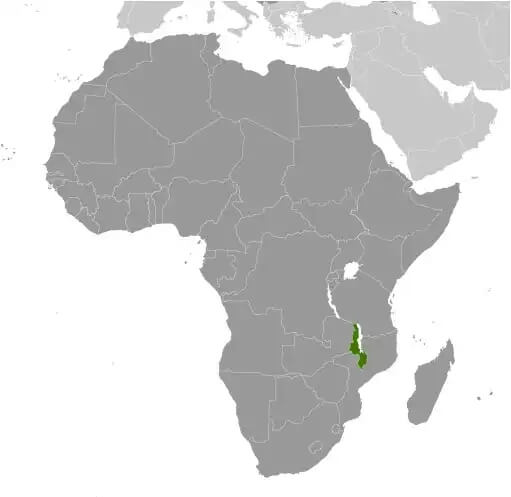
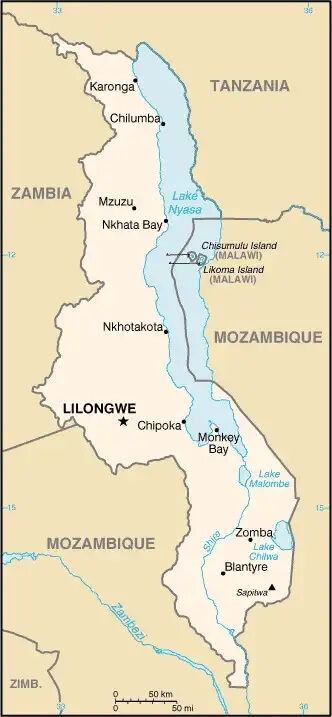
Mozambique - Tanzania - Zambia
Geography
Area
Total: 118,484 sq km
Land: 94,080 sq km
Water: 24,404 sq km
Malawi is characterized by its diverse geography, which includes a mix of highlands, plateaus, and valleys. The Great Rift Valley runs through the country, contributing to its unique topography and rich biodiversity. The country is bordered by Lake Malawi, one of the largest lakes in Africa, which plays a crucial role in the local ecosystem and economy. The climate is predominantly sub-tropical, with a distinct rainy season from November to May and a dry season from May to November. This climatic pattern significantly influences agricultural practices, which are vital to the livelihoods of the Malawian people. The natural resources of Malawi include limestone, arable land, and hydropower potential, alongside unexploited deposits of uranium, coal, and bauxite, which present opportunities for future economic development.
People and Society
Population
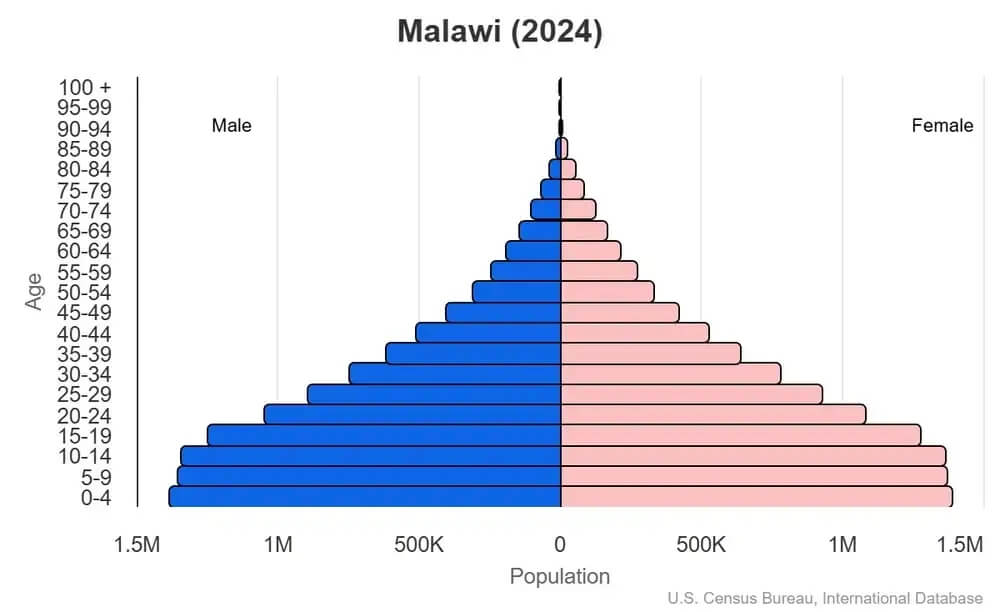
Total: 21,763,309 (2024 estimated)
Malawi is home to a diverse population that reflects a rich tapestry of ethnicities and cultures. The major ethnic groups include Chewa (34.3%), Lomwe (18.8%), Yao (13.2%), Ngoni (10.4%), and Tumbuka (9.2%), among others. This ethnic diversity contributes to a vibrant cultural landscape, characterized by various languages, traditions, and social practices. The official language is English, while Chewa is the dominant local language, spoken by a significant portion of the population. The religious landscape is equally diverse, with Protestantism being the most prevalent faith, followed by Roman Catholicism and Islam. The population growth rate of 2.22% (2024 estimated) indicates a youthful demographic, which presents both opportunities and challenges for the nation in terms of education, employment, and social services. As Malawi continues to develop, the interplay between its diverse ethnic groups and the need for social cohesion will be critical in shaping its future.
Government
Government type
Presidential republic
Capital
Name: Lilongwe
Malawi operates as a presidential republic, where the President serves as both the head of state and the head of government. Currently, President Lazarus CHAKWERA has been in office since June 28, 2020, leading the nation through various political and economic challenges. The capital city, Lilongwe, serves as the political and administrative center of the country. Malawi's government is characterized by a multi-party system, which allows for a range of political voices and participation in the democratic process. However, the nation faces ongoing challenges, including issues related to governance, corruption, and the need for effective public service delivery. The diplomatic representation in the United States is led by Ambassador Esme Jynet CHOMBO, who has been in position since April 19, 2022, reflecting Malawi's efforts to strengthen international relations.
Economy
Economic overview
Malawi's economy is classified as a low-income East African economy, primarily agrarian in nature. Agriculture plays a central role, employing a significant portion of the population and contributing to the country's GDP. However, the nation faces challenges such as increasing urban poverty exacerbated by the COVID-19 pandemic, high public debt, endemic corruption, and poor property rights. The hydroelectric grid is underdeveloped, limiting energy access and economic growth. Despite these challenges, Malawi is investing in human capital to improve education and health outcomes, which are crucial for long-term development. The localized pharmaceutical industry is emerging, indicating potential for growth in the health sector. Real GDP (purchasing power parity)
$35.425 billion (2024 estimated)
$34.789 billion (2023 estimated)
$34.143 billion (2022 estimated)
Real GDP per capita
$1,600 (2024 estimated)
$1,600 (2023 estimated)
$1,700 (2022 estimated)
Exports
$1.526 billion (2023 estimated)
$1.487 billion (2022 estimated)
$1.587 billion (2021 estimated)
Exports - partners
Germany 11%, India 7%, Zimbabwe 6%, South Africa 5%, USA 5% (2023)
Exports - commodities
Tobacco, tea, dried legumes, soybean meal, raw sugar (2023)
Imports
$3.995 billion (2023 estimated)
$3.834 billion (2022 estimated)
$3.768 billion (2021 estimated)
Imports - partners
China 17%, South Africa 16%, UAE 12%, India 7%, Tanzania 7% (2023)
Imports - commodities
Refined petroleum, fertilizers, plastics, garments, postage stamps/documents (2023)
Human Development Index
The country's Human Development Index (HDI) is 0.517, ranking it 172th out of 193 countries tested. (more information)
World Happiness Report
The World Happiness Report ranked the country 152nd out of 158 countries tested with a score of 3.383. (more information)