World Book
Togo
World Book Index
48

With a score of 48, the country is ranked 134th out of 158 countries in the World Book ranking. (more information)
Introduction
Togo, a small West African nation, boasts a rich tapestry of history and culture shaped by its diverse ethnic groups. From the 11th to the 16th centuries, various communities established their presence in the region, contributing to a vibrant cultural landscape. Following World War I, Togo transitioned from German colonial rule to French administration, ultimately gaining independence in 1960. This historical journey has influenced Togo's contemporary identity, making it a unique blend of traditional and modern influences.
Neighboring countries
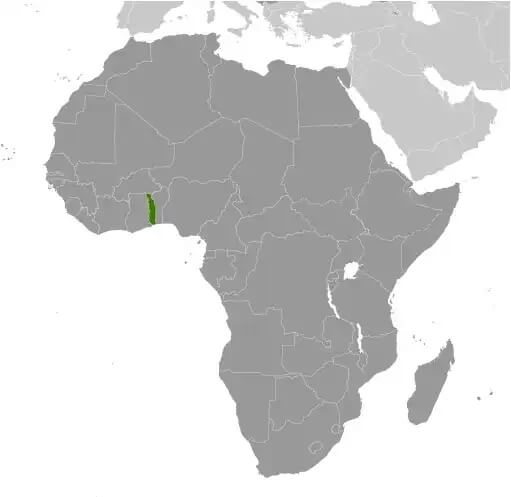
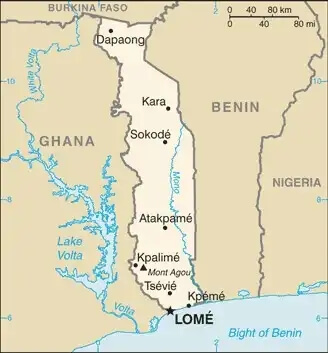
Benin - Burkina Faso - Ghana
Geography
Area
Total: 56,785 sq km
Land: 54,385 sq km
Water: 2,400 sq km
Togo is characterized by its diverse geography, which ranges from coastal plains along the Gulf of Guinea to the hilly regions in the north. The country’s total area of 56,785 sq km includes 54,385 sq km of land and 2,400 sq km of water bodies. The climate varies significantly, with a tropical climate dominating the southern regions, which are hot and humid, while the northern areas experience a semiarid climate. Togo is endowed with natural resources such as phosphates, limestone, and marble, alongside arable land that supports its agricultural sector.
People and Society
Population
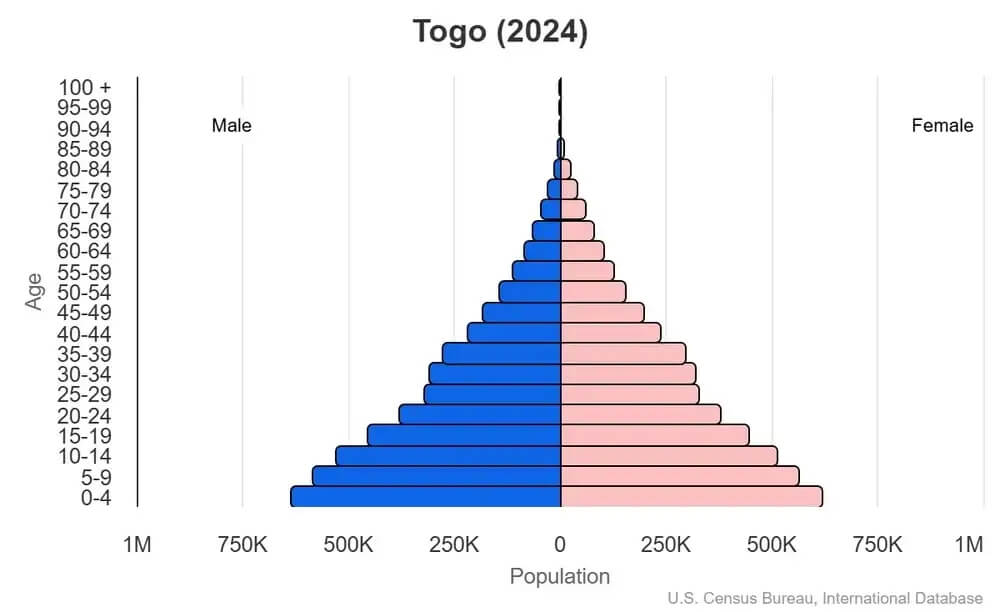
Total: 8,917,994 (2024 estimated)
Ethnic groups
Adja-Ewe/Mina 42.4%, Kabye/Tem 25.9%, Para-Gourma/Akan 17.1%, Akposso/Akebu 4.1%, Ana-Ife 3.2%, other Togolese 1.7%, foreigners 5.2%, no response 0.4% (2013-14 estimated)
Languages
French (official, language of commerce), Ewe and Mina (in the south), Kabye (sometimes spelled Kabiye) and Dagomba (in the north)
Religions
Christian 42.3%, folk religion 36.9%, Muslim 14%, Hindu <1%, Buddhist <1%, Jewish <1%, other <1%, none 6.2% (2020 estimated)
Population growth rate
2.41% (2024 estimated)
Togo's population, estimated at 8,917,994 in 2024, reflects a rich ethnic diversity, with the Adja-Ewe/Mina group constituting 42.4% of the population, followed by Kabye/Tem at 25.9%. The official language is French, which serves as the primary medium of commerce and government, while indigenous languages such as Ewe, Mina, and Kabye are widely spoken, particularly in their respective regions. The religious landscape is equally varied, with Christianity and folk religions being predominant, alongside a significant Muslim minority. The population growth rate of 2.41% indicates a youthful demographic, which presents both opportunities and challenges for the nation’s development.
Government
Government type
Presidential republic
Capital
Name: Lome
Executive branch
Chief of state: President Jean-Lucien Kwassi Savi de TOVE (since 3 May 2025)
Head of government: President of Council of Ministers Faure GNASSINGBE (since 3 May 2025)
Diplomatic representation in the US
Chief of mission: Ambassador Frédéric Edem HEGBE (since 24 April 2017)
Diplomatic representation from the US
Chief of mission: Ambassador (vacant); Chargé d’Affaires Richard C. MICHAELS (since June 2025)
Togo operates as a presidential republic, with a political structure that emphasizes the role of the president as both the head of state and government. The capital city, Lome, serves as the political and administrative center. The current leadership includes President Jean-Lucien Kwassi Savi de TOVE, who has been in office since May 3, 2025, alongside Faure GNASSINGBE, who heads the Council of Ministers. Togo maintains diplomatic relations with various countries, including the United States, where it is represented by Ambassador Frédéric Edem HEGBE.
Economy
Economic overview
Low-income West African economy; primarily agrarian economy; has a deep-water port; growing international shipping locale; improving privatization and public budgeting transparency; key phosphate mining industry; extremely high rural poverty
Real GDP (purchasing power parity)
$27.115 billion (2024 estimated)
$25.75 billion (2023 estimated)
$24.199 billion (2022 estimated)
Real GDP per capita
$2,800 (2024 estimated)
$2,800 (2023 estimated)
$2,700 (2022 estimated)
Exports
$1.722 billion (2020 estimated)
$1.665 billion (2019 estimated)
$1.703 billion (2018 estimated)
Exports - partners
UAE 40%, India 13%, Angola 13%, Burkina Faso 4%, Cote d'Ivoire 3% (2023)
Exports - commodities
Gold, refined petroleum, soybeans, phosphates, coconuts/brazil nuts/cashews (2023)
Imports
$2.389 billion (2020 estimated)
$2.261 billion (2019 estimated)
$2.329 billion (2018 estimated)
Imports - partners
China 26%, India 26%, Belgium 6%, Netherlands 6%, USA 3% (2023)
Imports - commodities
Refined petroleum, garments, rice, palm oil, motorcycles and cycles (2023)
Togo's economy is classified as a low-income West African economy, heavily reliant on agriculture, which forms the backbone of its economic activities. The nation benefits from a strategic deep-water port that enhances its position as a growing international shipping hub. The government is making strides towards improving privatization and public budgeting transparency, which are essential for economic development. The phosphate mining industry plays a crucial role in the economy, contributing significantly to export revenues. However, the country faces challenges, including extremely high rural poverty levels, which necessitate targeted interventions to improve living standards. The real GDP, estimated at $27.115 billion in 2024, reflects a gradual increase, with a per capita GDP of $2,800, indicating the need for sustained economic reforms to enhance overall prosperity.
Human Development Index
The country's Human Development Index (HDI) is 0.571, ranking it 161th out of 193 countries tested. (more information)
World Happiness Report
The World Happiness Report ranked the country 136th out of 158 countries tested with a score of 3.977. (more information)