World Book
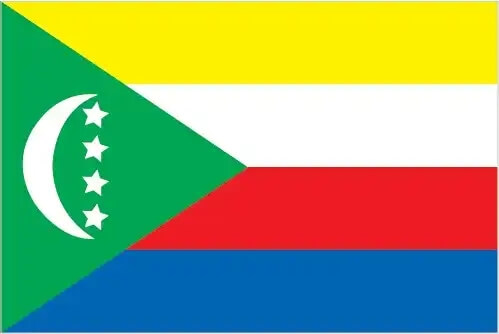
Comoros
World Book Index
47

With a score of 47, the country is ranked 135th out of 158 countries in the World Book ranking. (more information)
Introduction
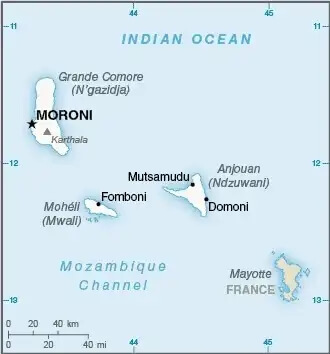
The Comoros, a stunning archipelago located in the Indian Ocean, is made up of three main islands: Anjouan, Moheli, and Grande Comore. This unique nation, rich in cultural heritage and natural beauty, declared its independence from France on 6 July 1975. The islands are known for their diverse ecosystems, vibrant traditions, and the resilience of their people, who have navigated a complex history marked by political changes and economic challenges. Today, the Comoros stands as a testament to the enduring spirit of its inhabitants, striving for development while preserving its rich cultural identity.
Neighboring countries
Madagascar - Mozambique - Seychelles - Tanzania
Geography
Area
Total: 2,235 sq km
Land: 2,235 sq km
Water: 0 sq km
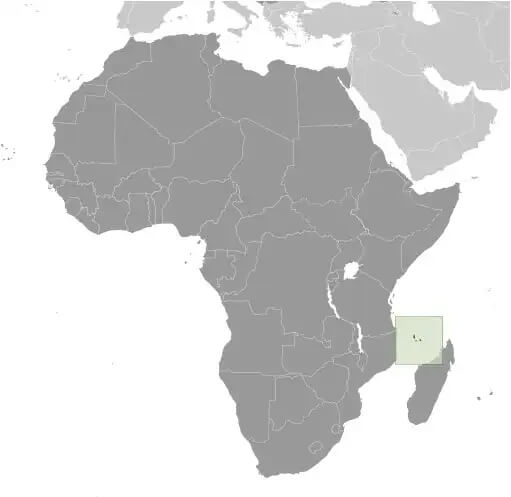
The Comoros archipelago is strategically positioned in the Indian Ocean, situated between the eastern coast of Africa and the island of Madagascar. The islands are characterized by their volcanic origins, lush landscapes, and a tropical marine climate that supports a rich biodiversity. The climate features a distinct rainy season from November to May, which significantly influences the agricultural practices and water resources of the islands. The absence of significant freshwater bodies highlights the importance of rainwater harvesting and sustainable management of the islands' limited resources. The natural resources, primarily fish, play a crucial role in the local economy and food security.
People and Society
Population
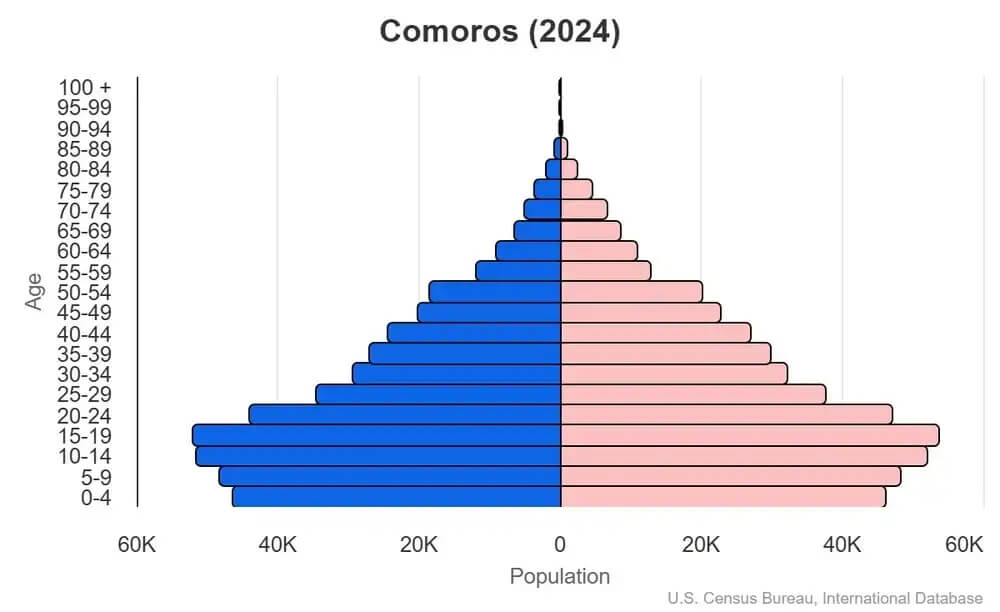
Total: 900,141 (2024 estimated)
The Comoros is home to a diverse population composed of several ethnic groups, including the Antalote, Cafre, Makoa, Oimatsaha, and Sakalava. This ethnic diversity contributes to a rich cultural tapestry, reflected in the islands' languages, traditions, and social structures. The official languages are Arabic, French, and Shikomoro, which is closely related to Swahili, highlighting the islands' historical connections to both the Arab world and Africa. The predominant religion is Islam, with 98.1% of the population identifying as Muslim, primarily of the Sunni denomination, alongside small communities of Shia Muslims and adherents of other faiths. The population growth rate of 1.3% (2024 estimated) indicates a young demographic, which presents both opportunities and challenges for the nation's development and social services.
Government
Government type
Federal presidential republic
Capital
Name: Moroni
The Comoros operates as a federal presidential republic, with a political system that has undergone various transformations since its independence. The executive branch is led by President AZALI Assoumani, who has been in office since 26 May 2016, serving as both the chief of state and head of government. The government structure reflects a commitment to democratic principles, although it has faced challenges related to political stability and governance. The diplomatic representation in the United States is managed by Ambassador Issimail CHANFI, who has held the position since 23 December 2020, also serving as the Permanent Representative to the United Nations.
Economy
Economic overview
The Comoros has a small trade-based island economy that is heavily reliant on agriculture and fishing. However, the economy faces significant challenges, including declining remittances, which have been a vital source of income for many families. Recent structural and fiscal reforms aim to stabilize the economy, but the impacts of adverse weather events, such as cyclones, and the ongoing effects of the COVID-19 pandemic have created a fragile economic environment. Despite manageable debts, the liquidity situation remains precarious, necessitating careful economic management. The country has attracted large foreign direct investment, although state-owned enterprises continue to struggle with inefficiencies and financial difficulties.
Real GDP (purchasing power parity)
$3.092 billion (2024 estimated)
$2.99 billion (2023 estimated)
$2.901 billion (2022 estimated)
Real GDP per capita
$3,600 (2024 estimated)
$3,500 (2023 estimated)
$3,500 (2022 estimated)
Exports
$148.455 million (2023 estimated)
$166.032 million (2022 estimated)
$128.331 million (2021 estimated)
Exports - partners
Indonesia 25%, India 23%, Turkey 16%, UAE 11%, USA 3% (2023)
Exports - commodities
Cloves, ships, essential oils, vanilla, scrap iron (2023)
Imports
$504.036 million (2023 estimated)
$480.268 million (2022 estimated)
$415.965 million (2021 estimated)
Imports - partners
China 24%, UAE 21%, Tanzania 12%, France 7%, India 6% (2023)
Imports - commodities
Refined petroleum, poultry, rice, flavored water, additive manufacturing machines (2023)
Human Development Index
The country's Human Development Index (HDI) is 0.603, ranking it 152nd out of 193 countries tested. (more information)
World Happiness Report
The World Happiness Report ranked the country 146th out of 158 countries tested with a score of 3.561. (more information)