World Book
Seychelles
Introduction
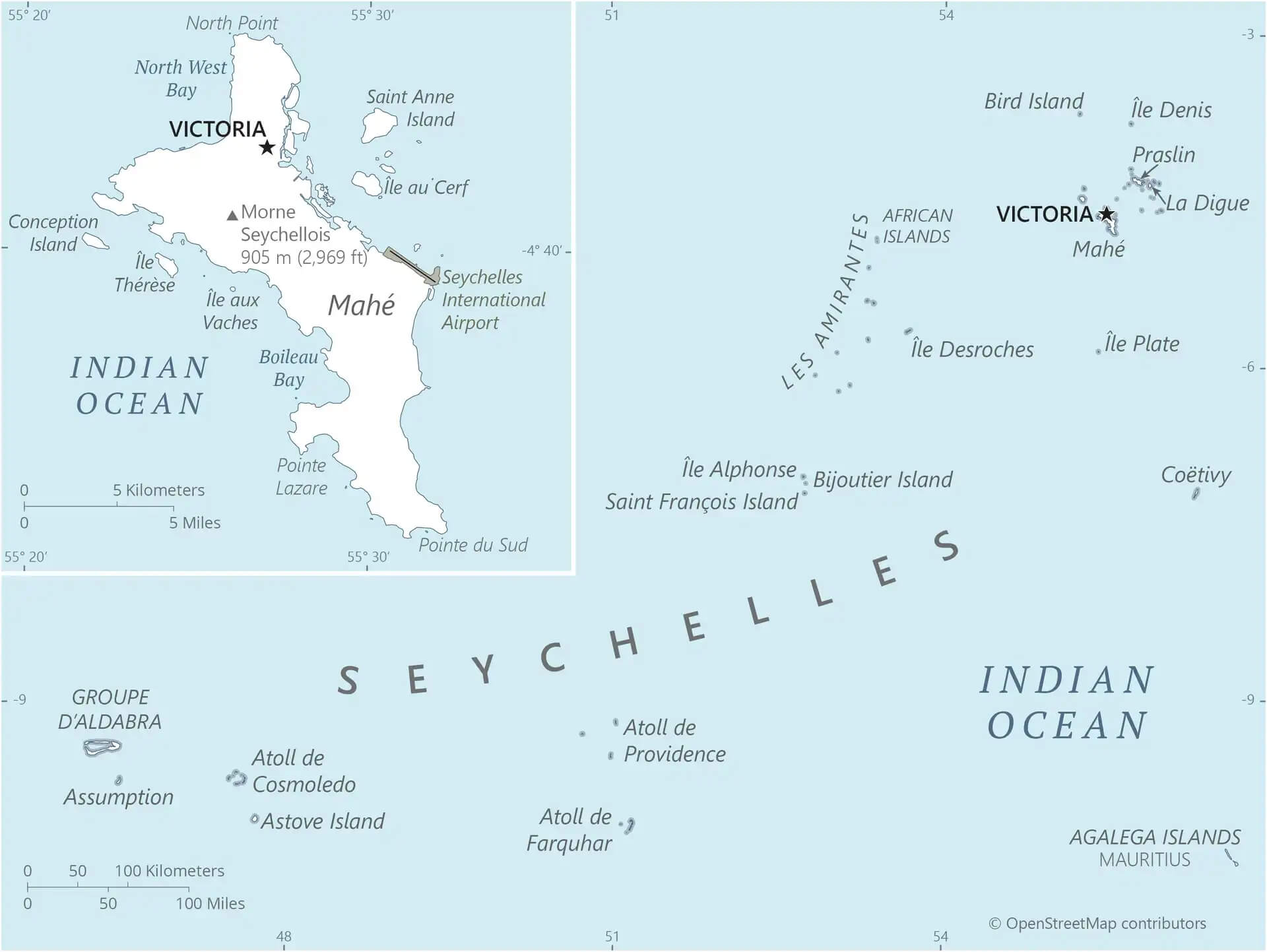
Seychelles, an archipelago of 115 islands in the Indian Ocean, boasts a rich history that began with its discovery by European explorers in the early 16th century. Initially uninhabited, the islands were claimed by France and later ceded to Great Britain in 1814 after a protracted struggle. The nation achieved independence in 1976, marking a significant turning point in its journey towards self-governance and national identity. Today, Seychelles is celebrated for its stunning natural beauty, diverse ecosystems, and vibrant culture, making it a unique gem in the Indian Ocean.
Neighboring countries
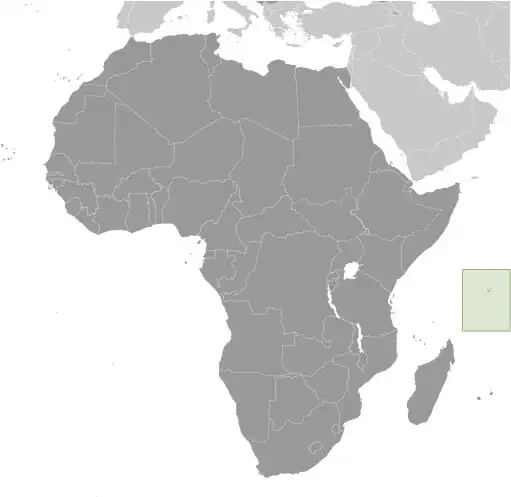
Comoros - Kenya - Madagascar - Maldives - Mauritius - Mayotte - Reunion
Geography
Area
Total: 455 sq km
Land: 455 sq km
Water: 0 sq km
Seychelles is characterized by its unique geographical features, comprising a group of islands located in the western Indian Ocean. The archipelago is renowned for its granite and coral islands, with the majority of the landmass concentrated in the inner islands, which are home to lush tropical forests and diverse wildlife. The climate is tropical marine, marked by high humidity and distinct seasonal variations influenced by the southeast and northwest monsoons. The islands are also endowed with rich natural resources, including fish, coconuts (copra), and cinnamon trees, which play a vital role in the local economy and culture.
People and Society
Population
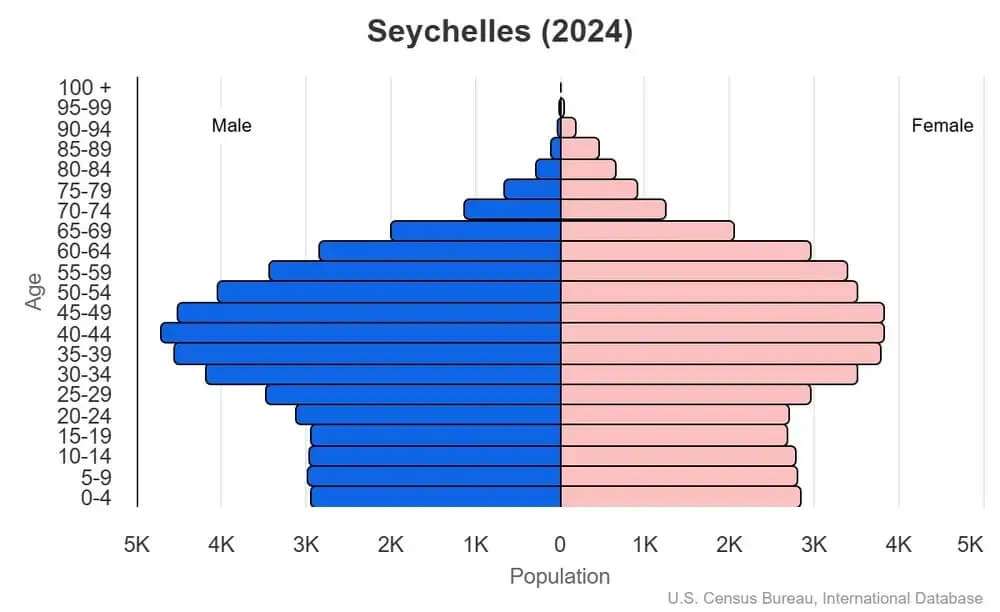
Total: 98,187 (2024 estimated)
Seychelles is a melting pot of cultures, predominantly inhabited by Creole people, who trace their roots to East Africa and Madagascar. The population also includes significant communities of French, Indian, Chinese, and Arab descent, contributing to the rich tapestry of Seychellois identity. The official languages reflect this diversity, with Seychellois Creole being the most widely spoken, followed by English and French. The religious landscape is predominantly Roman Catholic, with a notable presence of Protestant denominations, Hinduism, and Islam. The population growth rate stands at 0.56% (2024 estimated), indicating a stable demographic trend in this island nation.
Government
Government type
Presidential republic
Capital
Name: Victoria
Seychelles operates as a presidential republic, where the President serves as both the head of state and government. Currently, President Wavel RAMKALAWAN has been in office since 26 October 2020, steering the nation through various challenges and opportunities. The diplomatic representation in the United States is led by Ambassador Ian Dereck Joseph MADELEINE, who has been serving since 1 December 2021, also holding the position of Permanent Representative to the UN. The U.S. diplomatic mission is represented by Ambassador Henry V. JARDINE, who has been accredited to Seychelles since 22 February 2023, alongside Chargé d’Affaires Adham LOUTFI since 6 October 2023, highlighting the importance of international relations for the country.
Economy
Economic overview
Seychelles boasts a high-income economy characterized by its strategic location in the Indian Ocean. The tourism sector is a cornerstone of the economy, driving growth and providing employment opportunities for the local population. Additionally, Seychelles is a major exporter of tuna, which significantly contributes to its economic stability. The nation has established itself as an offshore financial hub, attracting foreign investment while also facing the challenges of environmental fragility. Recent discoveries of offshore oil potential present new avenues for economic development, although they come with ecological considerations. The government has made strides in anticorruption efforts, fostering a more transparent business environment.
Real GDP (purchasing power parity)
$3.549 billion (2024 estimated)
$3.43 billion (2023 estimated)
$3.354 billion (2022 estimated)
Real GDP per capita
$29,200 (2024 estimated)
$28,600 (2023 estimated)
$28,000 (2022 estimated)
Exports
$2.375 billion (2023 estimated)
$2.247 billion (2022 estimated)
$1.751 billion (2021 estimated)
Exports - partners
France 20%, Mauritius 12%, UK 9%, Japan 8%, Italy 8% (2023)
Exports - commodities
Fish, scrap iron, animal meal, broadcasting equipment, ships (2023)
Imports
$2.437 billion (2023 estimated)
$2.298 billion (2022 estimated)
$1.821 billion (2021 estimated)
Imports - partners
UAE 32%, Spain 10%, France 6%, South Africa 6%, India 6% (2023)
Imports - commodities
Refined petroleum, fish, ships, cars, plastic products (2023)
Human Development Index
The country's Human Development Index (HDI) is 0.848, ranking it 54th out of 193 countries tested. (more information)