World Book
Iceland
World Book Index
86

With a score of 86, the country is ranked 1st out of 158 countries in the World Book ranking. (more information)
Introduction
Iceland, a Nordic island nation, is renowned for its stunning landscapes and rich cultural heritage. Settled by Norwegian and Celtic (Scottish and Irish) immigrants during the late 9th and 10th centuries A.D., it has developed a unique identity that blends ancient traditions with modern influences. The country is notable for having the world's oldest functioning legislative assembly, the Althingi, established in 930, which reflects its long-standing commitment to democratic governance and civic participation. Iceland's history is marked by resilience and innovation, making it a fascinating case study in the evolution of a small nation in a globalized world.
Neighboring countries
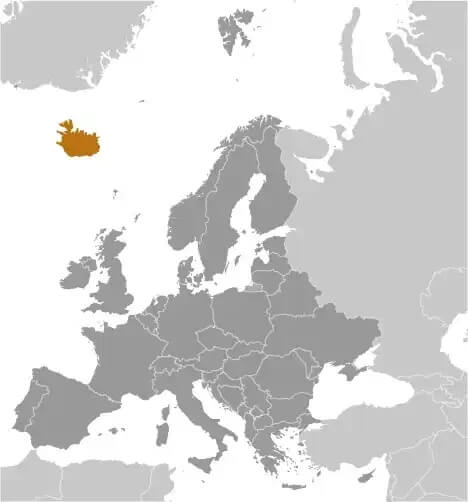
Denmark - Ireland - Norway - United Kingdom
Geography
Area
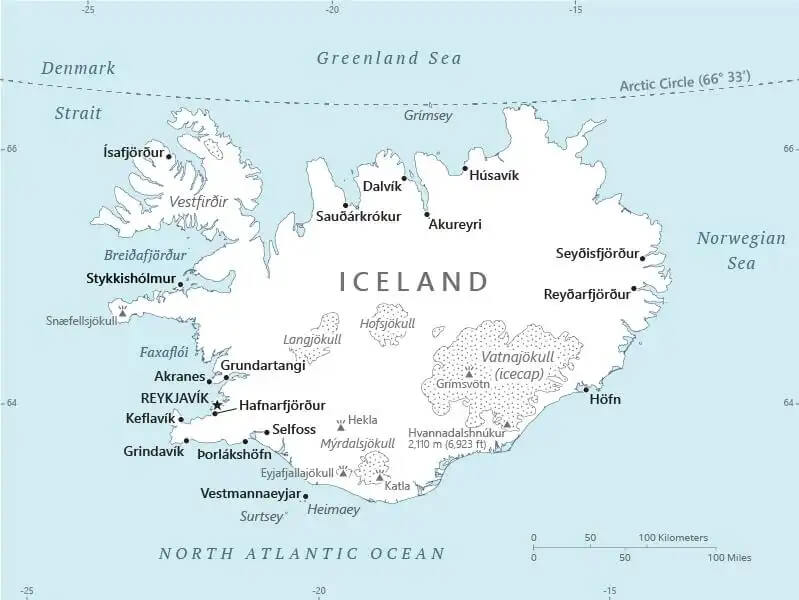
Total: 103,000 sq km
Land: 100,250 sq km
Water: 2,750 sq km
Climate
Iceland's climate is classified as temperate, significantly moderated by the North Atlantic Current. The country experiences mild, windy winters and damp, cool summers, which contribute to its unique ecosystems and biodiversity. The geographical features of Iceland, including its volcanic landscapes, glaciers, and geothermal activity, play a crucial role in shaping its climate and natural environment.
Natural resources
Iceland is rich in natural resources, including abundant fish stocks, hydropower, and geothermal power, which are pivotal to its economy. The country's unique geological characteristics also allow for the extraction of diatomite, further enhancing its resource portfolio. These resources not only support domestic needs but also position Iceland as a significant player in renewable energy production.
People and Society
Population
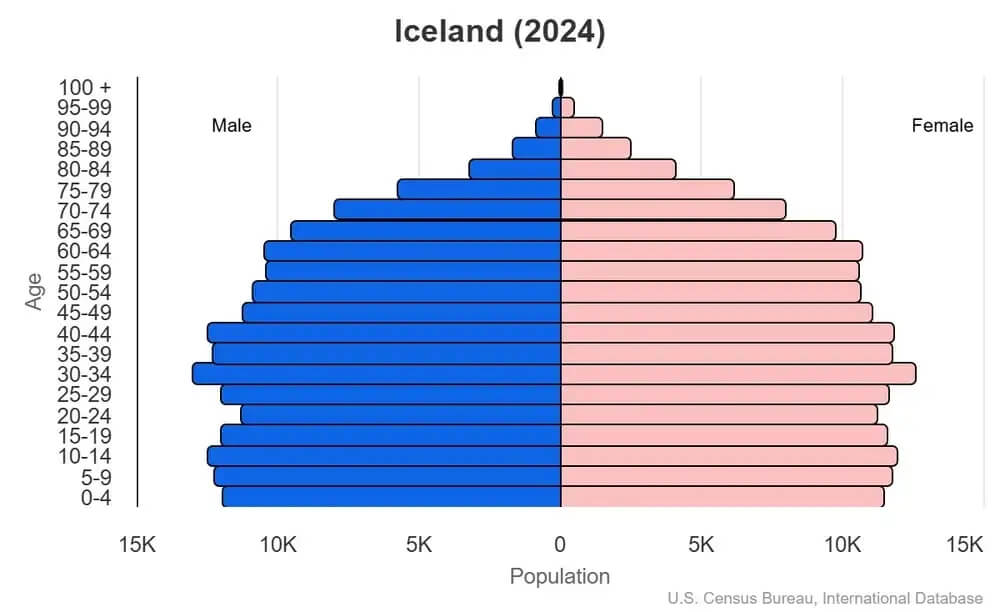
Total: 364,036 (2024 estimated)
Ethnic groups
Icelandic 78.7%, Polish 5.8%, Danish 1%, Ukrainian 1%, other 13.5% (2024 estimated)
Languages
The primary language spoken in Iceland is Icelandic, a North Germanic language that has preserved many archaic features. English is widely spoken, alongside Polish, Nordic languages, and German, reflecting the country's diverse population and its integration into the global community.
Religions
The religious landscape of Iceland is predominantly shaped by the Evangelical Lutheran Church of Iceland, which is the official state church, accounting for 58.6% of the population. Other religious affiliations include Roman Catholicism, independent congregations, and various pagan and humanist beliefs, illustrating the country's cultural diversity and the coexistence of different faiths.
Population growth rate
The population growth rate stands at 0.85% (2024 estimated), indicating a steady increase in the number of residents. This growth is influenced by factors such as immigration and natural population dynamics, contributing to the evolving demographic profile of the nation.
Government
Government type
Iceland operates as a unitary parliamentary republic, characterized by a strong democratic framework and active civic engagement.
Capital
Name: Reykjavik
Executive branch
The chief of state is President Halla TOMASDOTTIR (since 1 August 2024), while the head of government is Prime Minister Kristrun FROSTADOTTIR (since 21 December 2024). This dual leadership structure facilitates a balance of power and accountability within the government.
Diplomatic representation in the US
The chief of mission is Ambassador Svanhildur Hólm VALSDÓTTIR (since 18 September 2024).
Diplomatic representation from the US
The chief of mission is Ambassador (vacant); Chargé d’Affaires Erin SAWYER (since January 2025).
Economy
Economic overview
Iceland's economy is classified as a high-income North Atlantic island economy. Although it is not a member of the European Union, it maintains market integration through the European Economic Area (EEA). The economy is heavily reliant on tourism, fishing, and aluminum industries, which are susceptible to fluctuations in global demand and disruptions caused by volcanic activity. Inflation rates have consistently remained above the target rate, posing challenges for economic stability. Additionally, barriers to foreign business access and a lack of economic diversification are notable concerns that the government is addressing to ensure sustainable growth.
Real GDP (purchasing power parity)
$26.561 billion (2024 estimated)
$26.424 billion (2023 estimated)
$25.012 billion (2022 estimated)
Real GDP per capita
$65,600 (2024 estimated)
$67,200 (2023 estimated)
$65,500 (2022 estimated)
Exports
$13.916 billion (2024 estimated)
$13.702 billion (2023 estimated)
$13.114 billion (2022 estimated)
Exports - partners
Netherlands 27%, Germany 11%, USA 10%, UK 8%, Norway 6% (2023)
Exports - commodities
Iceland's key exports include aluminum, fish, orthopedic appliances, animal meal, and iron alloys (2023), which reflect the country's resource-rich environment and industrial capabilities.
Imports
$14.298 billion (2024 estimated)
$13.63 billion (2023 estimated)
$13.237 billion (2022 estimated)
Imports - partners
The main sources of imports are Norway 11%, China 9%, Germany 9%, Netherlands 8%, and USA 7% (2023), highlighting Iceland's interconnectedness with global markets.
Imports - commodities
Iceland primarily imports refined petroleum, cars, carbon-based electronics, aluminum oxide, and computers (2023), which are essential for supporting its domestic economy and infrastructure.
Human Development Index
The country's Human Development Index (HDI) is 0.972, ranking it 1st out of 193 countries tested. (more information)
World Happiness Report
The World Happiness Report ranked the country 3rd out of 158 countries tested with a score of 7.658. (more information)