World Book
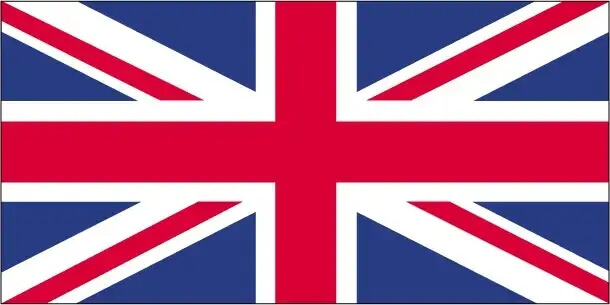
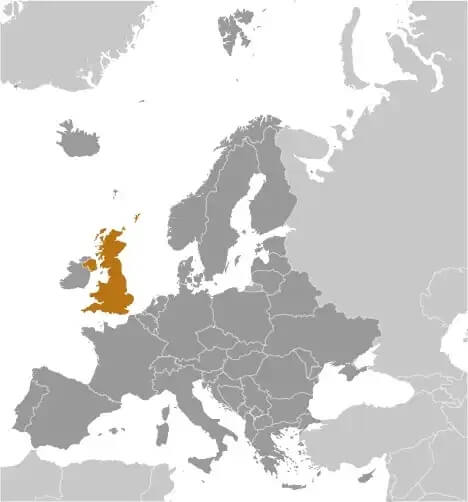
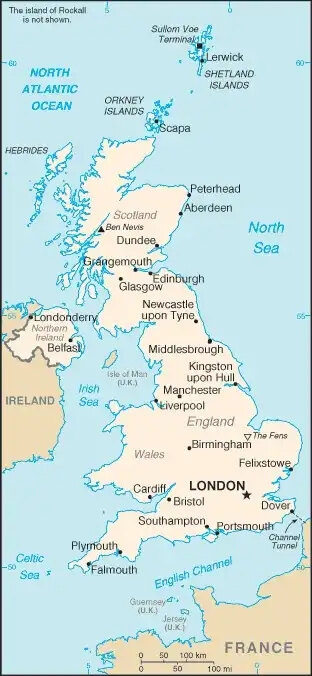
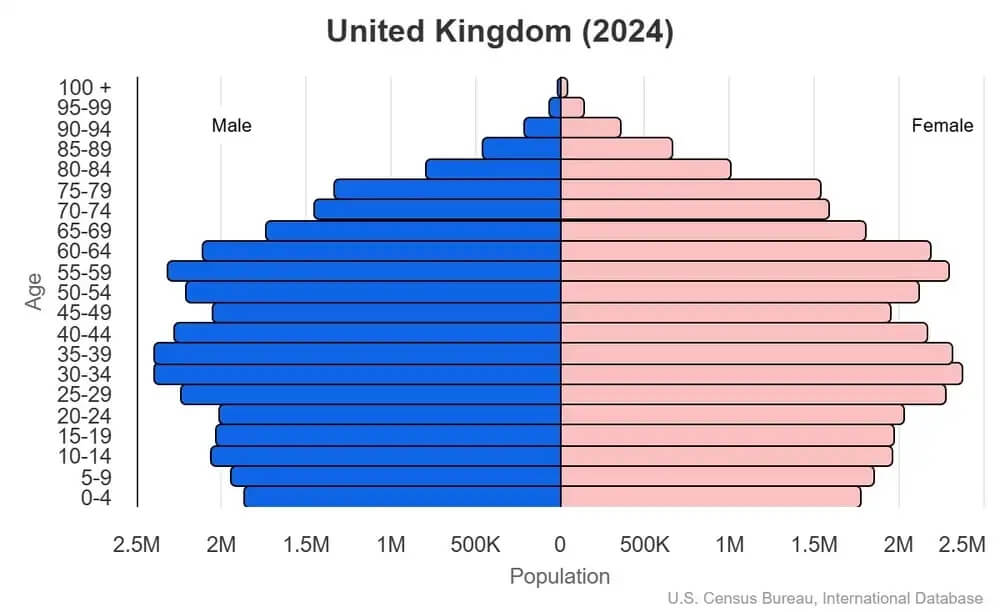
United Kingdom
World Book Index
79

With a score of 79, the country is ranked 19th out of 158 countries in the World Book ranking. (more information)
Introduction
The United Kingdom has played a leading role in developing parliamentary democracy and advancing literature and science. At its zenith in the 19th century, the British Empire stretched over one fourth of the earth's surface. After the Empire was dismantled, the UK rebuilt itself into a modern and prosperous European nation. The Scottish Parliament, the National Assembly for Wales, and the Northern Ireland Assembly were established in 1998.
Neighboring countries
Belgium - Denmark - France - Germany - Ireland - Netherlands - Norway
Geography
Area
total: 243,610 sq km
land: 241,930 sq km
water: 1,680 sq km
Climate
temperate; moderated by prevailing southwest winds over the North Atlantic Current; more than one-half of the days are overcast
Natural resources
coal, petroleum, natural gas, iron ore, lead, zinc, gold, tin, limestone, salt, clay, chalk, gypsum, potash, silica sand, slate, arable land
People and Society
Population
total: 68,459,055 (2024 est.)
Ethnic groups
White 87.2%, Black/African/Caribbean/black British 3%, Asian/Asian British: Indian 2.3%, Asian/Asian British: Pakistani 1.9%, mixed 2%, other 3.7% (2011 est.)
Languages
English
Religions
Christian (includes Anglican, Roman Catholic, Presbyterian, Methodist) 59.5%, Muslim 4.4%, Hindu 1.3%, other 2%, unspecified 7.2%, none 25.7% (2011 est.)
Population growth rate
0.45% (2024 est.)
Government
Government type
parliamentary constitutional monarchy; a Commonwealth realm
Capital
name: London
Executive branch
chief of state: King CHARLES III (since 8 September 2022)
head of government: Prime Minister Keir STARMER (since 5 July 2024)
Diplomatic representation in the US
chief of mission: Ambassador (vacant); Chargé d'Affaires James ROSCOE (since 11 September 2025)
Diplomatic representation from the US
chief of mission: Ambassador Warren A. STEPHENS (since 21 May 2025)
Economy
Economic overview
high-income, non-EU European economy; global financial center and dominant service sector; sluggish growth from stringent monetary policy, reduced business investment, low productivity and participation rates; fiscal austerity in face of high public debt
Real GDP (purchasing power parity)
$3.636 trillion (2024 est.)
$3.596 trillion (2023 est.)
$3.582 trillion (2022 est.)
Real GDP per capita
$52,500 (2024 est.)
$52,500 (2023 est.)
$53,000 (2022 est.)
Exports
$1.117 trillion (2024 est.)
$1.078 trillion (2023 est.)
$1.041 trillion (2022 est.)
Exports - partners
USA 14%, China 8%, Germany 8%, Netherlands 7%, Ireland 7% (2023)
Exports - commodities
cars, gold, gas turbines, packaged medicine, crude petroleum (2023)
Imports
$1.158 trillion (2024 est.)
$1.114 trillion (2023 est.)
$1.1 trillion (2022 est.)
Imports - partners
China 13%, USA 11%, Germany 10%, France 5%, Norway 4% (2023)
Imports - commodities
cars, gold, crude petroleum, refined petroleum, natural gas (2023)
Human Development Index
The country's Human Development Index (HDI) is 0.946, ranking it 13th out of 193 countries tested. (more information)
World Happiness Report
The World Happiness Report ranked the country 31st out of 158 countries tested with a score of 6.503. (more information)