World Book
Iran
World Book Index
64

With a score of 64, the country is ranked 86th out of 158 countries in the World Book ranking. (more information)
Introduction
Iran, historically known as Persia, has a rich and complex history that has shaped its identity and geopolitical significance. Since the establishment of the Islamic Republic in 1979, following the overthrow of the monarchy, Iran has been governed by a theocratic system where ultimate authority rests with the Supreme Leader. This unique political structure has fostered a distinct national identity, often at odds with Western powers, particularly due to ongoing tensions surrounding its nuclear ambitions. The interplay of tradition and modernity in Iran continues to influence its domestic and foreign policies, making it a pivotal player in regional dynamics and global affairs.
Neighboring countries
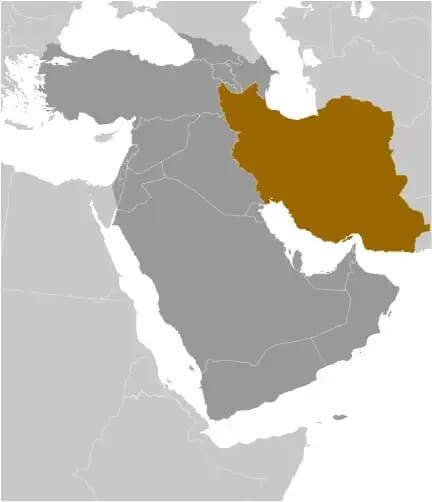
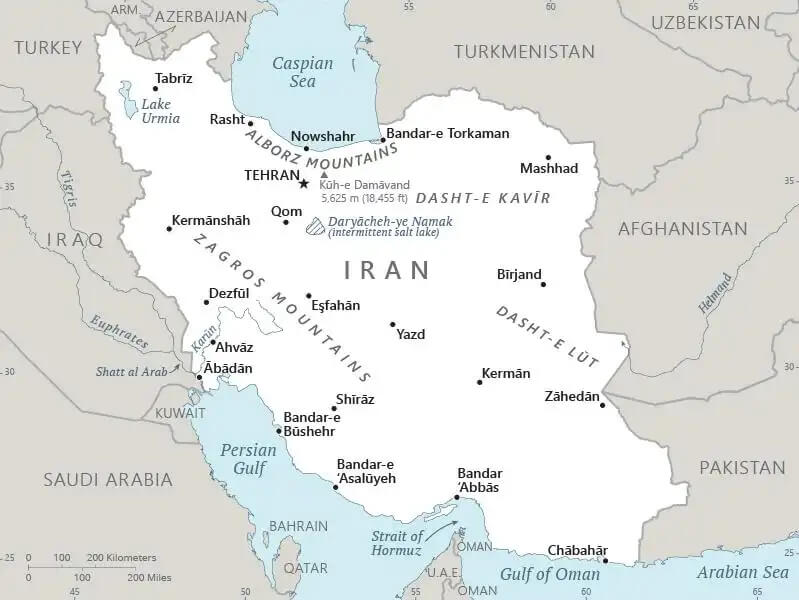
Afghanistan - Armenia - Azerbaijan - Iraq - Pakistan - Turkey - Turkmenistan
Geography
Area
Total: 1,648,195 sq km
Land: 1,531,595 sq km
Water: 116,600 sq km
Iran's geography is characterized by a diverse landscape that includes rugged mountains, vast deserts, and fertile plains. The country is predominantly arid or semiarid, with a subtropical climate along the Caspian coast, which contributes to its agricultural viability in certain regions. The extensive natural resources, particularly petroleum and natural gas, are concentrated in specific areas, influencing both the economy and geopolitical strategies. The geographical positioning of Iran, bordered by several countries and located near critical maritime routes, further enhances its strategic importance in the region.
People and Society
Population
Total: 88,386,937 (2024 estimated)
Ethnic groups
Persian, Azeri, Kurd, Lur, Baloch, Arab, Turkmen, and Turkic tribes
Languages
Persian Farsi (official), Azeri and other Turkic dialects, Kurdish, Gilaki and Mazandarani, Luri, Balochi, Arabic
Religions
Muslim (official) 98.5%, Christian 0.7%, Baha'i 0.3%, agnostic 0.3%, other (includes Zoroastrian, Jewish, Hindu) 0.2% (2020 estimated)
Population growth rate
0.88% (2024 estimated)
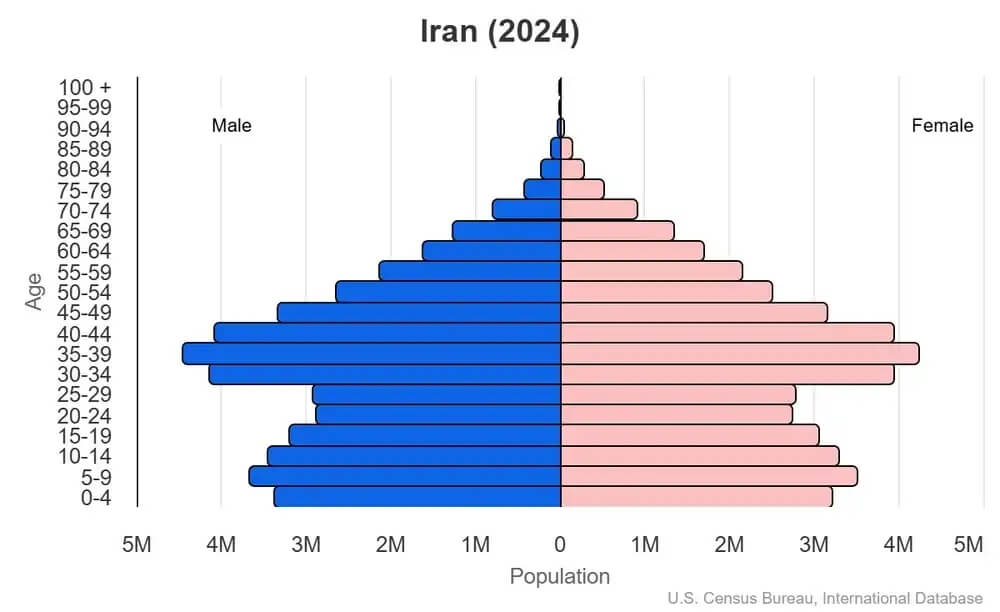
Iran's population is a tapestry of ethnicities, with Persians forming the majority, alongside significant Azeri, Kurdish, and other minority groups. This ethnic diversity contributes to a rich cultural heritage, though it also presents challenges in terms of national unity and social cohesion. The official language, Persian Farsi, serves as a unifying factor, while various regional languages reflect the country's multifaceted identity. The overwhelming Muslim majority, predominantly Shia, shapes the societal norms and values, influencing everything from politics to daily life. The population growth rate, while modest, indicates a young demographic that could play a crucial role in the country's future development and stability.
Government
Government type
Theocratic republic
Capital
Name: Tehran
Executive branch
Chief of state: Supreme Leader Ali Hoseini-KHAMENEI (since 4 June 1989)
Head of government: President Masoud PEZESHKIAN (since 30 July 2024)
Iran operates as a theocratic republic, where the Supreme Leader holds significant power over all branches of government, including the military and judiciary. The capital, Tehran, serves as the political and economic heart of the nation. The current leadership under President Masoud Pezeshkian reflects a continuation of the complex interplay between reformist and conservative factions within the government, impacting both domestic policies and international relations. The governance structure emphasizes religious authority, which often complicates the pursuit of democratic reforms and engagement with the global community.
Economy
Economic overview
Iran's economy has traditionally been state-controlled, but recent reforms aim to modernize state-owned financial entities. The economy is heavily reliant on its strong oil and gas sector, alongside significant agricultural and service industries. However, the country faces severe economic challenges, including massive inflation driven by exchange rate depreciation, international sanctions, and investor uncertainty. These factors have contributed to rising poverty levels and economic instability, prompting discussions about the need for comprehensive economic reforms to foster sustainable growth and development.
Real GDP (purchasing power parity)
$1.486 trillion (2024 estimated)
$1.442 trillion (2023 estimated)
$1.373 trillion (2022 estimated)
Real GDP per capita
$16,200 (2024 estimated)
$15,900 (2023 estimated)
$15,300 (2022 estimated)
Exports
$100.031 billion (2024 estimated)
$97.924 billion (2023 estimated)
$105.752 billion (2022 estimated)
Exports - partners
China 35%, Turkey 16%, India 8%, Pakistan 7%, Armenia 5% (2023)
Exports - commodities
Plastics, iron ore, alcohols, natural gas, refined copper (2023)
Imports
$117.176 billion (2024 estimated)
$113.21 billion (2023 estimated)
$97.729 billion (2022 estimated)
Imports - partners
China 34%, UAE 20%, Turkey 11%, Brazil 8%, Germany 4% (2023)
Imports - commodities
Broadcasting equipment, vehicle parts/accessories, corn, soybeans, vehicle bodies (2023)
Human Development Index
The country's Human Development Index (HDI) is 0.799, ranking it 75th out of 193 countries tested. (more information)
World Happiness Report
The World Happiness Report ranked the country 105th out of 158 countries tested with a score of 4.975. (more information)