World Book
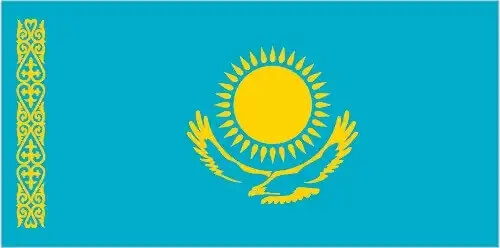
Kazakhstan
World Book Index
71

With a score of 71, the country is ranked 58th out of 158 countries in the World Book ranking. (more information)
Introduction
Kazakhstan, a vast and diverse nation, has a rich history shaped by the migration of ethnic Kazakhs, who are descendants of Turkic nomadic tribes that settled in the region during the 15th century. The area underwent significant transformations when it was conquered by Russia in the 18th and 19th centuries, ultimately becoming a Soviet Republic in 1925. Following the dissolution of the Soviet Union, Kazakhstan declared its independence in 1991, marking a new era in its national identity and governance. Today, Kazakhstan stands as a pivotal player in Central Asia, balancing its historical ties with Russia and its aspirations for a more autonomous and prosperous future.
Neighboring countries
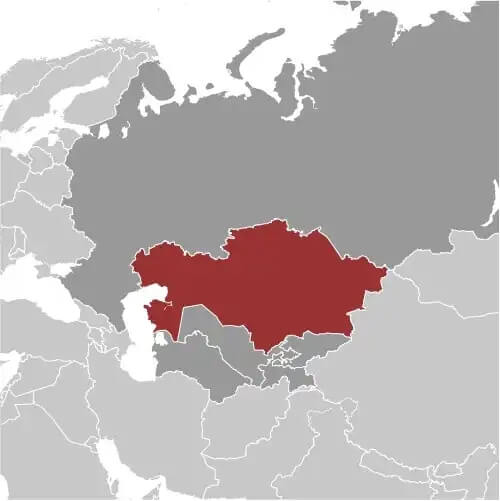
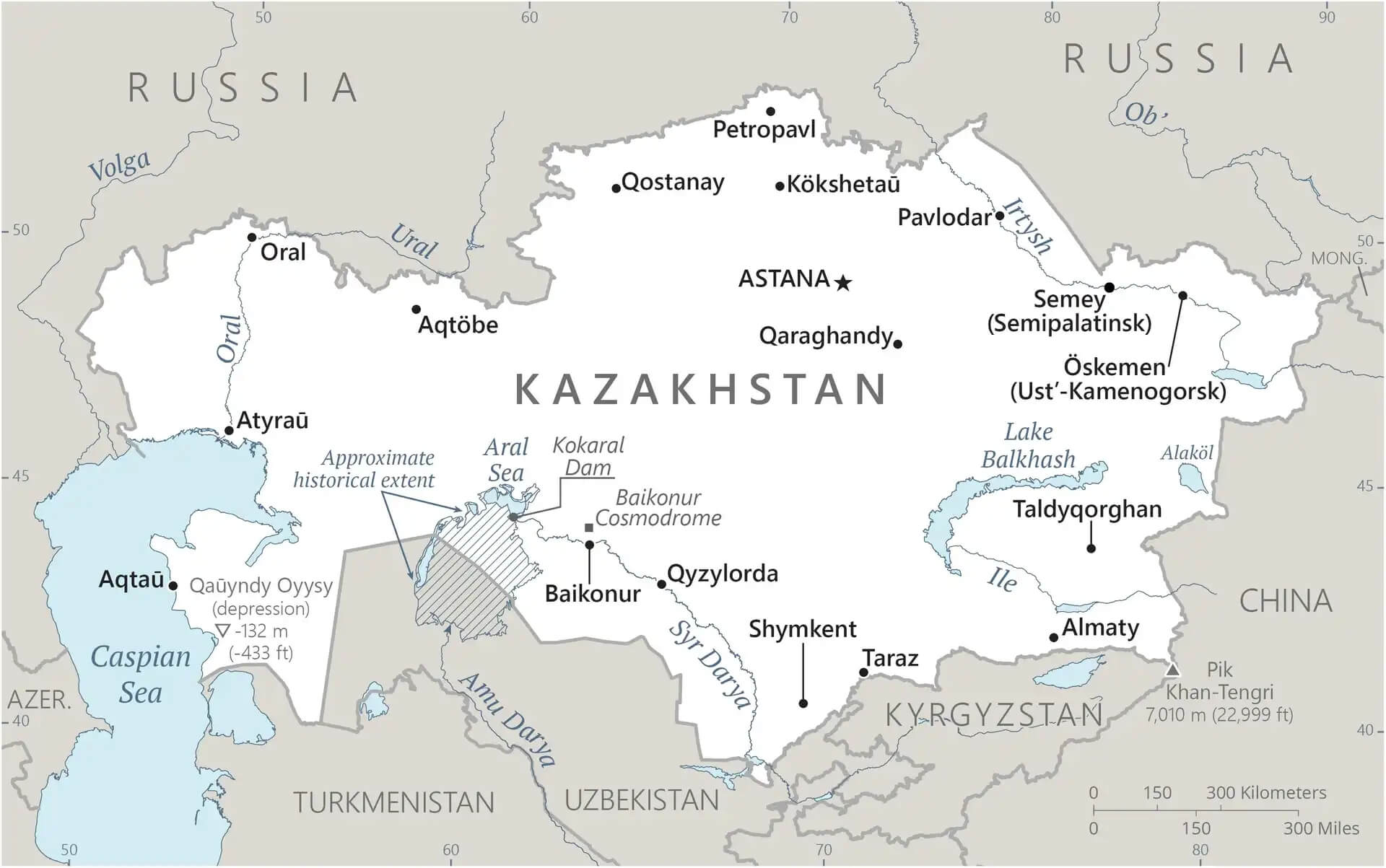
China - Kyrgyzstan - Russia - Turkmenistan - Uzbekistan
Geography
Area
Total: 2,724,900 sq km
Land: 2,699,700 sq km
Water: 25,200 sq km
Kazakhstan is the largest landlocked country in the world, characterized by its vast steppes, mountains, and deserts. The country's geography is predominantly continental, featuring cold winters and hot summers, with arid and semiarid climates prevailing in many regions. This diverse landscape is not only a defining feature of Kazakhstan but also plays a crucial role in its economy, particularly in agriculture and natural resource extraction. The nation is endowed with significant natural resources, including major deposits of petroleum, natural gas, coal, iron ore, manganese, chrome ore, nickel, cobalt, copper, molybdenum, lead, zinc, bauxite, gold, and uranium, making it a key player in the global energy market.
People and Society
Population
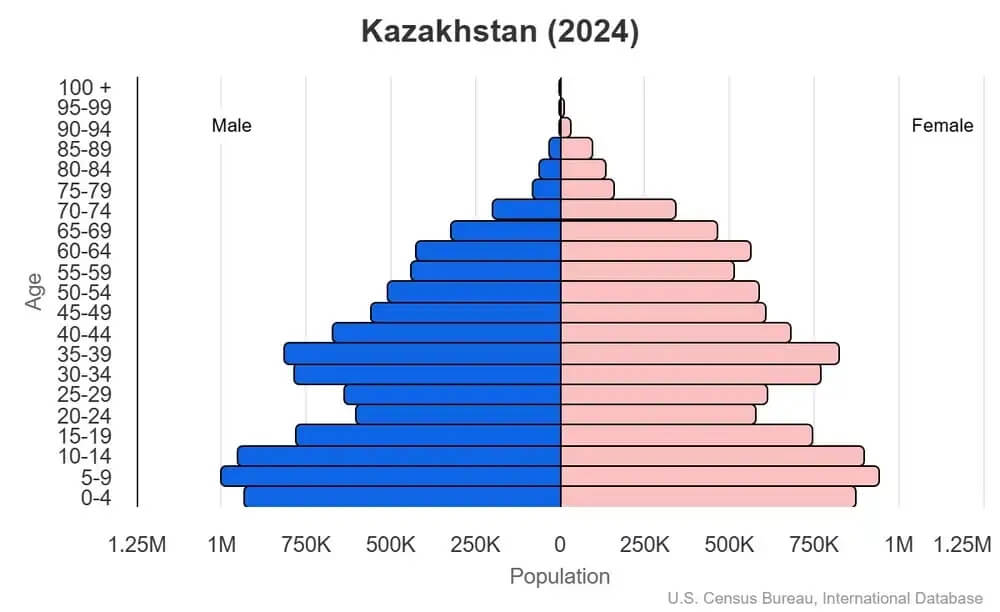
Total: 20,260,006 (2024 estimated)
Kazakhstan's demographic landscape is a tapestry of ethnic diversity, with Kazakhs making up 71% of the population, followed by Russians at 14.9%, and smaller communities of Uzbeks, Ukrainians, Uyghurs, Germans, Tatars, and others. This ethnic mosaic reflects the country's historical migrations and the legacy of Soviet policies. The official language is Kazakh, spoken by 80.1% of the population, while Russian is also widely used, with 83.7% of the populace being proficient in it. English is increasingly becoming a second language, with 35.1% of the population able to communicate in it, indicating a shift towards globalization and international engagement. The predominant religion is Islam, practiced by 69.3% of the population, followed by Christianity at 17.2%. The population growth rate stands at 0.86% (2024 estimated), suggesting a stable demographic trend in the face of various social and economic challenges.
Government
Government type
Presidential republic
Capital
Name: Astana
Kazakhstan operates as a presidential republic, where the President serves as both the head of state and government. The current chief of state is President Kasym-Zhomart Tokayev, who has been in office since March 20, 2019. The Prime Minister, Olzhas Bektenov, assumed office on February 6, 2024, leading the executive branch. Kazakhstan maintains diplomatic relations with various countries, including the United States, represented by Ambassador Yerzhan Ashikbayev since July 7, 2021. The U.S. diplomatic mission is currently led by Chargé d'Affaires Deborah Robinson, who has been in position since January 2025, reflecting ongoing bilateral engagement.
Economy
Economic overview
Kazakhstan's economy is primarily driven by its oil and gas sector, which has positioned the country as a significant player in the global energy market. The nation has attracted growing international investment, particularly in energy and infrastructure projects. However, the domestic economy faced substantial challenges due to the disruptions caused by the COVID-19 pandemic, which impacted various sectors. In response, the government is actively reforming civil society and working to improve business confidence, aiming to create a more conducive environment for economic growth. Despite these efforts, legacy state controls and the influence of Russia continue to inhibit the country's growth and autonomy.
Real GDP (purchasing power parity)
$739.385 billion (2024 estimated)
$705.52 billion (2023 estimated)
$671.285 billion (2022 estimated)
Real GDP per capita
$35,900 (2024 estimated)
$34,700 (2023 estimated)
$33,500 (2022 estimated)
Exports
$91.908 billion (2024 estimated)
$90.926 billion (2023 estimated)
$93.822 billion (2022 estimated)
Exports - partners
China 16%, UK 15%, Russia 10%, Turkey 6%, Italy 5% (2023)
Exports - commodities
Crude petroleum, gold, radioactive chemicals, refined copper, copper ore (2023)
Imports
$74.246 billion (2024 estimated)
$72.723 billion (2023 estimated)
$60.439 billion (2022 estimated)
Imports - partners
China 28%, Russia 24%, Gambia, The 4%, Turkey 4%, USA 4% (2023)
Imports - commodities
Garments, cars, broadcasting equipment, vehicle bodies, packaged medicine (2023)
Human Development Index
The country's Human Development Index (HDI) is 0.837, ranking it 60th out of 193 countries tested. (more information)
World Happiness Report
The World Happiness Report ranked the country 72th out of 158 countries tested with a score of 5.841. (more information)