World Book
Kyrgyzstan
World Book Index
63

With a score of 63, the country is ranked 93rd out of 158 countries in the World Book ranking. (more information)
Introduction
Kyrgyzstan, a landlocked nation nestled in the heart of Central Asia, boasts a rich tapestry of history and culture. Annexed by the Russian Empire in 1876, this country is renowned for its stunning landscapes, which range from towering mountains to lush valleys. The proud nomadic traditions of the Kyrgyz people are deeply intertwined with the land, reflecting a heritage that has thrived for centuries. Following its establishment as a Soviet republic in 1936, Kyrgyzstan declared independence in 1991 with the dissolution of the USSR, embarking on a journey to forge its own identity on the global stage.
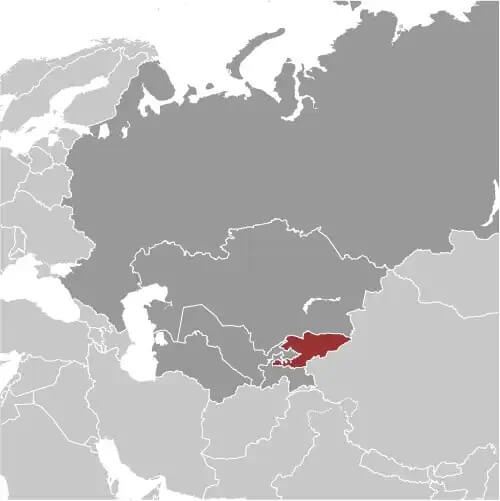
Neighboring countries
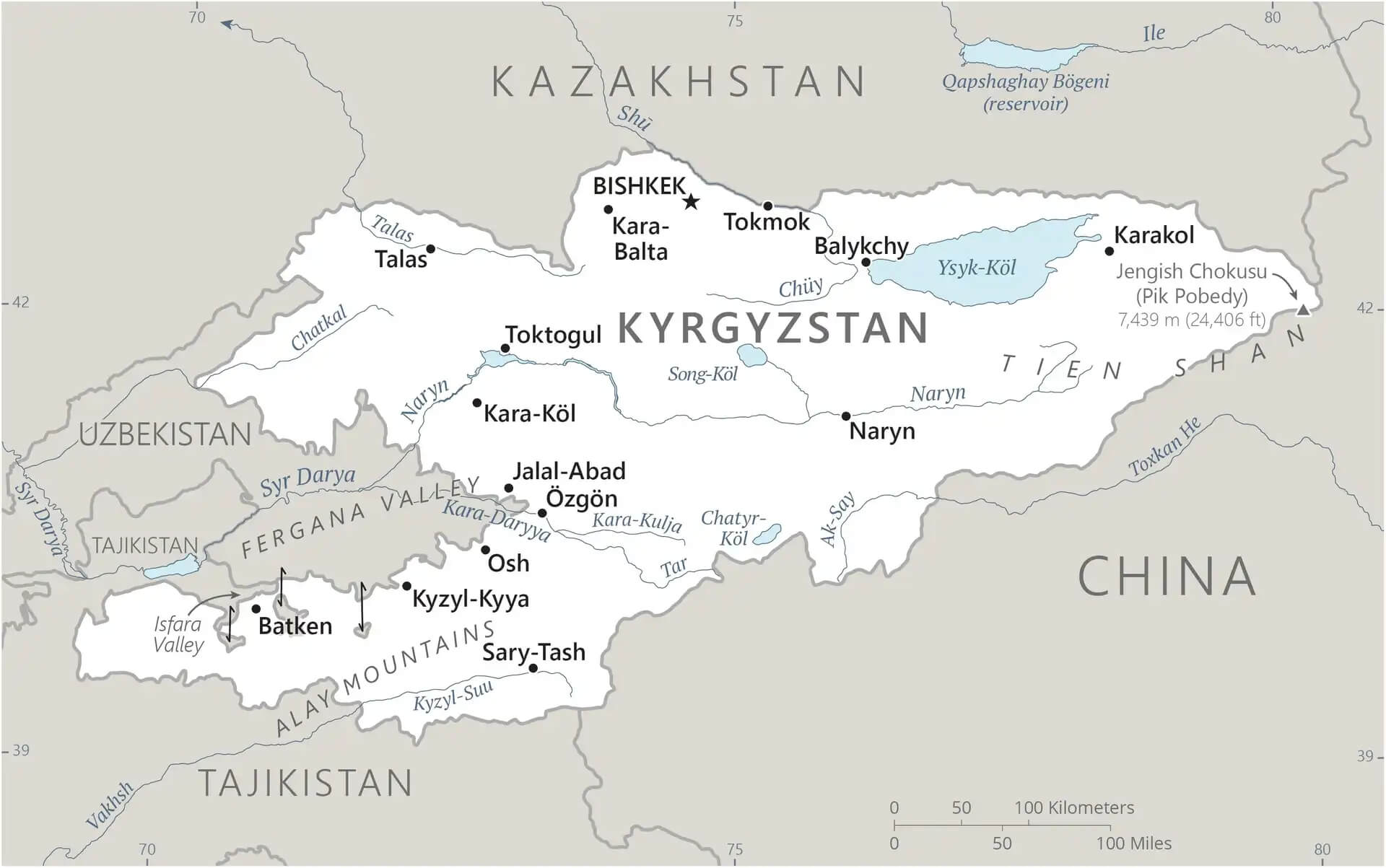
China - Kazakhstan - Tajikistan - Uzbekistan
Geography
Area
Total: 199,951 sq km
Land: 191,801 sq km
Water: 8,150 sq km
Kyrgyzstan's geography is characterized by its mountainous terrain, which forms a significant part of the Tien Shan mountain range. The country is predominantly landlocked, bordered by four nations, and features a diverse climate that varies from dry continental conditions in the high-altitude regions to subtropical climates in the Fergana Valley. The northern foothills experience a temperate climate, making them suitable for agriculture. The abundance of natural resources, including hydropower, gold, and rare earth metals, positions Kyrgyzstan as a country with significant economic potential, despite its geographical challenges.
People and Society
Population
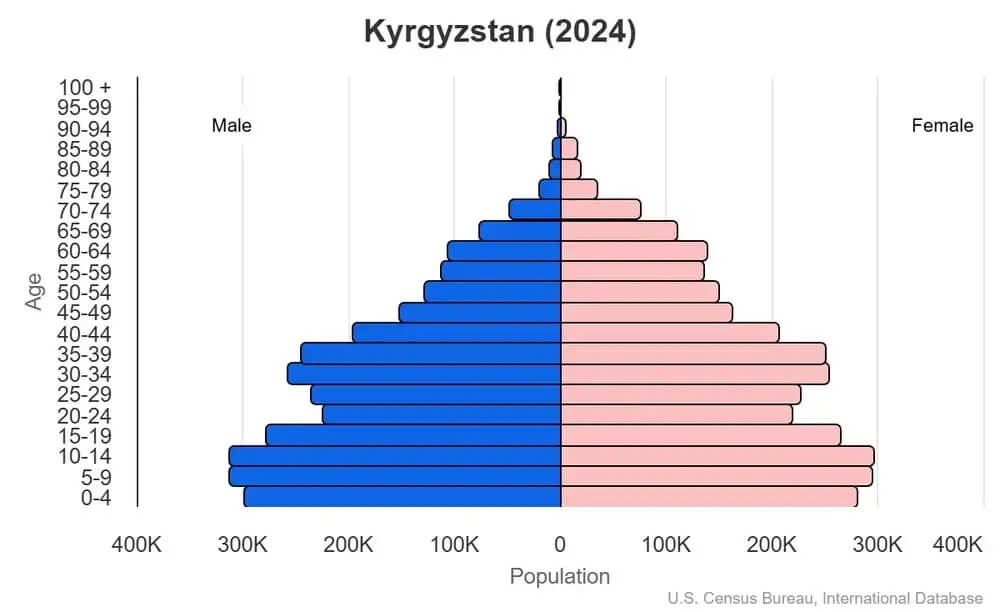
Total: 6,172,101 (2024 estimated)
Ethnic groups
Kyrgyz 73.8%, Uzbek 14.8%, Russian 5.1%, Dungan 1.1%, other 5.2% (includes Uyghur, Tajik, Turk, Kazakh, Tatar, Ukrainian, Korean, German) (2021 estimated)
Languages
Kyrgyz (state language) 71.4%, Uzbek 14.4%, Russian (official language) 9%, other 5.2% (2009 estimated)
Religions
Muslim 90% (majority Sunni), Christian 7% (Russian Orthodox 3%), other 3% (includes Jewish, Buddhist, Baha'i) (2017 estimated)
Population growth rate
0.79% (2024 estimated)
Kyrgyzstan's population is a mosaic of ethnicities, with the Kyrgyz people forming the majority. The Uzbek minority is significant, reflecting historical ties and cultural exchanges. The linguistic landscape is similarly diverse, with Kyrgyz as the state language and Russian serving as an official language, highlighting the country's Soviet legacy. The predominant religion is Islam, which plays a crucial role in shaping the cultural and social fabric of the nation. Despite a modest population growth rate, the demographic dynamics present both opportunities and challenges for national development and social cohesion.
Government
Government type
Parliamentary republic
Capital
Name: Bishkek
Executive branch
Chief of state: President Sadyr JAPAROV (since 28 January 2021)
Head of government: President Adylbek KASYMALIYEV (since 18 December 2024)
Diplomatic representation in the US
Chief of mission: Ambassador Aibek MOLDOGAZIEV (since 25 February 2025)
Diplomatic representation from the US
Chief of mission: Ambassador Lesslie VIGUERIE (since 29 December 2022)
Kyrgyzstan operates as a parliamentary republic, where the President serves as both the head of state and the head of government. The political landscape has been shaped by recent leadership changes, with President Sadyr Japarov taking office in early 2021 and Adylbek Kasymaliyev assuming the role of head of government in late 2024. This structure aims to balance power among various branches of government while navigating the complexities of domestic and international relations.
Economy
Economic overview
Kyrgyzstan is classified as a landlocked, lower-middle-income economy in Central Asia, characterized by its rich natural resources. The country has significant potential in hydroelectricity and tourism, which are increasingly becoming vital sectors for economic growth. High remittances from citizens working abroad also contribute to the national economy. However, challenges such as corruption hinder foreign investment, while the impacts of COVID-19 and political instability have adversely affected GDP, limited public revenues, and increased government spending.
Real GDP (purchasing power parity)
$50.907 billion (2024 estimated)
$46.686 billion (2023 estimated)
$42.826 billion (2022 estimated)
Real GDP per capita
$7,000 (2024 estimated)
$6,600 (2023 estimated)
$6,100 (2022 estimated)
Exports
$3.628 billion (2022 estimated)
$3.292 billion (2021 estimated)
$2.435 billion (2020 estimated)
Exports - partners
Switzerland 30%, Russia 19%, Kazakhstan 14%, UAE 10%, Turkey 8% (2023)
Exports - commodities
Gold, coal, precious metal ore, refined petroleum, garments (2023)
Imports
$10.655 billion (2022 estimated)
$5.928 billion (2021 estimated)
$4.051 billion (2020 estimated)
Imports - partners
China 44%, Russia 12%, Kazakhstan 6%, Turkey 6%, Uzbekistan 4% (2023)
Imports - commodities
Cars, garments, refined petroleum, fabric, footwear (2023)
Human Development Index
The country's Human Development Index (HDI) is 0.720, ranking it 117th out of 193 countries tested. (more information)
World Happiness Report
The World Happiness Report ranked the country 84th out of 158 countries tested with a score of 5.568. (more information)