World Book
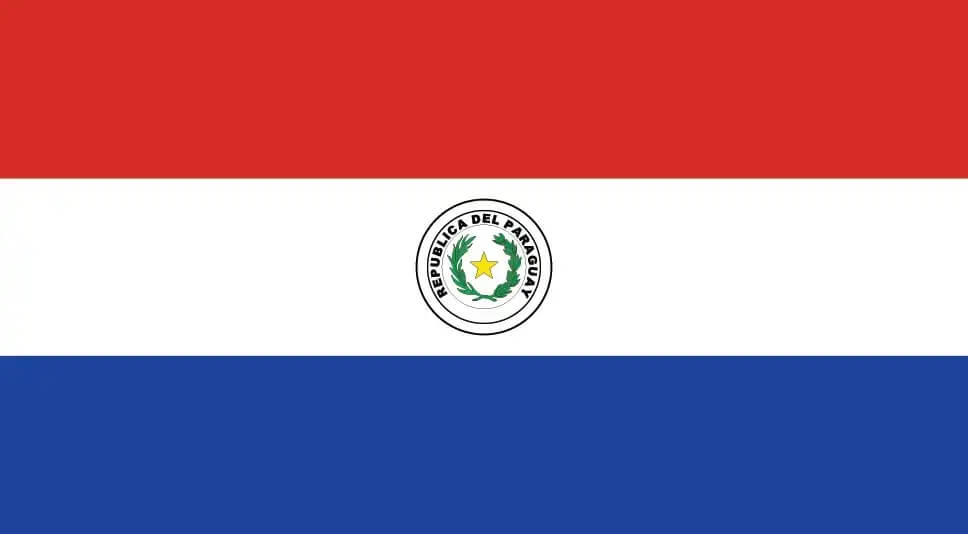
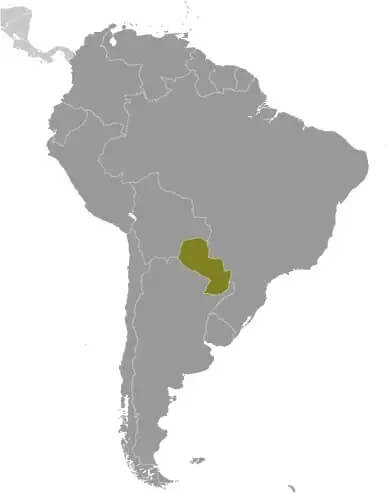
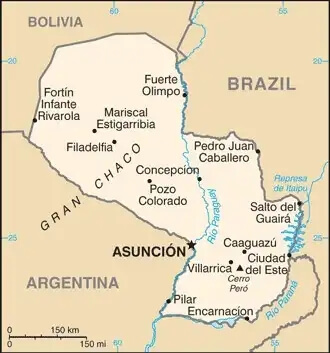
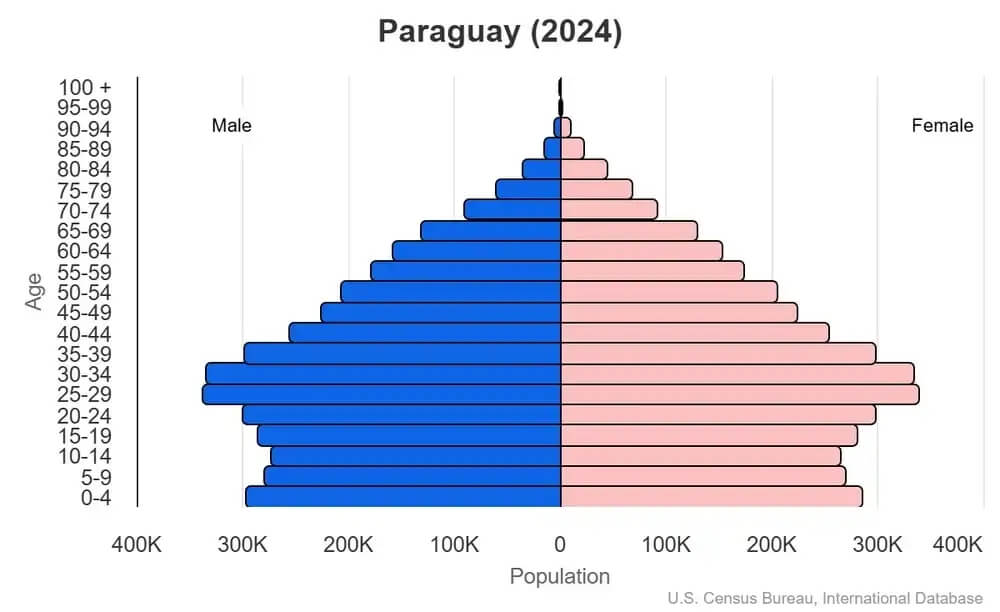
Paraguay
World Book Index
69

With a score of 69, the country is ranked 63rd out of 158 countries in the World Book ranking. (more information)
Introduction
Paraguay, a landlocked nation in the heart of South America, achieved its independence from Spain in 1811. The country has undergone significant political transformations, notably the end of a 35-year military dictatorship under Alfredo Stroessner in 1989. Since then, Paraguay has embraced a democratic framework, characterized by relatively free and regular presidential elections, which have allowed for greater political stability and civic engagement among its citizens.
Neighboring countries
Argentina - Bolivia - Brazil
Geography
Area
Total: 406,752 sq km
Land: 397,302 sq km
Water: 9,450 sq km
Paraguay is characterized by its diverse geography, which includes a mix of subtropical and temperate climates. The eastern regions of the country experience substantial rainfall, while the far west transitions into a semiarid climate. This geographical diversity contributes to the richness of its natural resources, including hydropower, timber, iron ore, manganese, and limestone, which play a crucial role in the country's economy and development.
People and Society
Population
Total: 7,522,549 (2024 estimated)
Ethnic groups
Mestizo (mixed Spanish and Indigenous ancestry) 95%, other 5%
Languages
Spanish (official) and Guarani (official) 46.3%, only Guarani 34%, only Spanish 15.2%, other (includes Portuguese, German, other Indigenous languages) 4.1%, no response 0.4% (2012 estimated)
Religions
Roman Catholic 80.4%, Protestant 7% (Evangelical (non-specific) 6.7%, Evangelical Pentecostal <0.1%, Adventist <0.1%, Protestant (non-specific) <0.1%), Believer (not belonging to the church) 5.7%, other 0.6%, agnostic <0.1%, none 0.2%, unspecified 6.2% (2023 estimated)
Population growth rate
1.09% (2024 estimated)
Paraguay's population is predominantly Mestizo, reflecting a rich cultural heritage that blends Spanish and Indigenous influences. The official languages, Spanish and Guarani, are widely spoken, with a significant portion of the population identifying with Guarani, highlighting the importance of Indigenous culture in the national identity. The country is predominantly Roman Catholic, but there is a growing diversity of religious beliefs, including various Protestant denominations. The population growth rate of 1.09% indicates a steady increase, which presents both opportunities and challenges for social and economic development.
Government
Government type
Presidential republic
Capital
Name: Asunción
Executive branch
Chief of state: President Santiago Peña Palacios (since 15 August 2023)
Head of government: President Santiago Peña Palacios (since 15 August 2023)
Diplomatic representation in the US
Chief of mission: Ambassador Gustavo Alfredo Leite Gusinky (since 5 September 2025)
Diplomatic representation from the US
Chief of mission: Ambassador (vacant); Chargé d’Affaires Robert Alter (since July 2025)
Paraguay operates as a presidential republic, where the President serves as both the head of state and government. The current President, Santiago Peña Palacios, has been in office since August 15, 2023. The capital city, Asunción, serves as the political and administrative center of the country. Paraguay maintains diplomatic relations with various nations, including the United States, where it is represented by Ambassador Gustavo Alfredo Leite Gusinky. The political landscape is shaped by the ongoing efforts to strengthen democratic institutions and governance.
Economy
Economic overview
Upper middle-income South American economy; COVID-19 hit while still recovering from 2019 Argentina-driven recession; global hydroelectricity leader; major corruption and money-laundering locale; highly agrarian economy; significant income inequality
Real GDP (purchasing power parity)
$112.919 billion (2024 estimated)
$108.316 billion (2023 estimated)
$103.159 billion (2022 estimated)
Real GDP per capita
$16,300 (2024 estimated)
$15,800 (2023 estimated)
$15,300 (2022 estimated)
Exports
$17.395 billion (2024 estimated)
$18.581 billion (2023 estimated)
$14.971 billion (2022 estimated)
Exports - partners
Argentina 33%, Brazil 25%, Chile 10%, USA 2%, Uruguay 2% (2023)
Exports - commodities
Soybeans, beef, electricity, corn, soybean meal (2023)
Imports
$18.377 billion (2024 estimated)
$17.848 billion (2023 estimated)
$17.088 billion (2022 estimated)
Imports - partners
China 33%, Brazil 24%, USA 8%, Argentina 7%, Germany 2% (2023)
Imports - commodities
Broadcasting equipment, refined petroleum, fertilizers, cars, pesticides (2023)
Paraguay's economy is classified as an upper middle-income economy, heavily reliant on agriculture and natural resources. The country has emerged as a global leader in hydroelectricity production, which is a significant contributor to its GDP. However, the economy faces challenges, including the aftermath of the COVID-19 pandemic and a previous recession driven by economic issues in Argentina. The GDP in purchasing power parity is projected to reach $112.919 billion in 2024, with a per capita GDP of $16,300. Exports are primarily driven by agricultural products such as soybeans and beef, while imports include essential goods like refined petroleum and machinery. The economy also grapples with issues of corruption and income inequality, which pose obstacles to sustainable growth and development.
Human Development Index
The country's Human Development Index (HDI) is 0.756, ranking it 99th out of 193 countries tested. (more information)
World Happiness Report
The World Happiness Report ranked the country 36th out of 158 countries tested with a score of 6.421. (more information)