World Book

Saint Vincent and the Grenadines
Introduction
Saint Vincent and the Grenadines, a picturesque archipelago in the Caribbean, has a rich history shaped by the resilience of its native Caribs, who resisted colonization until 1719. The island became a focal point of contention between France and England throughout the 18th century, ultimately being ceded to England in 1783. The journey towards self-governance began with its status as a separate administrative unit of the Federation of the West Indies from 1960 to 1962. Autonomy was achieved in 1969, culminating in full independence in 1979. Today, Saint Vincent and the Grenadines stands as a testament to the enduring spirit of its people and their cultural heritage.
Neighboring countries
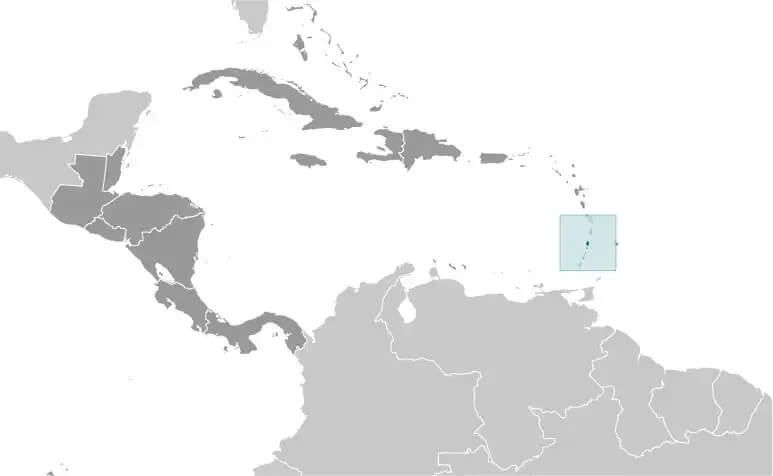
Barbados - Grenada - Saint Lucia - Trinidad and Tobago - Venezuela
Geography
Area
Total: 389 sq km
Land: 389 sq km
Water: 0 sq km
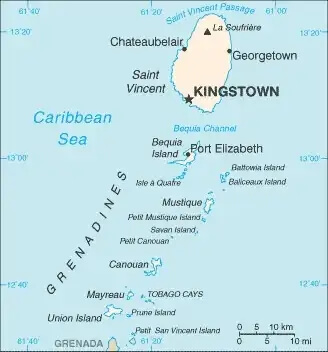
The geography of Saint Vincent and the Grenadines is characterized by its lush landscapes and volcanic origins, which contribute to its stunning natural beauty. The archipelago consists of the main island of Saint Vincent and a chain of smaller islands known as the Grenadines. The climate is tropical, with minimal seasonal temperature variation, and a distinct rainy season that spans from May to November. The country is endowed with natural resources such as hydropower and arable land, which play a crucial role in its agricultural sector.
People and Society
Population
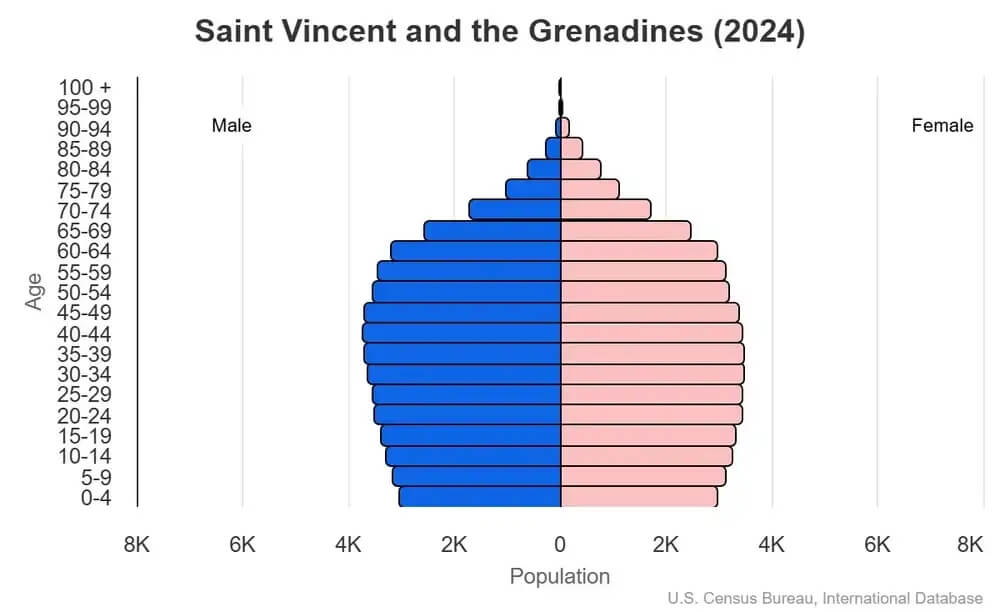
Total: 100,647 (2024 estimated)
Saint Vincent and the Grenadines boasts a diverse population, with ethnic groups primarily of African descent (71.2%), followed by mixed heritage (23%), Indigenous peoples (3%), East Indian/Indian (1.1%), European (1.5%), and other groups (0.2%) as per the 2012 estimates. The official language is English, complemented by Vincentian Creole English and French patois, reflecting the island's colonial history and cultural influences. The predominant religion is Protestantism, accounting for 75% of the population, with various denominations such as Pentecostal, Anglican, and Baptist. Roman Catholicism follows at 6.3%, alongside Rastafarianism (1.1%) and other faiths. The population growth rate is currently estimated at -0.15% for 2024, indicating demographic challenges that the nation may face in the coming years.
Government
Government type
Parliamentary democracy under a constitutional monarchy; a Commonwealth realm
Capital
Name: Kingstown
The governance of Saint Vincent and the Grenadines is structured as a parliamentary democracy, functioning under the framework of a constitutional monarchy. The head of state is King Charles III, who has been in this position since September 8, 2022, and is represented locally by Governor General Susan Dougan, who took office on August 1, 2019. The head of government is Prime Minister Ralph Everard Gonsalves, who has been serving since March 29, 2001. This political structure allows for a blend of traditional monarchy and democratic principles, ensuring representation and governance aligned with the interests of its citizens.
Diplomatic representation in the US
Chief of mission: Ambassador Lou-Anne Gaylene Gilchrist (since 18 January 2017)
Economy
Economic overview
Saint Vincent and the Grenadines operates as an upper middle-income Caribbean island economy, with agriculture and tourism serving as the cornerstone sectors. The nation faces environmental fragility, which necessitates careful management of its natural resources. In recent years, there has been a concerted effort to diversify the economy, expanding into services, science and knowledge, and creative industries. As a member of CARICOM and a beneficiary of the US Caribbean Basin Initiative, the country is positioned to leverage regional cooperation for economic growth.
Real GDP (purchasing power parity)
$1.883 billion (2024 estimated)
$1.809 billion (2023 estimated)
$1.718 billion (2022 estimated)
Real GDP per capita
$18,700 (2024 estimated)
$17,900 (2023 estimated)
$16,800 (2022 estimated)
Exports
$425.182 million (2024 estimated)
$345.098 million (2023 estimated)
$278.292 million (2022 estimated)
Exports - partners
Croatia 16%, Barbados 14%, USA 10%, St. Lucia 10%, St. Kitts & Nevis 8% (2023)
Exports - commodities
Ships, wheat flours, animal food, shellfish, construction vehicles (2023)
Imports
$641.179 million (2024 estimated)
$588.865 million (2023 estimated)
$540.833 million (2022 estimated)
Imports - partners
USA 37%, Italy 7%, Trinidad & Tobago 7%, China 6%, UK 6% (2023)
Imports - commodities
Ships, refined petroleum, wheat, coal, poultry (2023)
Human Development Index
The country's Human Development Index (HDI) is 0.798, ranking it 76th out of 193 countries tested. (more information)