World Book
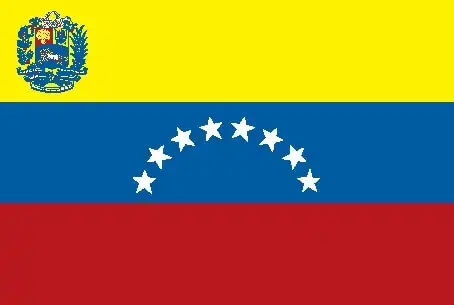
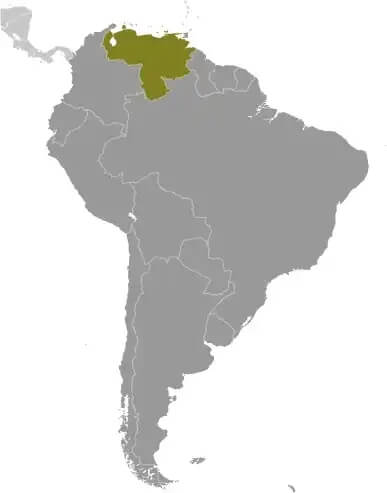
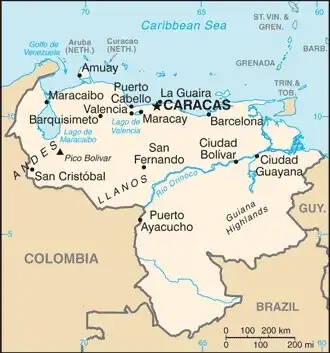
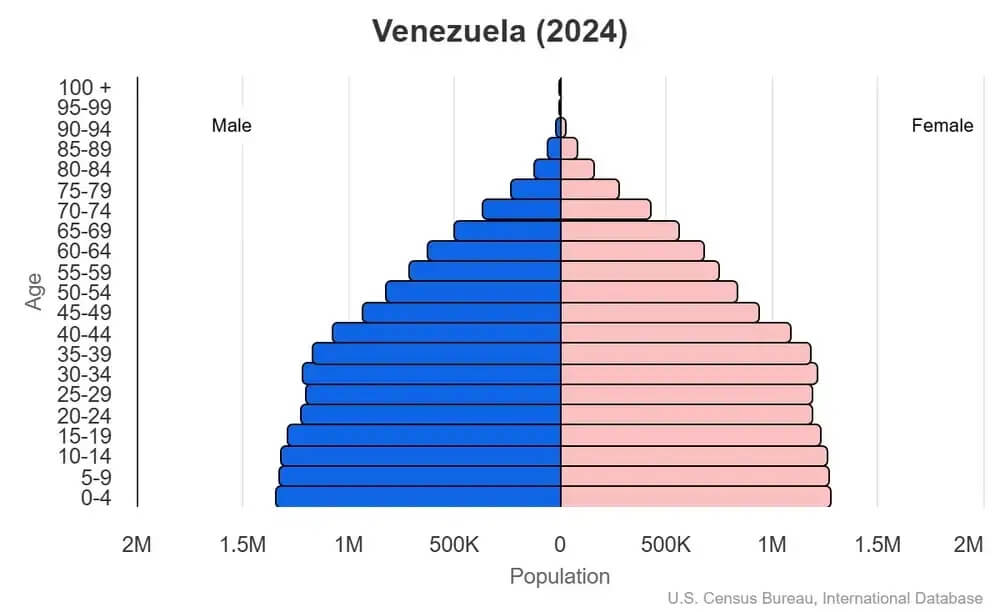
Venezuela
World Book Index
62

With a score of 62, the country is ranked 96th out of 158 countries in the World Book ranking. (more information)
Introduction
Venezuela, a nation rich in natural resources and cultural diversity, emerged from the dissolution of Gran Colombia in 1830, alongside Ecuador and New Granada (now Colombia). Throughout much of the early 20th century, the country experienced a series of military regimes that, while often authoritarian, facilitated the growth of the oil sector and initiated various social reforms. Since 1959, Venezuela has transitioned to a system of democratically elected governance, although this has been challenged by political instability and economic turmoil in recent years.
Neighboring countries
Brazil - Colombia - Grenada - Guyana - Trinidad and Tobago
Geography
Area
Total: 912,050 sq km
Land: 882,050 sq km
Water: 30,000 sq km
Venezuela is characterized by its diverse geography, which includes the Andes mountains in the west, the vast plains of the Llanos, and the Amazon rainforest in the south. The country's climate is predominantly tropical, marked by high temperatures and humidity, although the highland regions experience a more temperate climate. Venezuela is endowed with abundant natural resources, including significant reserves of petroleum and natural gas, along with minerals such as iron ore, gold, and bauxite. The country's hydropower potential is also noteworthy, contributing to its energy needs.
People and Society
Population
Total: 31,250,306 (2024 estimated)
Venezuela's population is a melting pot of ethnicities, including Spanish, Italian, Portuguese, Arab, German, African, and Indigenous groups, reflecting its rich historical tapestry. The official language is Spanish, spoken by 98.2% of the population, while a small percentage communicates in indigenous languages and Portuguese. The religious landscape is predominantly Roman Catholic (48.1%), followed by a significant Protestant community (31.6%), which includes Evangelicals and Adventists. The country has experienced a population growth rate of 2.34% as of 2024, indicating a dynamic demographic landscape amidst ongoing social challenges.
Government
Government type
Federal presidential republic
Capital
Name: Caracas
The Venezuelan government operates as a federal presidential republic, with the capital city being Caracas. The current chief of state is President Nicolas MADURO Moros, who has held office since 19 April 2013. It is important to note that the United States does not recognize Maduro's presidency, reflecting the contentious political climate. The diplomatic representation from the U.S. is managed by Chargé d’Affaires John McNAMARA, who has been in position since 1 February 2025, operating from the Venezuela Affairs Unit located in the U.S. Embassy in Bogotá.
Economy
Economic overview
Venezuela's economy is primarily based in South America and has been grappling with ongoing hyperinflation since the mid-2010s, leading to a chaotic economic environment exacerbated by political corruption, infrastructure deterioration, and human rights violations. The country is currently in debt default and heavily reliant on oil exports, while also being a significant consumer of hydropower. In recent years, relations with China have been on the rise, indicating a shift in economic partnerships.
Real GDP (purchasing power parity)
$110.943 billion (2023 estimated)
$106.672 billion (2022 estimated)
$98.768 billion (2021 estimated)
Real GDP per capita
$4,900 (2023 estimated)
$4,600 (2022 estimated)
$4,000 (2021 estimated)
Exports
$83.401 billion (2018 estimated)
$93.485 billion (2017 estimated)
$28.684 billion (2016 estimated)
Exports - partners
USA 50%, China 10%, Spain 9%, Brazil 6%, Turkey 5% (2023)
Exports - commodities
Crude petroleum, petroleum coke, scrap iron, alcohols, fertilizers (2023)
Imports
$18.432 billion (2018 estimated)
$18.376 billion (2017 estimated)
$25.81 billion (2016 estimated)
Imports - partners
China 35%, USA 24%, Brazil 12%, Colombia 7%, Turkey 4% (2023)
Imports - commodities
Refined petroleum, soybean meal, corn, plastic products, vehicle parts/accessories (2023)
Human Development Index
The country's Human Development Index (HDI) is 0.709, ranking it 121st out of 193 countries tested. (more information)
World Happiness Report
The World Happiness Report ranked the country 87th out of 158 countries tested with a score of 5.455. (more information)