World Book

United States
World Book Index
76

With a score of 76, the country is ranked 32th out of 158 countries in the World Book ranking. (more information)
Introduction
The United States of America, a nation born from the revolutionary spirit of its thirteen original colonies, declared independence from Britain in 1776. Following the Treaty of Paris in 1783, it emerged as a sovereign entity. Over the subsequent centuries, the nation underwent significant expansion, incorporating 37 additional states and acquiring various overseas territories. This evolution has shaped the United States into a diverse and influential global power, characterized by its rich history, cultural plurality, and dynamic political landscape.
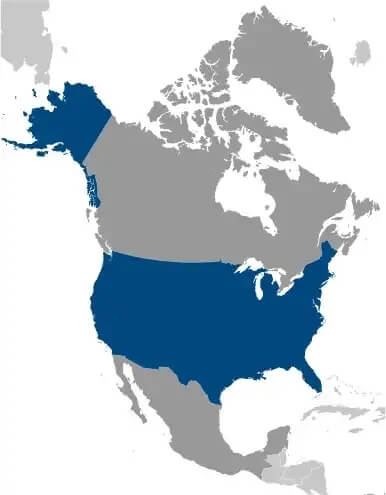
Neighboring countries
The Bahamas - Canada - Cuba - Mexico - Russia
Geography
Area
Total: 9,833,517 sq km
Land: 9,147,593 sq km
Water: 685,924 sq km
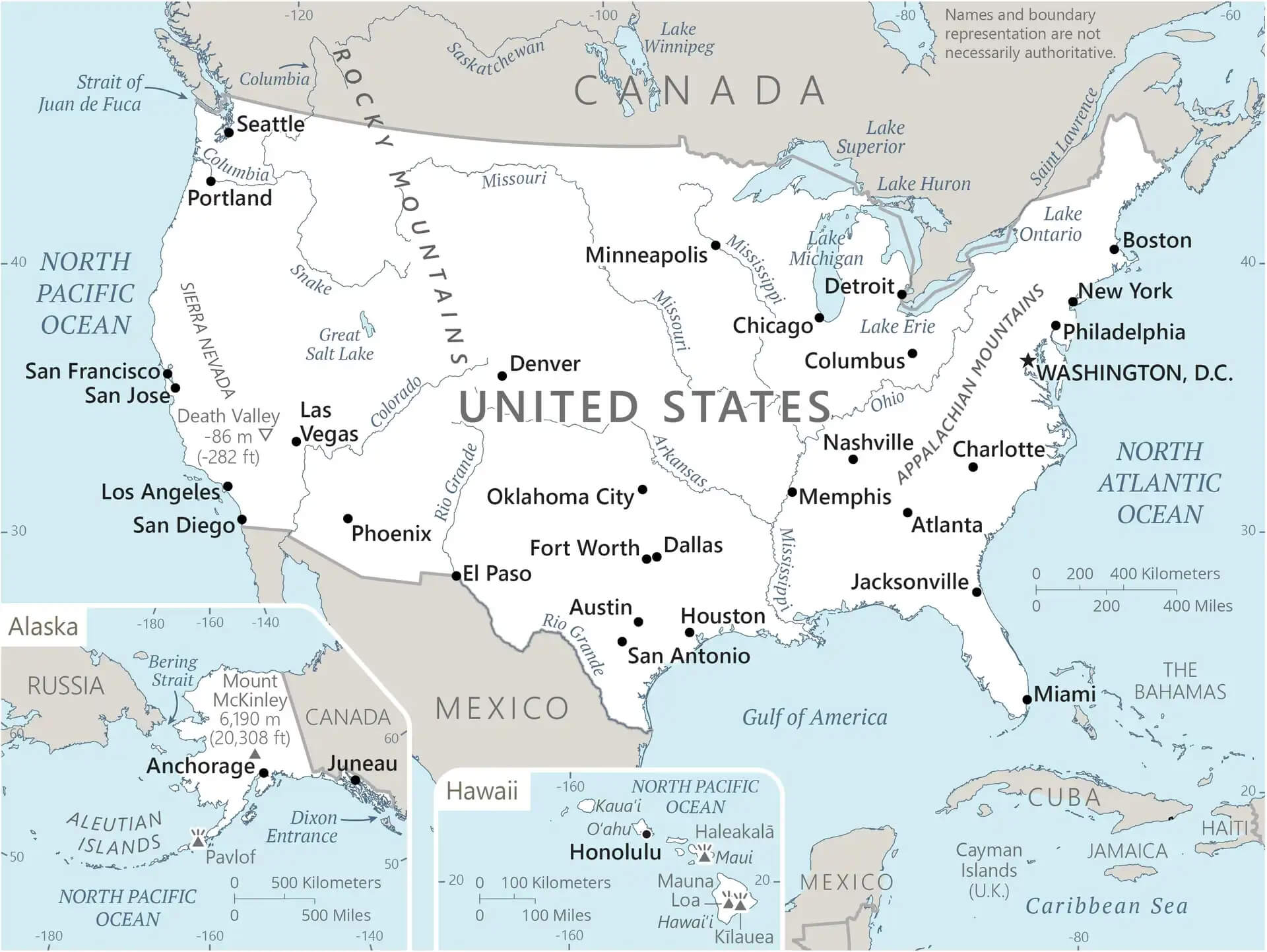
The United States boasts a vast and varied geography, encompassing a total area of 9,833,517 square kilometers, making it the third largest country in the world. Of this, 9,147,593 square kilometers is land, while 685,924 square kilometers is covered by water. The country's climate is predominantly temperate, with notable exceptions including the tropical conditions found in Hawaii and Florida, the arctic climate of Alaska, and the semiarid regions of the Great Plains west of the Mississippi River. The Great Basin in the southwest experiences arid conditions. Seasonal variations are marked, particularly in the northwest, where winter temperatures can be mitigated by warm chinook winds originating from the eastern slopes of the Rocky Mountains. The United States is rich in natural resources, including coal, copper, lead, molybdenum, phosphates, rare earth elements, uranium, bauxite, gold, iron, mercury, nickel, potash, silver, tungsten, zinc, petroleum, natural gas, timber, and arable land, contributing significantly to its economic strength.
People and Society
Population
Total: 341,963,408 (2024 estimated)
Ethnic groups
White 61.6%, Black or African American 12.4%, Asian 6%, Indigenous and Alaska native 1.1%, Native Hawaiian and Other Pacific Islander 0.2%, other 8.4%, two or more races 10.2% (2020 estimated)
Languages
English only (official) 78.2%, Spanish 13.4%, Chinese 1.1%, other 7.3% (2017 estimated)
Religions
Protestant 46.5%, Roman Catholic 20.8%, Jewish 1.9%, Church of Jesus Christ 1.6%, other Christian 0.9%, Muslim 0.9%, Jehovah's Witness 0.8%, Buddhist 0.7%, Hindu 0.7%, other 1.8%, unaffiliated 22.8%, don't know/refused 0.6% (2014 estimated)
Population growth rate
0.67% (2024 estimated)
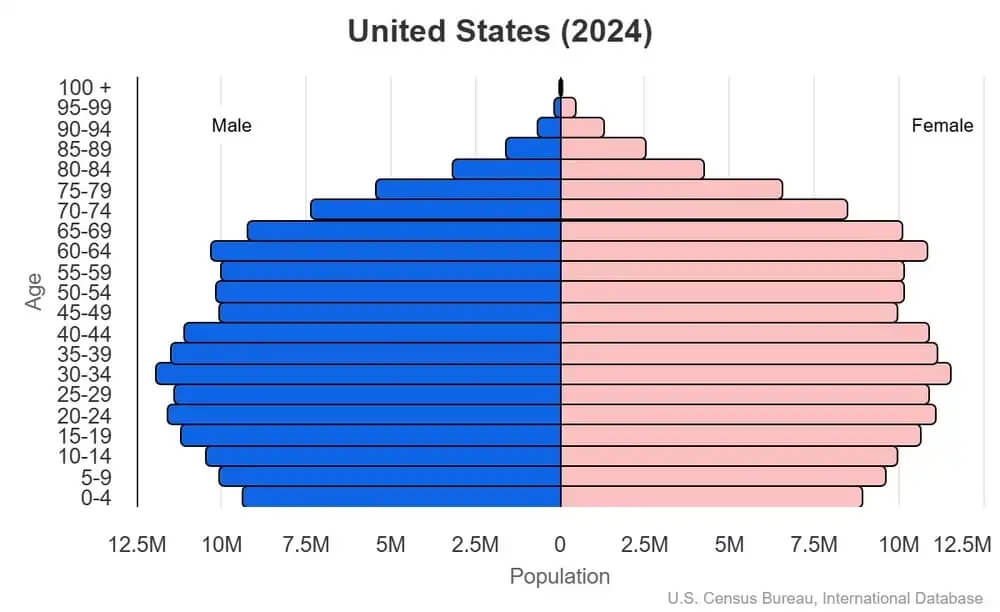
The United States is home to a diverse population of approximately 341,963,408 people as of 2024, reflecting a rich tapestry of ethnicities and cultures. The demographic composition includes 61.6% White, 12.4% Black or African American, 6% Asian, and 1.1% Indigenous and Alaska Native, among others. This diversity is further enriched by a variety of languages spoken, with English being the official language for 78.2% of the population, followed by Spanish at 13.4%. The religious landscape is equally varied, with Protestantism being the most prevalent faith at 46.5%, followed by Roman Catholicism at 20.8%. The population growth rate stands at 0.67%, indicating a steady increase in the number of residents, which has implications for social services, economic development, and cultural exchange.
Government
Government type
Constitutional federal republic
Capital
Name: Washington, D.C.
Executive branch
Chief of state: President Donald J. TRUMP (since 20 January 2025)
Head of government: President Donald J. TRUMP (since 20 January 2025)
The United States operates as a constitutional federal republic, characterized by a system of government that divides powers between the national and state levels. The capital city, Washington, D.C., serves as the political hub of the nation. The executive branch is led by the President, who serves as both the chief of state and head of government. As of January 20, 2025, Donald J. Trump holds this dual role, influencing both domestic and foreign policy decisions that shape the trajectory of the nation.
Economy
Economic overview
World’s largest economy by nominal GDP; largest importer and second-largest exporter; home to leading financial exchanges and global reserve currency; high and growing public debt; inflation moderating but remains above pre-pandemic levels
Real GDP (purchasing power parity)
$25.676 trillion (2024 estimated)
$24.977 trillion (2023 estimated)
$24.276 trillion (2022 estimated)
Real GDP per capita
$75,500 (2024 estimated)
$74,200 (2023 estimated)
$72,700 (2022 estimated)
Exports
$3.191 trillion (2024 estimated)
$3.072 trillion (2023 estimated)
$3.039 trillion (2022 estimated)
Exports - partners
Canada 14%, Mexico 13%, China 8%, Germany 5%, Japan 4% (2023)
Exports - commodities
Crude petroleum, refined petroleum, natural gas, gas turbines, cars (2023)
Imports
$4.108 trillion (2024 estimated)
$3.857 trillion (2023 estimated)
$3.984 trillion (2022 estimated)
Imports - partners
Mexico 15%, China 15%, Canada 14%, Germany 5%, Japan 5% (2023)
Imports - commodities
Cars, crude petroleum, broadcasting equipment, computers, garments (2023)
The United States stands as the world's largest economy, with a nominal GDP of $25.676 trillion projected for 2024. This economic powerhouse is characterized by its status as the largest importer and the second-largest exporter globally. The nation is home to prominent financial exchanges and serves as the issuer of the global reserve currency. Despite facing challenges such as high and growing public debt, the economy is showing signs of resilience, with inflation rates moderating yet remaining above pre-pandemic levels. The real GDP per capita is estimated at $75,500 for 2024, reflecting a high standard of living. Exports are projected to reach $3.191 trillion, with key partners including Canada, Mexico, and China, while imports are expected to total $4.108 trillion, highlighting the country's significant trade relationships and economic interdependencies.
Human Development Index
The country's Human Development Index (HDI) is 0.938, ranking it 17th out of 193 countries tested. (more information)
World Happiness Report
The World Happiness Report ranked the country 64th out of 158 countries tested with a score of 5.968. (more information)