World Book
France
World Book Index
76

With a score of 76, the country is ranked 29th out of 158 countries in the World Book ranking. (more information)
Introduction
France stands as a beacon of modernity and cultural richness in the global landscape. Renowned for its historical significance and contemporary influence, it is a pivotal player in international affairs. As a permanent member of the UN Security Council and a key participant in NATO, the G-7, the G-20, and the EU, France's diplomatic and economic strategies shape not only European policies but also global trends. The nation is celebrated for its contributions to art, philosophy, and science, making it a cornerstone of Western civilization. Its vibrant cities, picturesque countryside, and diverse cultural heritage attract millions of visitors each year, reinforcing its status as a global leader in tourism and cultural exchange.
Neighboring countries
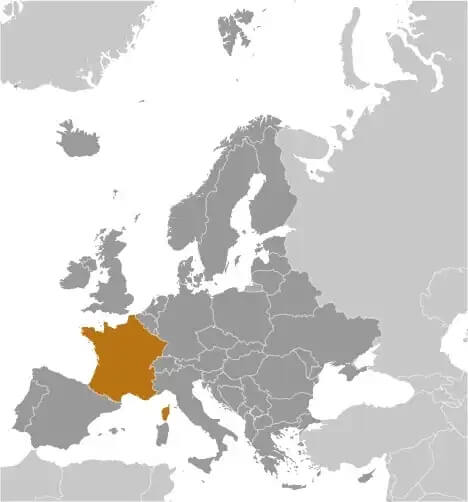
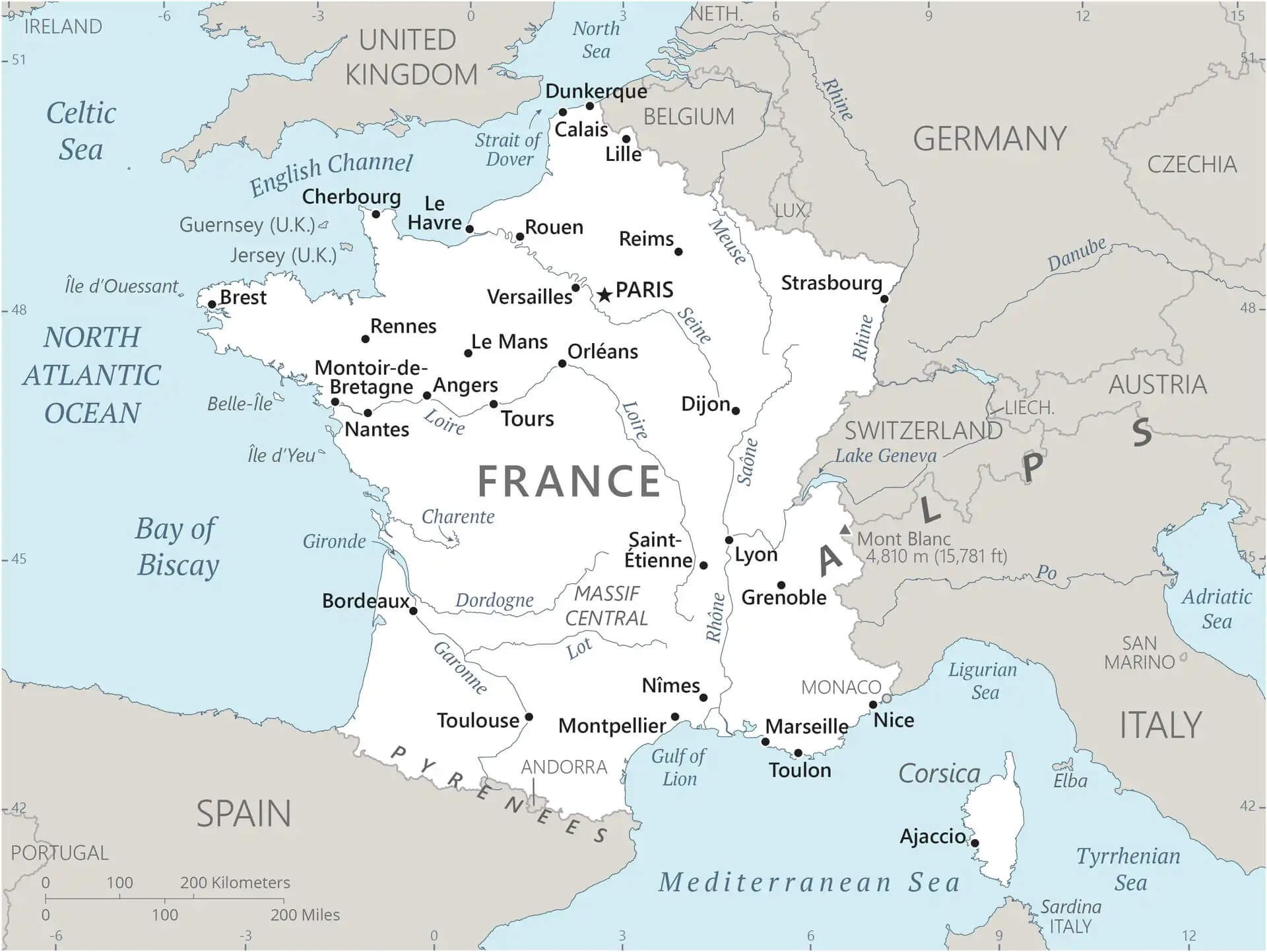
Andorra - Belgium - Germany - Italy - Luxembourg - Monaco - Spain - Switzerland
Geography
Area
Total: 643,801 sq km
Land: 640,427 sq km
Water: 3,374 sq km
Climate
Metropolitan France experiences a diverse climate characterized by generally cool winters and mild summers. The Mediterranean region, however, enjoys milder winters and hotter summers, influenced by the occasional strong, cold, dry wind known as the mistral, which sweeps down from the north. This climatic variety contributes to the rich agricultural output and biodiversity found across the country.
Natural resources
Metropolitan France is endowed with a wealth of natural resources, including coal, iron ore, bauxite, zinc, uranium, antimony, arsenic, potash, feldspar, fluorspar, gypsum, timber, arable land, and fish. In addition, French Guiana boasts significant deposits of gold, petroleum, kaolin, niobium, tantalum, and clay, further enhancing the nation's resource portfolio and economic potential.
People and Society
Population
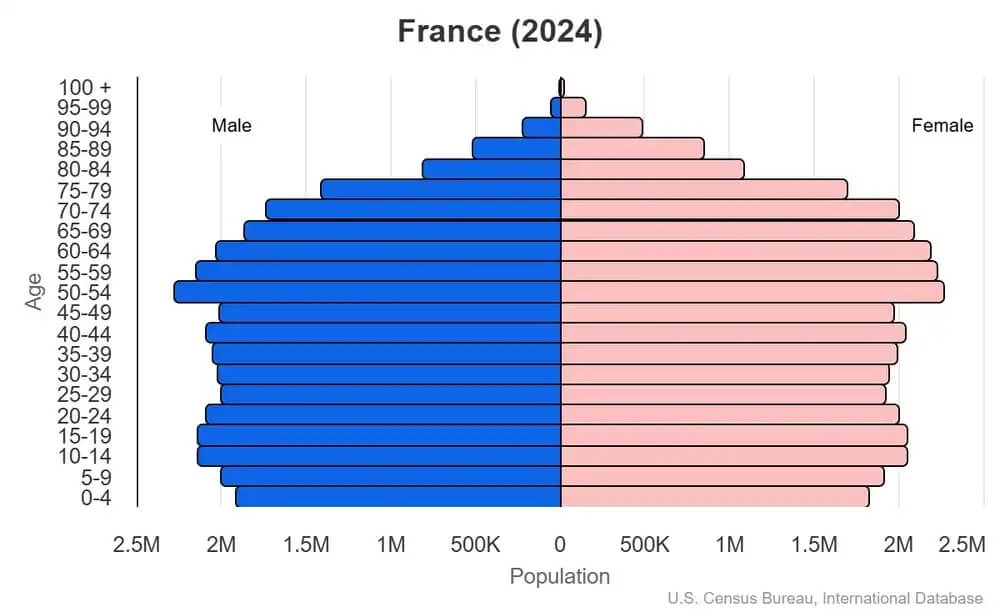
Total: 68,374,591 (2024 estimated)
Ethnic groups
The population of France is primarily composed of Celtic and Latin ethnic groups, with notable minorities including Teutonic, Slavic, North African (Algerian, Moroccan, Tunisian), Indochinese, and Basque communities. This ethnic diversity enriches the cultural tapestry of the nation, fostering a dynamic society that is both inclusive and multifaceted.
Languages
French is the official language, spoken by 100% of the population. While regional dialects and languages such as Provençal, Breton, Alsatian, Corsican, Catalan, Basque, Flemish, Occitan, and Picard are in decline, they remain an important part of France's cultural heritage and identity.
Religions
The religious landscape of France is predominantly Roman Catholic (47%), followed by Muslim (4%), Protestant (2%), Buddhist (2%), Orthodox (1%), Jewish (1%), other (1%), none (33%), and unspecified (9%) as of 2021. This diversity reflects the historical and contemporary influences that have shaped French society, contributing to a rich dialogue among various faiths.
Population growth rate
0.2% (2024 estimated)
Government
Government type
France operates as a semi-presidential republic, a system that combines elements of both presidential and parliamentary governance, allowing for a balance of power between the executive and legislative branches.
Capital
Name: Paris
Executive branch
Chief of state: President Emmanuel MACRON (since 14 May 2017)
Head of government: Sébastien LECORNU (since 10 September 2025)
Diplomatic representation in the US
Chief of mission: Ambassador Laurent BILI (since 19 April 2023)
Diplomatic representation from the US
Chief of mission: Ambassador Charles KUSHNER (since 11 July 2025); note - also accredited to Monaco
Economy
Economic overview
France boasts a high-income, advanced economy and is a member of the EU and eurozone. The nation is characterized by a robust tourism sector, a strong aircraft manufacturing industry, and a significant pharmaceuticals sector, alongside diverse industrial activities. However, it faces challenges such as high public debt and ongoing pension reform efforts. The government is actively pursuing a transition to a green economy through its "France 2030" strategy, aiming to enhance sustainability and innovation across various sectors.
Real GDP (purchasing power parity)
$3.732 trillion (2024 estimated)
$3.689 trillion (2023 estimated)
$3.655 trillion (2022 estimated)
Real GDP per capita
$54,500 (2024 estimated)
$54,000 (2023 estimated)
$53,700 (2022 estimated)
Exports
$1.071 trillion (2024 estimated)
$1.05 trillion (2023 estimated)
$1.021 trillion (2022 estimated)
Exports - partners
Germany 11%, Italy 9%, USA 8%, Belgium 8%, Spain 7% (2023)
Exports - commodities
Aircraft, cars, packaged medicine, gas turbines, vehicle parts/accessories (2023)
Imports
$1.074 trillion (2024 estimated)
$1.094 trillion (2023 estimated)
$1.092 trillion (2022 estimated)
Imports - partners
Germany 15%, Belgium 11%, Netherlands 9%, Spain 8%, Italy 8% (2023)
Imports - commodities
Cars, natural gas, crude petroleum, refined petroleum, garments (2023)
Human Development Index
The country's Human Development Index (HDI) is 0.920, ranking it 26th out of 193 countries tested. (more information)
World Happiness Report
The World Happiness Report ranked the country 50th out of 158 countries tested with a score of 6.195. (more information)