World Book
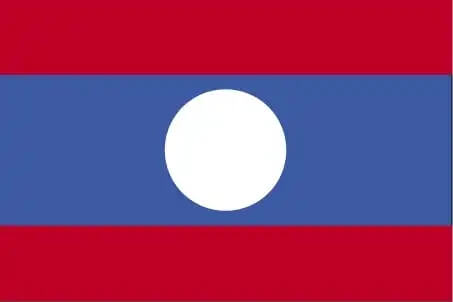
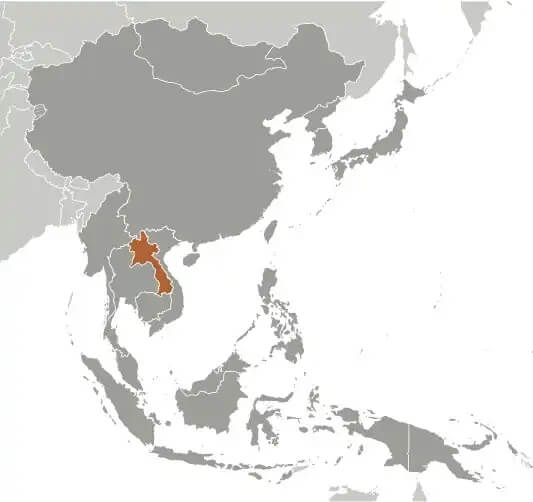
Laos
World Book Index
56

With a score of 56, the country is ranked 111th out of 158 countries in the World Book ranking. (more information)
Introduction
Laos, officially known as the Lao People's Democratic Republic, is a landlocked nation in Southeast Asia that boasts a rich historical tapestry woven from its ancient kingdom of Lan Xang. This kingdom, which flourished from the 14th to the 18th centuries, laid the foundation for modern Lao identity. Following centuries of external influences, including domination by Siam (now Thailand) and later incorporation into French Indochina in the late 19th century, Laos underwent significant political transformation. The communist Pathet Lao seized power in 1975, marking the beginning of a new era characterized by a centralized government. Since 1988, the country has cautiously embraced economic reforms, allowing for a limited return to private enterprise and foreign investment, which has gradually shaped its contemporary economic landscape.
Neighboring countries
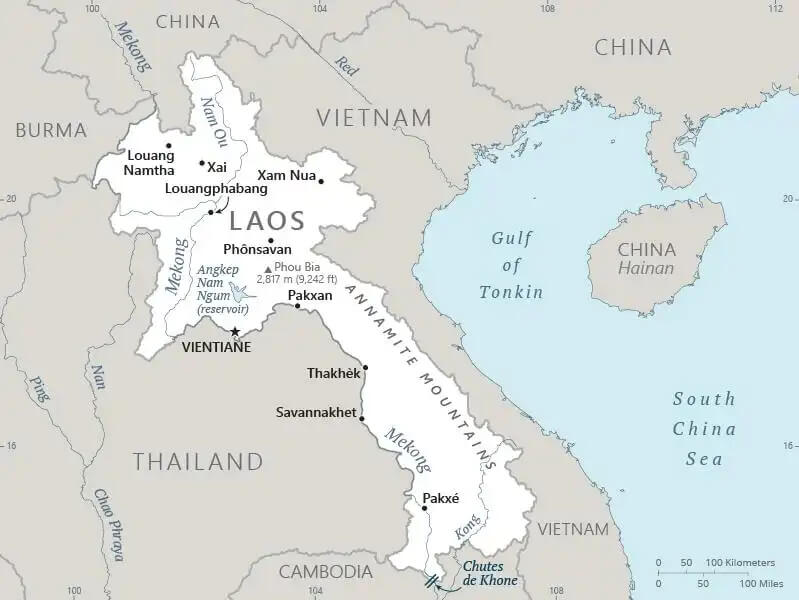
Burma - Cambodia - China - Thailand - Vietnam
Geography
Area
Total: 236,800 sq km
Land: 230,800 sq km
Water: 6,000 sq km
Laos is characterized by its mountainous terrain, which covers a significant portion of the country, contributing to its diverse ecosystems and rich biodiversity. The Mekong River, one of the longest rivers in the world, serves as a vital waterway, forming a natural border with several neighboring countries. The climate is predominantly tropical monsoon, with a distinct rainy season from May to November and a dry season from December to April, influencing agricultural practices and water resource management. The country is endowed with abundant natural resources, including timber, hydropower potential, and various minerals such as gypsum, tin, gold, and gemstones, which play a crucial role in its economic development.
People and Society
Population
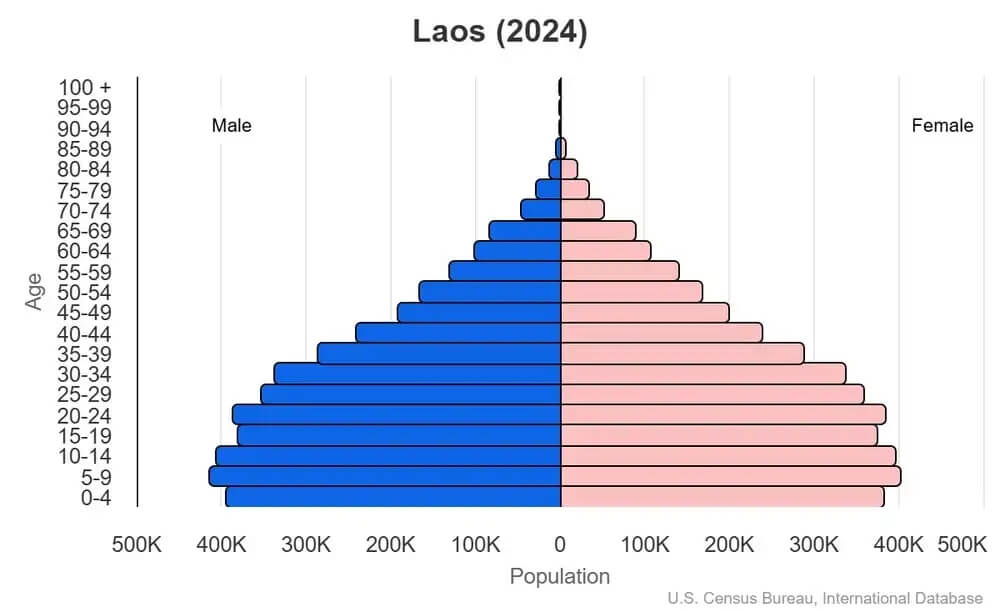
Total: 7,953,556 (2024 estimated)
Laos is home to a diverse population composed of various ethnic groups, with the Lao people constituting 53.2% of the population. Other significant ethnic groups include the Khmou (11%), Hmong (9.2%), and Phouthay (3.4%), among others. This ethnic diversity contributes to a rich cultural tapestry, with multiple languages spoken, including Lao (the official language), French, English, and various ethnic languages. The predominant religion is Buddhism, practiced by 64.7% of the population, reflecting the country's cultural heritage. The population growth rate is estimated at 1.26% for 2024, indicating a steady increase in the number of inhabitants, which poses both opportunities and challenges for socio-economic development.
Government
Government type
Communist party-led state
Capital
Name: Vientiane (Viangchan)
The government of Laos operates under a single-party system led by the Lao People's Revolutionary Party. The President, currently THONGLOUN Sisoulith, serves as the chief of state, while the Prime Minister, SONEXAY Siphandon, heads the government. The political landscape is characterized by limited political pluralism, with the party maintaining strict control over governance and political expression. Diplomatic relations are managed through various channels, including representation in the United States, where Ambassador PHOUKHONG Sisoulath has been serving since September 2025.
Economy
Economic overview
Laos is classified as a lower middle-income, socialist Southeast Asian economy, recognized for its rapid economic growth in recent years. Despite experiencing a decline in poverty levels, the country still faces significant challenges, including high public debt and the need for ongoing economic reforms. The economy is rich in natural resources, particularly in hydropower, which has become a cornerstone of its development strategy. Recent anticorruption efforts aim to enhance transparency and governance, which are crucial for attracting foreign investment. The service sector, however, has been adversely affected by the COVID-19 pandemic, highlighting the vulnerabilities within the economy.
Real GDP (purchasing power parity)
$66.905 billion (2024 estimated)
$64.173 billion (2023 estimated)
$61.856 billion (2022 estimated)
Real GDP per capita
$8,600 (2024 estimated)
$8,400 (2023 estimated)
$8,200 (2022 estimated)
Exports
$9.698 billion (2023 estimated)
$8.604 billion (2022 estimated)
$7.82 billion (2021 estimated)
Exports - partners
China 39%, Thailand 34%, Australia 4%, USA 4%, Cambodia 2% (2023)
Exports - commodities
Electricity, fertilizers, gold, garments, paper (2023)
Imports
$8.596 billion (2023 estimated)
$7.983 billion (2022 estimated)
$6.527 billion (2021 estimated)
Imports - partners
Thailand 58%, China 36%, Japan 1%, Singapore 1%, Germany 1% (2023)
Imports - commodities
Refined petroleum, cars, raw sugar, plastic products, trucks (2023)
Human Development Index
The country's Human Development Index (HDI) is 0.617, ranking it 147th out of 193 countries tested. (more information)
World Happiness Report
The World Happiness Report ranked the country 100th out of 158 countries tested with a score of 5.139. (more information)