World Book
Saudi Arabia
World Book Index
76

With a score of 76, the country is ranked 35th out of 158 countries in the World Book ranking. (more information)
Introduction
Saudi Arabia, a nation steeped in history and cultural significance, is recognized as the birthplace of Islam, housing the two holiest sites in the religion: Mecca and Medina. The modern state of Saudi Arabia was established in 1932 by ABD AL-AZIZ bin Abd al-Rahman AL SAUD (Ibn Saud) after an extensive campaign lasting three decades to unify the majority of the Arabian Peninsula. Today, Saudi Arabia stands as a pivotal player in the global energy market, being one of the foremost producers of oil and natural gas, which significantly shapes its economy and international relations.
Neighboring countries
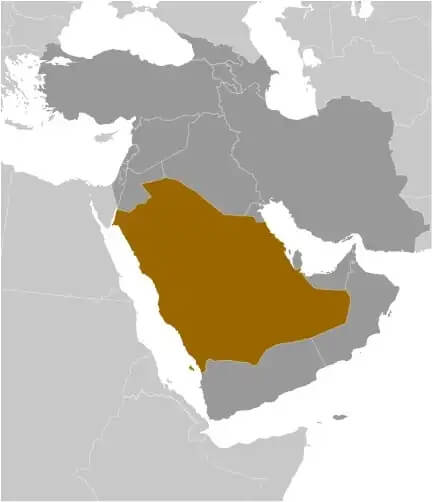
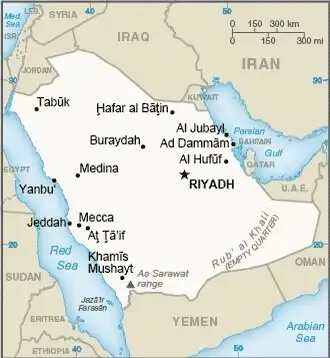
Bahrain - Iraq - Jordan - Kuwait - Oman - Qatar - United Arab Emirates - Yemen
Geography
Area
Total: 2,149,690 sq km
Land: 2,149,690 sq km
Water: 0 sq km
Climate
The climate of Saudi Arabia is characterized by harsh, dry desert conditions, marked by significant temperature extremes that can challenge both human habitation and agricultural practices.
Natural resources
Saudi Arabia is endowed with vast natural resources, including petroleum, natural gas, iron ore, gold, and copper, which play a crucial role in its economic framework and development strategies.
People and Society
Population
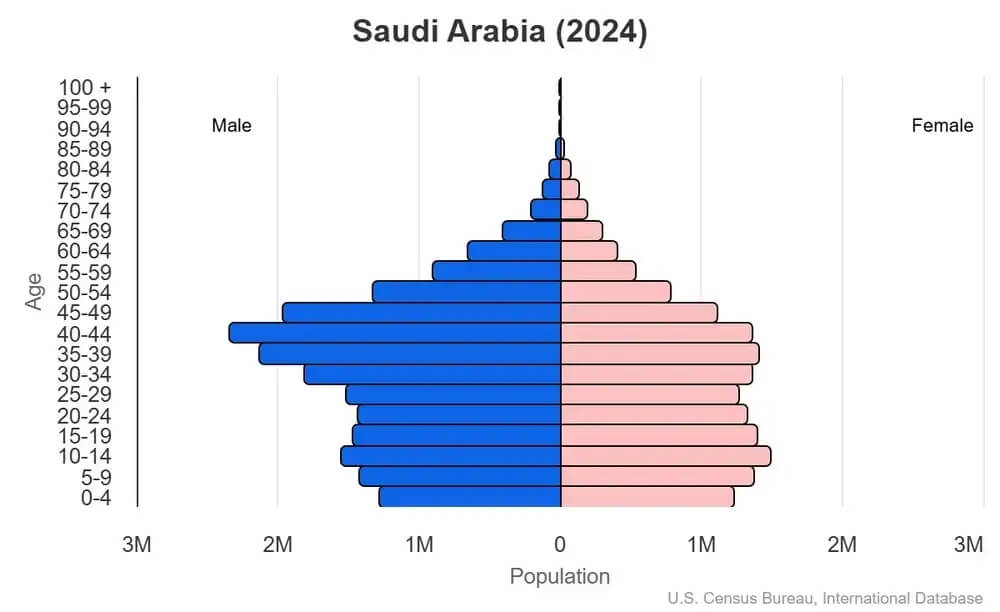
Total: 36,544,431 (2024 estimated)
Ethnic groups
Arab 90%, Afro-Asian 10%
Languages
Arabic (official)
Religions
Muslim (official; citizens are 85-90% Sunni and 10-12% Shia), other (includes Eastern Orthodox, Protestant, Roman Catholic, Jewish, Hindu, Buddhist, and Sikh) (2020 estimated)
Population growth rate
1.68% (2024 estimated)
The population of Saudi Arabia reflects a diverse demographic landscape, with Arabs constituting 90% of the population and a notable Afro-Asian presence. The official language is Arabic, which serves as a unifying element in the society. The religious composition is predominantly Muslim, with a significant majority identifying as Sunni, while a smaller percentage adheres to Shia beliefs. The population growth rate of 1.68% indicates a youthful demographic, which presents both opportunities and challenges for the nation in terms of economic development and social services.
Government
Government type
Absolute monarchy
Capital
Name: Riyadh
Executive branch
Chief of state: King SALMAN bin Abd al-Aziz Al Saud (since 23 January 2015)
Head of government: Crown Prince and Prime Minister MUHAMMAD BIN SALMAN bin Abd al-Aziz Al Saud (since 27 September 2022)
Diplomatic representation in the US
Chief of mission: Ambassador Reema Bint Bandar Bin Sultan AL SAUD (since 8 July 2019)
Diplomatic representation from the US
Chief of mission: Ambassador (vacant); Chargé d’Affaires Alison DILWORTH (since January 2025)
The government of Saudi Arabia operates as an absolute monarchy, with the King serving as the chief of state. The current monarch, King SALMAN bin Abd al-Aziz Al Saud, has been in power since January 2015. The Crown Prince, MUHAMMAD BIN SALMAN bin Abd al-Aziz Al Saud, also serves as the Prime Minister, having assumed this role in September 2022. The diplomatic landscape is marked by the presence of Ambassador Reema Bint Bandar Bin Sultan AL SAUD in the United States, reflecting the strategic ties between the two nations.
Economy
Economic overview
Saudi Arabia boasts a high-income, oil-based economy that is a cornerstone of the Middle Eastern financial landscape. As a founding member of OPEC, the country plays a pivotal role in global oil production and pricing. The Vision 2030 strategy is a transformative initiative aimed at diversifying the economy, increasing private sector participation, and fostering projects funded by the sovereign wealth fund and foreign investments. Despite a young labor force and significant strides in development, the country faces challenges, including a falling but still notable poverty rate, which lacks comprehensive official statistics.
Real GDP (purchasing power parity)
$2.213 trillion (2024 estimated)
$2.173 trillion (2023 estimated)
$2.161 trillion (2022 estimated)
Real GDP per capita
$62,700 (2024 estimated)
$64,500 (2023 estimated)
$67,200 (2022 estimated)
Exports
$360.897 billion (2024 estimated)
$368.731 billion (2023 estimated)
$445.881 billion (2022 estimated)
Exports - partners
China 21%, India 12%, Japan 12%, USA 6%, UAE 4% (2023)
Exports - commodities
Crude petroleum, refined petroleum, plastics, alcohols, ships (2023)
Imports
$317.012 billion (2024 estimated)
$289.91 billion (2023 estimated)
$258.371 billion (2022 estimated)
Imports - partners
China 21%, UAE 8%, USA 7%, India 6%, Germany 5% (2023)
Imports - commodities
Cars, refined petroleum, gold, broadcasting equipment, packaged medicine (2023)
Human Development Index
The country's Human Development Index (HDI) is 0.900, ranking it 37th out of 193 countries tested. (more information)
World Happiness Report
The World Happiness Report ranked the country 42nd out of 158 countries tested with a score of 6.324. (more information)