World Book
United Arab Emirates
World Book Index
79

With a score of 79, the country is ranked 20th out of 158 countries in the World Book ranking. (more information)
Introduction
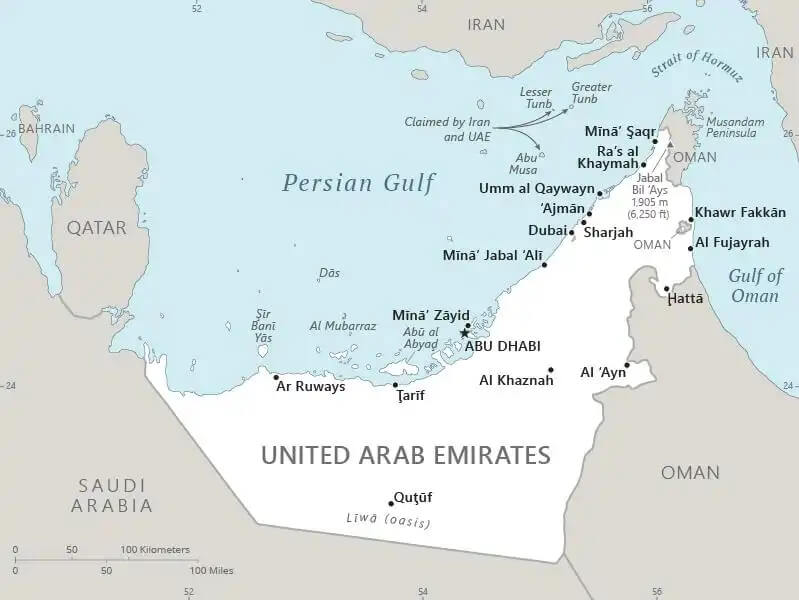
The Trucial States of the Persian Gulf coast granted the UK control of their defense and foreign affairs in 19th-century treaties. In 1971, six of these states -- Abu Dhabi, 'Ajman, Al Fujayrah, Ash Shariqah, Dubayy, and Umm al Qaywayn -- merged to form the United Arab Emirates (UAE). Ra's al Khaymah joined in 1972.
Neighboring countries
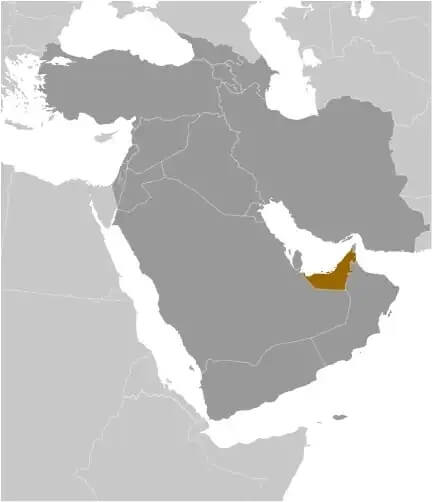
Bahrain - Iran - Kuwait - Oman - Qatar - Saudi Arabia
Geography
Area
total: 83,600 sq km
land: 83,600 sq km
water: 0 sq km
Climate
desert; cooler in eastern mountains
Natural resources
petroleum, natural gas
People and Society
Population
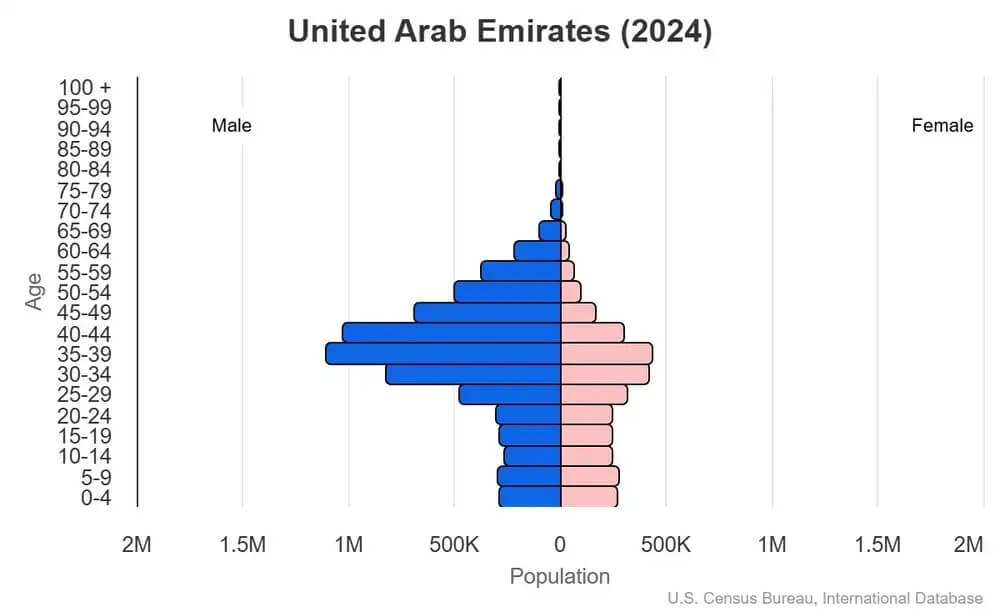
total: 10,032,213 (2024 est.)
Ethnic groups
Emirati 11.6%, South Asian 59.4% (includes Indian 38.2%, Bangladeshi 9.5%, Pakistani 9.4%, other 2.3%), Egyptian 10.2%, Filipino 6.1%, other 12.8% (2015 est.)
Languages
Arabic (official), English, Hindi, Malayalam, Urdu, Pashto, Tagalog, Persian
Religions
Muslim 74.5% (official) (Sunni 63.3%, Shia 6.7%, other 4.4%), Christian 12.9%, Hindu 6.2%, Buddhist 3.2%, agnostic 1.3%, other 1.9% (2020 est.)
Population growth rate
0.6% (2024 est.)
Government
Government type
federation of monarchies
Capital
name: Abu Dhabi
Executive branch
chief of state: President MUHAMMAD BIN ZAYID Al Nuhayyan (since 14 May 2022)
head of government: Prime Minister and Co-Vice President MUHAMMAD BIN RASHID Al Maktum (since 5 January 2006)
Diplomatic representation in the US
chief of mission: Ambassador Yousif AL OTAIBA (since 28 July 2008)
Diplomatic representation from the US
chief of mission: Ambassador (vacant); Chargé d’Affaires Eric GAUDIOSI (since August 2025)
Economy
Economic overview
high-income, oil-driven Middle Eastern economy; fastest GDP growth of Gulf states; diversification through tourism, construction, and services; strong foreign direct investment orientation; continued government investment and business-friendly reforms
Real GDP (purchasing power parity)
$745.994 billion (2024 est.)
$718.95 billion (2023 est.)
$693.842 billion (2022 est.)
Real GDP per capita
$68,600 (2024 est.)
$68,600 (2023 est.)
$68,900 (2022 est.)
Exports
$558.402 billion (2023 est.)
$521.897 billion (2022 est.)
$425.156 billion (2021 est.)
Exports - partners
China 11%, India 11%, Japan 10%, Iraq 6%, Thailand 4% (2023)
Exports - commodities
crude petroleum, refined petroleum, gold, broadcasting equipment, natural gas (2023)
Imports
$481.852 billion (2023 est.)
$427.992 billion (2022 est.)
$347.529 billion (2021 est.)
Imports - partners
China 19%, India 7%, USA 6%, Turkey 4%, Japan 4% (2023)
Imports - commodities
gold, broadcasting equipment, cars, refined petroleum, diamonds (2023)
Human Development Index
The country's Human Development Index (HDI) is 0.940, ranking it 15th out of 193 countries tested. (more information)
World Happiness Report
The World Happiness Report ranked the country 34th out of 158 countries tested with a score of 6.448. (more information)